
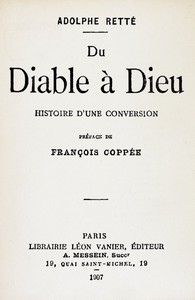
Du Diable à Dieu : Histoire d'une conversion by Adolphe Retté
Let's be honest, conversion stories can sometimes feel predictable. Not this one. Adolphe Retté's Du Diable à Dieu is the opposite of a safe, Sunday school tale. It's messy, intellectual, and charged with the energy of a man who fought his own transformation every step of the way.
The Story
Retté paints a vivid picture of his early life as a radical in fin-de-siècle Paris. He wasn't just irreligious; he was militantly against religion, diving headfirst into anarchist circles, symbolist poetry, and a lifestyle meant to defy every convention. He built his identity on rebellion. The book then tracks the slow, often painful, cracking of that identity. He doesn't present his conversion as a single lightning bolt, but as a series of intellectual roadblocks, personal failures, and a growing, undeniable emptiness in the life he had championed. The climax isn't a argument he lost, but a truth he could no longer outrun. He describes finally surrendering to Catholicism not as a defeat, but as the only logical end to a long and exhausting journey.
Why You Should Read It
What grabbed me was Retté's honesty. He doesn't sugarcoat his past sins or his pride. You feel his stubbornness. This isn't a story about a good man finding God; it's about a proud, difficult man being found. The value for me, as a modern reader, was seeing how timeless that internal struggle is. The specific debates about anarchism or symbolism might be of their time, but the core conflict—between self-will and surrender, between constructed identity and a deeper calling—feels incredibly relevant. It's a powerful reminder that profound change often looks like chaos from the outside.
Final Verdict
This book is perfect for anyone interested in personal memoirs, late 19th-century European culture, or stories of faith that don't shy away from complexity. It's especially compelling if you appreciate an intellectual journey. You don't have to share Retté's final conclusions to be fascinated by the path he took. Think of it as a historical document and a psychological portrait rolled into one. Just be ready for a narrator who is sometimes frustrating, often brilliant, and always completely himself. It's a unique window into a soul in turmoil, and ultimately, at rest.
This work has been identified as being free of known copyright restrictions. Enjoy reading and sharing without restrictions.
Sarah Gonzalez
6 months agoUnlike many other resources I've purchased before, the critical analysis of current industry standards is very timely. I'll be citing this in my upcoming project.
Linda Thompson
1 year agoGreat read!







Emily Williams
3 months agoThe clarity of the introduction set high expectations, and the data points used to support the main thesis are quite robust. A mandatory read for anyone in this industry.