
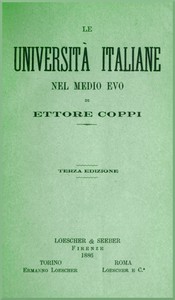
Le Università italiane nel Medio Evo by Ettore Coppi
Ettore Coppi’s Le Università italiane nel Medio Evo is a fascinating trip back to the very beginning of the university as we know it. Published in the late 19th century, it collects and analyzes the scattered records that tell the story of how places like Bologna and Padua grew from loose collections of scholars into formal, powerful institutions.
The Story
The book doesn’t follow a single character, but rather tracks the life of the universities themselves. Coppi starts by showing how they weren't "founded" by kings in grand ceremonies, but often sprang up organically. A famous teacher would attract students to a city, and suddenly you had a "university." The real drama comes from the constant fights for control. Students (often older and wealthier than today) formed powerful guilds to negotiate prices and demand good teaching. Teachers fought for their own rights and pay. City governments wanted the prestige and economic boost the scholars brought, but also wanted to keep them in line. And always, the Church was there, asserting its authority over what could be taught. Coppi walks us through these clashes using legal documents, city statutes, and papal decrees, painting a picture of a system born from conflict and compromise.
Why You Should Read It
What makes this old history book so engaging is how human it all feels. When Coppi details the rules against students carrying swords to lecture, or the contracts that fined professors for skipping class, it suddenly clicks: these were real people trying to figure it out. You see the origins of modern concepts—like academic freedom and degree requirements—in their messy, early forms. It’s also a powerful reminder of how valuable this new idea of a "universal" community of learning was. Students risked long, perilous journeys across Europe just for a chance to study. That sense of passion and purpose jumps off the page, even through the legalistic language of the sources.
Final Verdict
This book is perfect for anyone with a curiosity about where our modern world came from, especially students, teachers, or anyone who’s ever been part of a university. It’s not a light read—Coppi’s 19th-century style and deep dive into primary sources require a bit of focus—but the rewards are huge. You’ll never look at your alma mater the same way again. Think of it as the origin story for the entire idea of higher education, filled with surprisingly relatable struggles over power, money, and the pursuit of knowledge.
This publication is available for unrestricted use. You are welcome to share this with anyone.
Elizabeth Davis
1 year agoFinally found time to read this!
Ava Johnson
1 year agoWow.






John Jones
10 months agoThis book was worth my time since the narrative structure is incredibly compelling. Absolutely essential reading.