
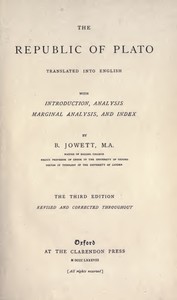
The Republic of Plato by Plato
Don't let the title fool you—The Republic isn't really a blueprint for a country. It's a long, winding conversation led by the philosopher Socrates. He's hanging out with a group of friends, and they start by trying to define a single, slippery idea: What is justice? Is it telling the truth and paying your debts? Is it what's good for the powerful? The talk quickly moves from a person's soul to the soul of an entire city.
The Story
To figure out what makes a just person, Socrates suggests they imagine building a just city from scratch. They design this ideal city, which they call Kallipolis. It has three classes: workers, soldiers, and rulers. The rulers, shockingly, are the philosophers—the lovers of wisdom. Socrates argues that only those who see the truth of reality should be in charge. To make this work, he proposes some radical ideas: rulers share everything (including spouses and children), art that tells lies is banned, and a 'noble lie' is told to keep everyone in their place. The whole conversation is a search for the perfect balance between individual freedom and social order.
Why You Should Read It
You read this book not for answers, but for the questions. It’s like mental weightlifting. Plato (writing as Socrates) pushes every idea to its extreme. One minute you're nodding along about the importance of education, the next you're reeling from a proposal to remove kids from their parents. It forces you to examine your own beliefs about fairness, leadership, and truth. The character of Socrates is magnetic—annoying, brilliant, and relentlessly curious. You feel like you're right there in the room, being gently cornered by his logic. It's humbling to realize how little our core debates have changed in two millennia.
Final Verdict
This is for the curious thinker, not the casual reader. It's perfect for anyone interested in philosophy, political theory, or the roots of Western thought. You'll get the most out of it if you're ready to engage—to argue, to question, and to sit with uncomfortable ideas. It can be dense, so take it slow. Pair it with coffee and a friend to debate with. It’s not an easy read, but it’s a profoundly rewarding one. Just be prepared: you might finish it looking at the world, and your own opinions, a little differently.
This is a copyright-free edition. Use this text in your own projects freely.
David Thompson
7 months agoI've gone through the entire material twice now, and the visual layout and supporting data make the reading experience very smooth. Truly a masterpiece of digital educational material.
Richard Rodriguez
1 year agoThe layout is perfect for tablet and e-reader devices.
Jessica Smith
1 year agoGood quality content.
Mason Lee
3 months agoEssential reading for students of this field.
Charles Martin
3 months agoThe layout is perfect for tablet and e-reader devices.