1

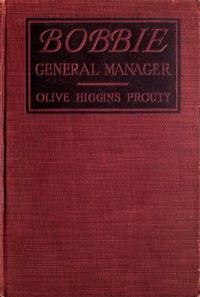
Bobbie, General Manager: A Novel — Inside the Classic
(0 User reviews)
272
Project Gutenberg
2017
Not confirmed
Families -- Fiction; New England -- Social life and customs -- 20th century -- Fiction
Readers of public-domain and historical texts
Project Gutenberg digital edition
en
Edition facts
Words
106,379
Reading time
463 min
Text sections
26
The source record for Bobbie, General Manager: A Novel — Inside the Classic measures this digital text at 106,379 words, 7 hr 43 min estimated reading time, and 26 detected text sections.
The text analysis averages about 15.5 words per sentence, while the detected sections provide another way to judge how the source is divided.
Project Gutenberg metadata also associates the work with “Families -- Fiction,” connecting these edition facts with the source record’s subject description.
Source:
Project Gutenberg record #53891
A sixteen-year-old girl, self-styled 'Bobbie,' narrates her life as the de facto mother of her siblings in early 1900s New England, blending wry self-assessment with a secret conviction of genius.
Editorial Edition Score
4.9/5
★★★★★
★★★★★
Calculated from edition completeness, EPUB availability, text structure and catalogue metadata. Not a user rating.
How this score is calculated
- Description quality20 pts
- Title & short description10 pts
- Source metadata20 pts
- Text length15 pts
- Chapters / structure15 pts
- EPUB file integrity20 pts
Total of 100 points, scaled to a 2.5-5.0 range. Editions with an empty description or a missing EPUB file are not scored.
Edition quality
Read the Text
Shakespeare had told us about his school-days or Julius Caesar had described his family and what they used to do when he was a boy of fifteen. Of course I may not be a genius; but facts point that way. I hate mathematics, my imagination is vivid, my life is difficult and full of obstacles, and my handwriting illegible. My Themes are generally read out loud in English, and my quarterly deportment mark is frightfully low. Moreover, if I am not a genius I shall be awfully disappointed. Why, I think I should rather be a genius than to go to a College Prom. It makes everything so bearable, from a flunk in geometry, to not being invited to Bessie Jaynes' birthday-party last week.
My life has not been an easy one. Ever since I can remember I have been the mother of five children--two of them older and three younger than myself. They all call me Bobbie for short, but my real name is Lucy Chenery Vars.
Our house is a big ugly brown affair which Father built when we were all babies and the business was prosperous. The house has twenty rooms in it, and on the top an octagon cupola, which I have fixed up with a fish-net and some old tennis rackets, and call my study. I have a plaster cast of a skull up here, and a "No Trespassing" sign which Juliet Adams and I stole out of old Silas Morton's blueberry-pasture. It looks exactly like a college man's room now and I intend to do all my writing up here. It is a perfectly lovely place for inspirations! From my eight little windows I can see all over New England, and at night every star that shines. It is simply glorious up here in a thunder-storm, and when I have the trap-door once closed behind me, with all my cares and troubles shut safely away down below, I feel as if I could fly with the birds. I ought to write something wonderful.
In the first place I had better state that I haven't anything distinguishing about me except my experience. I am middling tall--five feet five inches, to be precise; middling heavy--112 pounds; and am one of six children--four boys and two girls--without the honour of being either the oldest or youngest. With Father there are seven of us; with Nellie and the cook (when we have one) and poor little Dixie, the horse, there are ten.
Father is a big, quiet, solemn man and is sixty-eight years old. He is president of the Vars & Company Woollen Mills, has perfectly white hair, and wears grey and white seersucker coats in the summer. Tom is the oldest and is in business out West. We're all awfully proud of Tom. He was a perfect star in college, and is making money hand over fist with his lumber camps in Michigan. Alec, the next to oldest, is struggling along in business with Father. Then I come, and next to me the twins--Oliver and Malcolm, aged fifteen and perfect terrors. Last is Ruthie; and after her, mother died and so there weren't any more. _I_ was the mother then, and I was only a little over five. Father says he used to put me on the dictionary in mother's chair at the table when I was so little that Nellie had to help lift the big silver pot while I poured the coffee. Well, I've sat there ever since, pushed the bell, scowled at the twins and performed a mother's duty generally, as well as I knew how.
It hasn't been easy. Ruthie isn't the kind of little sister who likes to be petted or cuddled. The twins scorn everything I do or say. The house is a perfect elephant to run (there are thirty-three steps between the refrigerator and the kitchen sink) and our washings are something frightful. Alec says we simply can_not_ afford a laundress, and the result is that I spend most of my Saturday mornings in intelligence-offices hunting cooks. Intelligence-offices are dreadful on inspirations.
Ever since I can remember, the house has been out of repair--certain doors that won't close, certain windows that have no shades, certain ceilings that are stained and smoked. It's hard to give the rooms the proper look when there are paths worn all over the Brussels carpet, exactly like cow-paths in a pasture, and the stuffed arms of the furniture in the parlour are worn as bare as the back of a little baby's head I once saw.
The novel opens with a sixteen-year-old narrator, Lucy Ch—, known as Bobbie, delivering a blunt inventory of her life: she is a junior at Hilton Classical High School, captain of the basketball team, and the self-appointed mother of five children—two older and three younger than herself. Her voice is immediate and confiding, mixing mundane facts (her travels as far as Revere Beach) with a startling private belief: she may be a genius. This conviction, she explains, is what compels her to record her early experiences, much as she wishes Shakespeare or Caesar had done. The reader is thus placed inside a consciousness that is at once ordinary and grandiose, pragmatic and romantic.
A Voice That Refuses to Be Pretty
Bobbie’s narration is defined by its unadorned self-assessment. She states flatly, “I am not pretty, nor a bit popular with the boys,” and catalogues her physical shortcomings—short hair from typhoid, straight hair that may soon lose its only kink. Yet this plainness is a rhetorical choice, not a confession of defeat. The same voice that lists her “ugly as mud” clothes also claims her themes are read aloud in English class and her deportment mark is “frightfully low.” Prouty builds a character who uses self-deprecation as a shield for ambition. The secret conviction of genius is never mocked by the narrative; it is treated as a serious, if ironic, organizing principle. Bobbie’s prose is colloquial and direct, full of dashes and asides, mimicking the rush of a mind that cannot stop evaluating itself and its surroundings.
The Portrait as a Moral Witness
One of the novel’s most striking recurring details is a portrait of Bobbie’s deceased father, which hangs on the landing of the family home. During a dance party, Bobbie and her brother-in-law Alec pause before it, and Alec calls the effect “miraculous.” But the portrait soon becomes a silent judge. Bobbie switches off its lights when the festivities grow too raucous, unable to bear her father’s “look of censure.” Later, she creeps back alone in her nightgown to turn the lights on again, seeking comfort. The portrait is not merely a sentimental object; it is a character in the moral drama, embodying the tension between the family’s strict upbringing and the “orgy” of champagne and laughter. Prouty uses this physical detail to externalize Bobbie’s inner conflict between duty and desire, reverence and rebellion.
The Weight of Being ‘General Manager’
The title “General Manager” is Bobbie’s self-appointed role in her family, a phrase that signals both her competence and her burden. She describes herself as “the mother of five children—two of them older and three younger than myself.” This inversion of the family hierarchy is presented without self-pity; it is simply a fact of her life. Yet the excerpts show the cost: at the dance, she slinks away to her room, unable to “enter in” to the merriment, feeling that the whole affair is a “debauch” in her father’s house. Her managerial eye sees the scattered violets, torn chiffon, and half-eaten macaroon as evidence of moral failure. Prouty does not let Bobbie become a martyr; instead, she shows how the role of caretaker isolates her from the very pleasures she might have enjoyed. The narrative voice remains wry, but the loneliness is palpable.
Setting as a Mirror of Social Aspiration
The novel is set in Hilton, a New England town, and the family’s house at 240 Main Street is a fixed point in Bobbie’s identity. Her father is a state senator, and the family’s social position is both a source of pride and a cage. The dance scene takes place in this house, transformed by “gorgeous raiment” and “violins, pianos and cornets.” Yet Bobbie’s description of the event is suffused with disgust: the laughter is “hilarious,” the music “shrieking.” Prouty uses the setting to dramatize class anxiety and the gap between public display and private conscience. Bobbie’s father, in his portrait, becomes the emblem of a lost moral authority. The house itself, with its landing and stairs, serves as a stage for Bobbie’s solitary rituals—turning lights on and off, sitting on the lowest stair—underscoring her role as both manager and outsider in her own home.
Readers should attend to the way Prouty uses Bobbie’s first-person voice to create a character who is both unreliable and deeply sympathetic. The secret conviction of genius may be a delusion or a prophecy; the novel leaves that ambiguity intact. Pay attention to the small physical details—the portrait, the macaroon, the nightgown—that carry emotional weight. Bobbie’s story is not a simple coming-of-age but a study in how a young woman negotiates authority, memory, and desire within the confines of family and social expectation.
I’ve shelved Bobbie beside Experience — A Closer Reading more than once, though they never speak. Bobbie’s wry, fierce guarding of her own small world—her quiet conviction—finds an echo in that book’s patient tracing of how we hold ourselves together. Different eras, same steady pulse. A librarian notices such pairings. Experience — A Closer Reading sits there still, waiting for someone’s hand.
There are no reviews for this eBook.
There are no comments for this eBook.
Reader reflection
Before you leave, reflect on the book
Use these questions to collect your thoughts before moving on.
Your progress
0
/
10
2
Did this book hold your interest?
3
Is this a title you would suggest to others?
4
What was the reading difficulty like?
5
Did any part of the book feel personally relevant?
6
Did you gain anything practical from the text?
7
How did the reading compare with what you expected?
8
Could you follow the author’s main argument?
9
In one sentence, what did you learn?
10