1

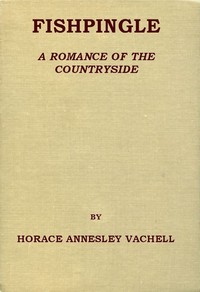
Fishpingle: A Romance of the Countryside — Reading Notes
(0 User reviews)
897
Project Gutenberg
2015
Not confirmed
Country life -- England -- Fiction; Household employees -- Fiction
Readers of public-domain and historical texts
Project Gutenberg digital edition
en
Edition facts
Words
82,374
Reading time
359 min
Text sections
10
Before opening Fishpingle: A Romance of the Countryside — Reading Notes, the edition data offers a quick orientation: 82,374 words, 5 hr 59 min estimated reading time, and 10 detected text sections.
The text analysis averages about 10.8 words per sentence, while the detected sections provide another way to judge how the source is divided.
Project Gutenberg metadata also associates the work with “Country life -- England -- Fiction,” connecting these edition facts with the source record’s subject description.
Source:
Project Gutenberg record #50255
Horace Annesley Vachell's 1917 novel examines the pressures on English country gentlemen to modernize farming, interwoven with a love triangle involving a squire's daughter, a London socialite, and a landowner's son. The preface argues landowners must learn 'new tricks' or face extinction, while excerpts show contrasting romantic motivations between Joyce and Lady Margot.
Editorial Edition Score
4.8/5
★★★★★
★★★★★
Calculated from edition completeness, EPUB availability, text structure and catalogue metadata. Not a user rating.
How this score is calculated
- Description quality20 pts
- Title & short description10 pts
- Source metadata20 pts
- Text length15 pts
- Chapters / structure15 pts
- EPUB file integrity20 pts
Total of 100 points, scaled to a 2.5-5.0 range. Editions with an empty description or a missing EPUB file are not scored.
Edition quality
Read the Text
ireplace. In the alcoves flanking the hearth stood two Queen Anne tallboys, much battered. Opposite to them was a Sheraton bookcase and bureau roughly restored by the village carpenter. The chairs were mostly eighteenth century. But oak, walnut and mahogany twinkled at each other harmoniously, polished by unlimited elbow-grease to a rich golden sameness of tint, the one tint which the faker of old furniture is, happily, unable to reproduce.
This room had been known as the Steward’s Room in the time of Sir Geoffrey Pomfret’s predecessor and father. Fishpingle came into possession when he was installed as butler long after Sir Geoffrey’s accession to the family honours. Some forty years had passed since then but the room retained its ancient uses, inasmuch as Fishpingle was recognised and even acclaimed as steward rather than butler, whose stewardship was the more real because it concerned itself loyally with cause and disdained effect. Sir Geoffrey boasted with good reason that he was the most approachable of squires. He may not have been aware that Fishpingle soaped the ways upon which importunate tenants slid from cottage to hall. Fishpingle served as an encyclopædia of information concerning the more intimate details of estate management. He kept a big diary. In the tallboys were filed papers and memoranda. Sir Geoffrey’s only son, Lionel, and Lady Pomfret shared a saying which had mellowed into a crusted family joke: “Fishpingle knows.”
Upon the stone walls were some fine heads of fallow deer, and half a dozen cases of stuffed birds and fish. Fishpingle, it might be inferred, was something of an angler and naturalist. A glance at his bookcase revealed his interest in horse and hound. Beckford was there, and Daniel’s “Rural Sports,” and Izaac Walton. In the place of honour shone conspicuous a morocco-bound, richly-tooled, gilded volume—“Stemmata Pomfretiana.” This genealogical work had been compiled, regardless of expense, by Sir Geoffrey’s grandfather, who had wasted time and money in pursuit of other and less harmless interests. It was he indeed, who encumbered a fine estate with a large and crippling mortgage.
Into Fishpingle’s room came Alfred Rockley, the first footman, carrying a handsome tankard in one hand and a “chammy” leather in the other. Alfred was a good-looking young fellow, racy of the Wiltshire soil, born and bred upon the Pomfret estates and quite willing to serve a master who lived upon those estates and did not own (or lease) a house in town. A reason for this contentment will appear immediately.
Alfred placed the tankard, bottom uppermost upon the Cromwellian table, and stared at it intently with a slight frown upon his ordinarily pleasant countenance. Then he picked it up, rubbed it softly, and began to inspect himself in its shining surface. This agreeable task so engrossed him that he failed to notice the sly approach of a maid-servant, who followed a tip-tilted nose into the room. The nose belonged to Prudence Rockley, a cousin of Alfred and the stillroom maid of the establishment. She carried a feather duster and a smile which, so Sir Geoffrey affirmed, was worth an extra five pounds a year in wages.
Alfred dropped the tankard and caught it again deftly. The Squire encouraged cricket. Prudence laughed. Alfred displayed some irritation.
“There you go again.”
He spoke with the Wilts accent, an accent dear to the Squire and his lady, as being the unmistakable voice of “his” people. Prudence shrugged a pretty pair of shoulders as she answered with the same rising inflection:
“I’ll go, Alfred, if so be as I’m disturbing you at your—_work_.”
“I came nigh on droppin’ the bloomin’ mug.”
As he spoke, he rubbed it caressingly, but his eyes dwelt even more caressingly upon the stillroom maid, who, noting his glance, began dusting the articles upon the table. As she moved from the young man, she murmured interrogatively:
“Why ever have ’ee brought it in here?”
“I’ll tell ’ee, if you’ll give us a kiss, Prue.”
“Don’t ’ee be silly!”
Alfred retorted with conviction.
“If it be silly to want to kiss ’ee, I be the biggest fule in the parish. ’Ee didn’t want coaxin’ las’ night, Prue.”
To this Prudence replied with alluring directness and simplicity.
“Be good, Alfie. If you kiss me afore ‘elevenses’ my cheeks ’ll be red as fire, and Uncle Ben ’ll ask questions.”
Alfred let this soak in, as he rubbed the shining tankard. Then he spoke decisively.
“I want un to ask questions. Sooner the better. Our gettin’ wed depends, seemin’ly, upon your Uncle Ben.”
The significance of his tone was not lost upon the maid. Her straight brows puckered slightly as she asked:
“But—why? You said that las’ night, you did.”
Horace Annesley Vachell's preface to Fishpingle: A Romance of the Countryside (1917) is unusually direct: it argues that English landowners must 'abandon their deep ruts and take the high-road of progress' or risk extinction. The novel, dedicated 'To the Country Gentlemen of England,' frames its romance within a broader economic argument about agricultural expertise. Yet the excerpts suggest the love story operates with its own tensions. Two women—Joyce, a 'parson's daughter,' and Lady Margot, a Mayfair socialite—find themselves drawn to the same man, Lionel, for markedly different reasons. The narrative lingers on Margot's internal conflict between physical desire and calculated resolve, while Joyce's love emerges from a sense of need. Vachell's prose shifts between didactic commentary and psychological observation, creating a work that is part social treatise, part romantic entanglement.
The Preface as Argument
The preface functions as a policy brief, not a conventional introduction. Vachell states that 'the old dogs won’t learn the new tricks' and insists that heirs must 'stick to the land, and concentrate undivided energies upon it.' He cites French agricultural methods as a model, claiming that 'even thin, sterile soil can be made productive.' This is not a neutral framing: it sets up the novel as a demonstration of a thesis. The catalog subjects—'Country life -- England' and 'Household employees'—only partially capture this. The excerpts show little of the household employees, but the preface reveals that the author's primary concern is the economic survival of the squirearchy. Readers should note that the romantic plot may be designed to illustrate or complicate this argument.
Contrasting Romantic Motivations
The excerpts offer a pointed comparison between two women in love with Lionel. Joyce 'realised her love for Lionel at the moment when she knew that he had need of her'; Lady Margot is 'thrilled into what she believed to be love because she felt the need of him.' The narrator explicitly invites 'psychologists' to differentiate 'true love from its counterfeit presentment.' Margot's internal experience is rendered in sensual detail: 'His lips were on hers. His arms were about her. She yielded joyously to his embrace.' Yet the next morning she is 'quite herself, and capable of smiling mockingly at the momentary triumph of body over mind.' This oscillation between surrender and control suggests a character whose emotions are subject to rational scrutiny. The novel appears to use these parallel arcs to explore authenticity in romantic attachment, though the excerpts do not reveal how the triangle resolves.
Setting and Social Observation
The golf match at Bramshaw, set in the New Forest where 'William of Orange planted the oaks,' serves as a stage for social maneuvering. Lady Pomfret observes that Margot is 'tuned up—fully charged with electricity, ready to take the road to a definite destination.' The Squire, Sir Geoffrey, hopes that Lionel will see Joyce and Margot together, 'the oftener the better.' The setting is not merely decorative: the condition of the fairway prompts discussion of 'August hunting,' and Margot cancels a Scotch engagement to stay, remarking, 'I should be bored to tears up there.' These details ground the romance in a specific social milieu where leisure activities double as courtship rituals. The catalog subject 'Country life -- England' is thus rendered through precise, class-inflected behaviors—golf, hunting, and the careful management of guest lists.
Because the excerpts cover only a portion of the novel, readers should approach the preface's economic argument as a lens rather than a summary. Pay attention to how Vachell integrates or strains against his own thesis in the romantic and domestic scenes. The household employees mentioned in the catalog subjects are largely absent from these excerpts; their role may become clearer later. The novel rewards attention to the interplay between declared purpose and narrative practice.
I found myself thinking of Vachell’s old squires, stubborn against change, while turning the pages of The Athelings; or, the Three Gifts. Vol. 1/3 — Reading Notes. There’s the same quiet ache in both—people holding onto a way of life that’s already slipping from their hands, not fighting it, just remembering it in the fading afternoon light.
There are no reviews for this eBook.
There are no comments for this eBook.
Reader reflection
Take a moment to reflect on this book
Create a short personal record of your experience with this book.
Your progress
0
/
10
2
What was your overall reaction to the book?
3
Would you recommend this book to another reader?
4
What was the reading difficulty like?
5
How clearly were the main ideas presented?
6
How did the reading compare with what you expected?
7
Did the book offer a fresh perspective?
8
Would this book work well in a reading group?
9
What changed or sharpened your thinking?
10