1

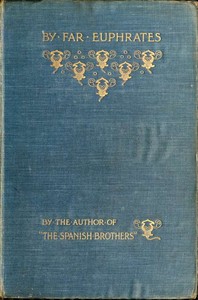
By far Euphrates — Background and Themes
(0 User reviews)
1279
Project Gutenberg
2015
Not confirmed
Armenia -- Fiction; British -- Armenia -- Fiction
Readers of public-domain and historical texts
Project Gutenberg digital edition
en
Edition facts
Words
86,166
Reading time
375 min
Text sections
11
Before opening By far Euphrates — Background and Themes, the edition data offers a quick orientation: 86,166 words, 6 hr 15 min estimated reading time, and 11 detected text sections.
The text analysis averages about 16.2 words per sentence, while the detected sections provide another way to judge how the source is divided.
Project Gutenberg metadata also associates the work with “Armenia -- Fiction,” connecting these edition facts with the source record’s subject description.
Source:
Project Gutenberg record #49915
Deborah Alcock's 1897 novel follows Englishman John Grayson into Ottoman Armenia, where he witnesses the 1895 massacres. The narrative shifts from a traveler's perspective to an insider's view of siege, faith, and survival, using biblical epigraphs and journalistic contrasts to frame the violence.
Editorial Edition Score
4.8/5
★★★★★
★★★★★
Calculated from edition completeness, EPUB availability, text structure and catalogue metadata. Not a user rating.
How this score is calculated
- Description quality20 pts
- Title & short description10 pts
- Source metadata20 pts
- Text length15 pts
- Chapters / structure15 pts
- EPUB file integrity20 pts
Total of 100 points, scaled to a 2.5-5.0 range. Editions with an empty description or a missing EPUB file are not scored.
Edition quality
Read the Text
There was nothing to do, nothing to see. He turned to go back, and then the whole scene in its loneliness and desolation took a sudden grip of his young soul. The awe and wonder of the great, silent, solitary space overcame him. The river, instead of being a voice amidst the stillness, a living thing amidst the death around, was only another death. It seemed to flow from some--
"Waste land where no man comes, Or hath come, since the making of the world."
Then all at once, by a very common trick of fancy, young John Grayson found himself at home--at home really--in happy England. His mother, dead a year ago, was there still. He saw her room: the table with her books and work, and her favourite clock upon it; a shawl she used to wear of some blue, shimmering stuff like silk;--he saw her face. And then, as suddenly, all was gone. He knew that she was dead. And he stood alone with the silent sky, the desolate earth, the gloomy river--an atom of life in the midst of a vast, dead world. Before he knew it the tears were on his cheek.
This would never do. He was ashamed of himself, though there was no one there to see. Dashing the disgraceful drops aside, he started at a run to go back.
After a time he stopped, in a space fairly clear of reeds, to look about him. He could see in the distance the clump of trees that marked the camping place, but it looked very far off. The low hills confused him; it would not be such an easy matter as he thought to return. He sat down to rest a little, for disappointment and discouragement made him feel suddenly very tired.
But he soon sprang to his feet again with a shout. A familiar sound reached his ear, the long Australian "Coo-ee-en!" which his father had adopted as the most penetrating kind of call. He gave back the cry with all the strength of his lungs, and waved his handkerchief high in the air.
Presently he saw his father coming towards him through the reeds, followed by two of the Arabs. He ran to him in high delight, his sad reflections gone into the vast limbo that engulfs boyish sorrows. "Father! father! I have found Euphrates."
"Yes, my boy, but _I_ had some trouble to find _you_."
They stood together, son and father, in that great solitude, as in a sense they did also in the greater solitude of the world. The father was one of those men of whom it is impossible to say he belongs to such and such a type, or, he is cast in such and such a mould. Rather was he hand-hewn, as by the Great Artist's own chisel. He was tall, spare, wiry, with a cheek as brown as southern skies could make it, dark hair and beard showing early threads of grey, dark eyes full of fire, and a mouth as sensitive as a woman's. The boy had inherited his mother's blue eyes and fair hair, but he was very like his father, both in expression and in the cast of his features, especially the shape of his forehead and the moulding of his fine mouth and chin. Slight as was the shadow of rebuke conveyed by his father's words, he felt it--it was so rare.
He said simply, "I am sorry."
"Did you think Euphrates worth the trouble when you found it?" asked his father, who had seen the far-famed and disappointing river long ago.
"Very much the reverse, father. An uglier, muddier, blacker kind of a river I never saw."
"I suppose we are quite close to it? I will go on and have a look, as there is no hurry about our start. Stay here, if you are tired, with one of the Arabs."
"I will come back with you. I should like it."
A short walk brought them to the bank, the two Arabs following at a respectful distance stately and indifferent.
The sun was setting now, and, behold! a wonder met their eyes. The dark stream was transfigured, as if by the wand of an angel. It poured rejoicing on its way, a torrent of liquid gold; for it had taken to its heart of hearts all the glory of the setting sun, and gave it back to the beholder in a marvel of radiance. So might look to mortal eyes the river of God, the river of the water of life, that runs through the shining streets of the New Jerusalem. The boy uttered a cry of wonder and delight. The father gazed in silence. At last he said, "_So the dark river turns to gold._"
Alcock's preface frames the novel not as a chronicle of atrocities but as an attempt to 'show the light that, even there, shines through the darkness,' invoking the biblical image of the fourth figure in the fiery furnace. The opening chapter, 'The Dark River,' begins with a poetic epigraph about native streams before plunging into a vast, dreary landscape under an Eastern sun. The narrative voice is that of an omniscient observer, but the perspective soon narrows to John Grayson, an Englishman whose initial detachment—imagining how a European newspaper might sanitize the violence—gives way to direct experience of thirst, hunger, and confinement in the Armenian Quarter.
From Outsider to Participant
The early chapters establish John Grayson as a foreigner learning Turkish, living with the Vartonian family, and gradually becoming enmeshed in the community's struggles. Alcock uses small details—the cleaning of old wells, the hoarding of rice and bulghour—to ground the siege in tangible survival. A telling contrast emerges: the hypothetical European newspaper report reduces the massacre to a 'disturbance,' while Grayson now 'shuddered and starving with the thousands.' The novel's structure thus moves from a traveler's curiosity to shared suffering, a shift that the reader must track through the accumulating domestic and communal scenes.
Biblical Language and Historical Parallels
The preface explicitly links the 1890s massacres to early Christian martyrdom, quoting a poem about those who 'wrap the burning robe round, thanking God.' This biblical register recurs in chapter titles like 'The Dark River Turns to Light' and in the epigraph from Daniel about the fourth figure in the fire. Alcock also invokes Thermopylae in a chapter heading, suggesting a classical lens for Armenian resistance. However, the excerpts show that this language is not merely decorative: it shapes how characters interpret their own suffering, as when the narrator notes that 'every instance of faith or heroism given in these pages is not only true in itself, but typical of a hundred others.'
The Siege as a Test of Character
Within the compressed space of the Armenian Quarter, Alcock uses the crisis to reveal individual temperaments. Baron Muggurditch Thomassian, whose shop is looted, sinks into 'morbid depression' and is stingy with aid—prompting the younger Vartonians to joke that Turks might poison themselves with his drugs. Meanwhile, Grayson learns Turkish to better navigate danger, and Miss Celandine (a missionary figure) maintains communication through bribed zaptiehs. These vignettes do not advance a single plot but instead build a mosaic of responses: generosity, paralysis, resourcefulness, and dark humor. The reader must attend to these small moral distinctions, as the novel offers no simple heroism.
The Role of the English Protagonist
John Grayson is not a typical adventure hero. He arrives ignorant of Turkish, dependent on Armenian hosts, and his most active role in the excerpts is 'taking an active share in everything that was done'—a deliberately vague phrase. His value lies in his perspective: he is the reader's surrogate, learning alongside us. The novel does not grant him special agency; instead, it places him inside a collective ordeal. This choice means that the story's tension derives not from individual exploits but from the slow erosion of normal life—the cutting of water, the loss of church services, the difficulty of obtaining a passport. The excerpts end with Grayson still inside the Quarter, his fate unresolved.
Readers should approach By Far Euphrates as a document of witness rather than a conventional novel of suspense. Alcock's method is cumulative: she layers biblical allusion, journalistic critique, and domestic detail to create a textured account of communal endurance. The incomplete excerpts leave many questions unanswered—what becomes of Grayson, Shushan, or the Meneshian family?—but the work's value lies in its refusal to simplify. Pay attention to the epigraphs and the preface's framing; they are not ornaments but keys to the novel's moral and theological architecture.
I remember how By Far Euphrates stayed with me long after, that quiet shift from watching to witnessing. It left a particular ache, the way faith holds up in siege. That same ache surfaced in its companion, The Test of Scarlet: A Romance of Reality — Background and Themes, though there the armor is different. Both feel less like history, more like someone's held breath.
There are no reviews for this eBook.
There are no comments for this eBook.
Reader reflection
What was your reading experience?
Capture what you thought, learned, and would like to remember.
Your progress
0
/
10
2
Did this book hold your interest?
3
How likely are you to recommend this book?
4
How demanding did the text feel?
5
Would you start a conversation about this book?
6
Which aspect of the book did you value most?
7
Would you read this book again?
8
Did any part of the book stay with you emotionally?
9
What changed or sharpened your thinking?
10