1

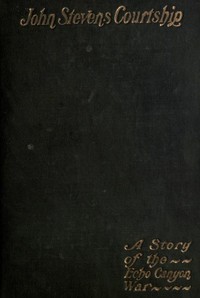
John Stevens' Courtship: A Story of the Echo Canyon War — Reading Companion
(0 User reviews)
60
Project Gutenberg
2015
Not confirmed
Latter Day Saints -- Fiction; Utah Expedition (1857-1858) -- Fiction
Readers of public-domain and historical texts
Project Gutenberg digital edition
en
Edition facts
Words
88,608
Reading time
386 min
Text sections
8
Before opening John Stevens' Courtship: A Story of the Echo Canyon War — Reading Companion, the edition data offers a quick orientation: 88,608 words, 6 hr 26 min estimated reading time, and 8 detected text sections.
The text analysis averages about 22.4 words per sentence, while the detected sections provide another way to judge how the source is divided.
Project Gutenberg metadata also associates the work with “Latter Day Saints -- Fiction,” connecting these edition facts with the source record’s subject description.
Source:
Project Gutenberg record #50312
Susa Young Gates's 1909 novel intertwines a courtship plot with the 1857-58 Utah Expedition, using the deserted streets of Salt Lake City and the tension of Johnston's Army as a backdrop for personal drama.
Editorial Edition Score
4.7/5
★★★★★
★★★★★
Calculated from edition completeness, EPUB availability, text structure and catalogue metadata. Not a user rating.
How this score is calculated
- Description quality20 pts
- Title & short description10 pts
- Source metadata20 pts
- Text length15 pts
- Chapters / structure15 pts
- EPUB file integrity20 pts
Total of 100 points, scaled to a 2.5-5.0 range. Editions with an empty description or a missing EPUB file are not scored.
Edition quality
Read the Text
There was a great clattering of wheels and many gay jests, with gusts of youthful laughter floating out from that wagon-load of happy hilarity. The placid Aunt Clara Tyler looked on from her vantage point in the back seat, with sympathetic companionship. They overtook and passed scores and hundreds of teams, all traveling in the same direction. And each party was given, as they passed, the greetings of long friendships and mutual pleasures.
When they reached the rendezvous at the mouth of Big Cottonwood Canyon, they found the narrow passageway between the hills looking like a tented field. Out in the open square of the regulated camp, the strains of "Uncle" Dimick Huntington's Martial Band saluted the ears with tingling effect, as the fifes piped out shrilly the melody of "The Girl I Left Behind Me."
Charlie Rose assisted Aunt Clara and Ellen to alight, while he sang in merry accompaniment the words of the song. Ellie's own dancing feet were tripping, almost before she touched the greensward; and Charlie seized her hands and together they flew and pirouetted and bowed and danced to the strains of that inspiring sound.
Henry Boyle, who was off his horse before the party halted, quickly appropriated Dian's willing fingers, and together they tripped in all the gay disorder of impromptu dancing over the open square, as the music shrilled and floated out on the cool, canyon breeze.
Even Aunt Clara's feet tingled with the sound; but she refused to accept jolly Tom Allen's invitation to join the merry throng now quickly gathering on the sward, for she was very stout; but she smiled sympathetically into John's face as he glanced quizzically at his own partner now whisking away merrily with another, and at his associate youths who had left to him all the labor of unhitching and preparing camp for the night. But John was not a dancing man. He cared little that he was left alone. His animals were very dear to him; for his lonely domestic life had brought him in close association with the dumb beasts that carried him over trackless plains and mountain peaks.
Soon the word went forth that President Young was approaching the rendezvous, and all hastened to greet their friend and leader. As his buggy, driven rapidly through the dusty road, came in sight, the Nauvoo Band poured forth its brass blare of welcome; the boys pulled off their hats; the girls waved sunbonnets; and the whole group stood at attention, with affectionate greetings written upon their smiling faces, and waving their hands, to welcome Brigham Young--Governor, President, friend, and brother.
Thereafter followed the peaceable family of Bishop Winthrop. Comforted and rested by the soothing assurance that wife and children were well and with him, and that his precious young sister, Diantha, was for once in the care and company of the man he loved best on earth, Bishop Winthrop had driven his light spring wagon joyfully, and withal as rapidly as his farm horses would permit, in the wake of the President and his immediate family, with Rachel and babe crooning happily beside him, and the merry youngsters behind, who were too interested in the gigantic picnic before them even to indulge in a childish squabble.
At late sunset, the bugle sent forth its insistent call for silence. Rapidly the company of over three thousand souls, encamped for the night beside the brawling Big Cottonwood stream, gathered in one glowing mass of color and motion. Then youth and age knelt reverently on the sward, while devotions were offered to the kind Providence which had permitted them to begin their long-planned festivity.
An hour after the evening service was over, the pleasure seekers had retired into wagons and tents, and the silence of the peaceful hills brooded over the encampment.
The next morning at daybreak, the party began the long steady climb amidst crags and pine covered hills, up through the rocky windings of "The Stairs," and still up. The party laughed, sang, walked, climbed, or rested for a moment beside the churning, foaming mountain stream or beneath the shadowing pine trees which bordered the newly made road. As the long cavalcade wound in and out between the hills, the two girls in the wagon drawn by John Stevens' spirited horses, sang and laughed in gayest abandon. Aunt Clara's eyes were full of tender gratitude for such happiness, for she had known the sorrows of many mobbings and drivings. This haven of peace and joyous plenty was a foretaste of heaven to the faithful heart which had braved more than the persecution of strangers; for Aunt Clara had left home, parents, and all she held dear for the sake of that Gospel which spelled Truth and Life Everlasting to its faithful votaries.
The novel opens with a picnic in the Wasatch mountains, but its most striking structural feature is the extended set piece of the army's march through a deserted Salt Lake City. The narrative slows to a near halt, cataloging sounds—"tramp, tramp of armed men," "rattle of heavy field-pieces," "gurgle of City Creek"—and sights: piles of straw ready for torches, rose-bushes plucked by soldiers, sun-rotting barrels. This passage, which occupies several pages, suspends the personal story to render a collective experience of abandonment and threat.
A City Held in Suspense
The army's entry into Salt Lake City is described not through action but through absence. The streets are "tomb-like and deserted," and the only living creatures visible are a group of men around Governor Cumming. Inside houses, furniture is piled with shavings and straw, ready to be burned. The narrative shifts between the external march and the internal watchfulness of men holding flint and steel. This dual perspective—the soldiers' view of an empty city and the hidden residents' readiness for destruction—creates a tension that is both historical and emotional.
The Officer's Taunt and John's Silence
An officer's sneering speech to John Stevens—"I have no doubt that we shall find all the women we want"—is met with silent anger. John, under orders to maintain peace, merely turns away. The dialogue reveals the officer's contempt and the precarious position of the Mormon residents. The author uses this exchange to show the constraints on John's character: his anger is palpable but suppressed. The scene is a microcosm of the larger conflict, where restraint is both a strategy and a source of tension.
Recurring Images of Water and Dust
Throughout the army's passage, water appears as a motif: soldiers drink from "running, sparkling streams" along the road, while unused wells have "sun-rotting barrels and buckets." The contrast between the life-giving water and the decay of abandoned infrastructure underscores the disruption of normal life. Later, the army camps "on the dry plain across the river Jordan," a location that echoes biblical exile. These details ground the historical event in sensory experience, making the abstract conflict tangible.
The Author's Framing of Romance and History
In the preface, Gates states that the story aims to show "plenty of romance and color in every-day life." She acknowledges that the characters are mainly fictitious, but the historical setting—the Echo Canyon War—is depicted faithfully according to historians Tullidge, Whitney, and Bancroft. The last two chapters were written at the request of "Diantha herself" to illustrate "true, pure and sanctified married affection." This framing suggests that the personal and historical are deliberately intertwined, with the courtship plot serving as a vehicle for exploring pioneer resilience.
Readers should attend to how Gates moves between intimate scenes—a picnic, a courtship—and the broader historical canvas. The army's march is not merely background but a structural pivot that redefines the stakes for every character. The novel rewards attention to its sensory details: the sound of City Creek, the sight of a rose-bush plucked by a soldier, the weight of silence in a deserted street.
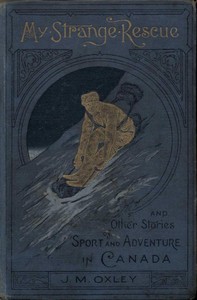
There’s something about a story where the quiet streets carry so much weight, where two people try to find each other while everything else feels uncertain. I kept thinking about that long after finishing the courtship tale. It reminded me of the stillness in My Strange Rescue, and Other Stories of Sport and Adventure in Canada — Themes and Context, where the open country seems to hold its breath too. That feeling stayed with me.
There are no reviews for this eBook.
There are no comments for this eBook.
Reader reflection
Record your reading impressions
A brief reflection can help important ideas stay with you longer.
Your progress
0
/
10
2
How much did you enjoy the reading experience?
3
Is this a title you would suggest to others?
4
How easy was the book to follow?
5
How closely did the book connect with your experience?
6
Did the story or argument move comfortably?
7
Would a second reading be valuable?
8
How valuable was this book for your own interests?
9
What is the main idea you are taking away?
10