1

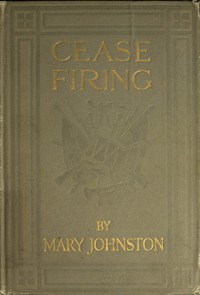
Cease firing — Edition Insights
(0 User reviews)
657
Project Gutenberg
2016
Not confirmed
Historical fiction; United States -- History -- Civil War, 1861-1865 -- Fiction; Confederate States of America. Army -- Fiction
Readers of public-domain and historical texts
Project Gutenberg digital edition
en
Edition facts
Words
180,159
Reading time
784 min
Text sections
45
This digital edition of Cease firing — Edition Insights is described by source-level measurements including 180,159 words, 13 hr 4 min estimated reading time, and 45 detected text sections.
The text analysis averages about 14.6 words per sentence, while the detected sections provide another way to judge how the source is divided.
Project Gutenberg metadata also associates the work with “Historical fiction,” connecting these edition facts with the source record’s subject description.
Source:
Project Gutenberg record #52154
Mary Johnston's 'Cease Firing' uses a shifting narrative voice—from panoramic battle descriptions to intimate soldier dialogue—to chart the final two years of the Civil War. The prose alternates between lyrical natural imagery and stark casualty lists, reflecting the war's grinding toll on Confederate forces.
Editorial Edition Score
4.9/5
★★★★★
★★★★★
Calculated from edition completeness, EPUB availability, text structure and catalogue metadata. Not a user rating.
How this score is calculated
- Description quality20 pts
- Title & short description10 pts
- Source metadata20 pts
- Text length15 pts
- Chapters / structure15 pts
- EPUB file integrity20 pts
Total of 100 points, scaled to a 2.5-5.0 range. Editions with an empty description or a missing EPUB file are not scored.
Edition quality
Read the Text
e sandbars in the river, there were jewelled islands; there were parallel swamps, lakes, and bayous. From the border of these, and out of the water, rose tall trees, starred over, in their season, with satiny cups or disks, flowers of their own or vast flowering vines, networks of languid bloom. The Spanish moss, too, swayed from the trees, and about their knees shivered the canebrakes. Of a remarkable personality throughout, in its last thousand miles the river grew unique. Now it ran between bluffs of coloured clay, and now it flowed above the level of the surrounding country. You did not go down to the river: you went up to the river, the river caged like a tiger behind the levees. Time of flood was the tiger’s time. Down went the levee—widened in an instant the ragged crevasse—out came the beast!—
December, along the stretch of the Mississippi under consideration, was of a weather nearly like a Virginian late autumn. In the river towns and in the plantation gardens roses yet bloomed. In the fields the cotton should have been gathered, carried—all the silver stuff—in wagons, or in baskets on the heads of negroes, to the gin-houses. This December it was not so. It was the December of 1862. Life, as it used to be, had disintegrated. Life, as it was, left the fields untended and the harvest ungathered. Why pick cotton when there was nowhere to send it? The fields stayed white.
The stately, leisurely steamers, the swan-like white packets, were gone from the river; gone were the barges, the flatboats and freight boats; gone were the ferries. No more at night did there come looming—from up the stream, from down the stream—the giant shapes, friendly, myriad-lighted. No more did swung torches reveal the long wharves, while the deep whistle blew, and the smokestack sent out sparks, and the negro roustabouts sang as they made her fast. No more did the planter come aboard, and the planter’s daughter; no more was there music of stringed instruments, nor the aroma of the fine cigar, nor sweet drawling voices. The planter was at the front; and the planter’s daughter had too much upon her hands to leave the plantation, even if there had been a place to go to. As it happened there was none.
Farragut, dressed in blue, ruled the river upward from the Gulf and New Orleans to Baton Rouge. Porter, dressed in blue, ruled it downward from Cairo to Grand Lake. Their steam frigates, corvettes, and sloops-of-war, their ironclads, tinclads, gunboats, and rams flew the Stars and Stripes. Between Grand Lake and Baton Rouge the river was Confederate, unconquered yet, beneath the Stars and Bars. They flew from land and water defences at Vicksburg, from the batteries up the Yazoo, from Natchez and the works on the Red River, and the entrenchments at Port Hudson. They flew from the few, few remaining grey craft of war, from the transports, the cotton-clads, the Vicksburg, the De Soto, the gunboat Grand Duke, the ram Webb. Tawny and strong ran the Mississippi, by the Stars and Stripes, by the Stars and Bars.
It had rained and rained. All the swamps were up, the bayous overflowing. The tiger, too, was out; now here, now there. That other tiger, War, was abroad, and he aided in breaking levees. On the Mississippi side, on the Louisiana side, bottom lands were brimming. Cottonwood, red gum, china trees, cypress and pine stood up, drenched and dismal, from amber sheets and eddies, specked with foam. The clouds hung dark and low. There was a small, chill, mournful wind. The roads, trampled and scored by eighteen months of war, were little, if any, better than no roads.
Mary Johnston's Cease Firing opens with a river that 'ran several thousand miles,' immediately establishing a sweeping geographical scope that contrasts with the intimate, fragmented voices of soldiers that soon follow. The narrative voice shifts between panoramic descriptions of terrain and battle lines and the colloquial, weary speech of men who sing 'My Old Kentucky Home' while marching past burned trees and dead mockingbirds. This alternation between lyrical distance and gritty immediacy sets the novel's distinctive rhythm.
The text's structure—forty-five chapters moving from Vidalia to Appomattox—mirrors the Confederate army's own trajectory, but Johnston often pauses for close-up scenes of individual regiments or commanders. The prose can be starkly factual, as when it lists casualties for the Ninth Kentucky, then pivot to a reverent portrait of General Cleburne, whose division carried flags emblazoned with 'crossed cannon inverted.' These shifts in pace and focus create a layered, episodic account of war's attrition.
Voice Between Ballad and Bulletin
Johnston's narrative voice is notably unstable, moving without transition from the lyrical to the bureaucratic. The opening chapter describes the Mississippi as 'yellow and turbid and strong,' a painterly observation, but within pages the text reproduces a colonel's after-action report: 'I went into the fight with thirty officers and two hundred and seventy-two men, and came out with ten officers and one hundred and forty-six men.' This juxtaposition is deliberate: the novel treats official reports as raw material for its emotional landscape. Soldiers sing Stephen Foster while discussing 'hot shot from Yankee gunboat,' and the narrator records both the song's sentimental refrain and the precise number of dead. The effect is a voice that refuses to settle into a single register, forcing the reader to oscillate between aesthetic distance and statistical horror.
The Weight of Proper Names
Johnston loads her prose with proper names—regiments, commanders, battle sites—in a way that both grounds the fiction in historical fact and creates a cumulative, almost incantatory rhythm. The excerpt lists 'Adams's Louisiana brigade,' 'the Second Kentucky,' 'the Ninth,' 'the Forty-first Alabama,' each with its losses. This cataloging is not dry; it is a structural device that conveys the scale of attrition. When the narrator notes that 'no Confederate brigade, no Confederate regiment, had full complement of muskets,' the sentence itself mimics the skeleton organizations it describes—lean, repetitive, haunted by absent numbers. The names become a kind of roll call, and the reader feels the weight of each unit's history. Johnston also names generals—Breckinridge, Cleburne—and gives them brief, vivid character sketches, as if to counterbalance the anonymity of the casualty lists.
Pace as a Marker of Attrition
The novel's pacing is uneven, and that unevenness is thematically significant. Some passages move with the speed of a cavalry charge: 'Kentuckians! Charge bayonets! Double-quick!' Others slow to a halt, dwelling on a single image—a dead mockingbird on a burning nest, a flag planted on breastworks. This variation mirrors the war's own rhythm of intense action and prolonged waiting. Johnston also uses chapter titles as temporal markers: 'The Road to Vidalia,' 'The Siege,' 'The Beginning of the End.' The final chapters compress time, with 'April, 1865' covering the surrender. The prose itself becomes more fragmented as the Confederacy collapses, shifting from full battle descriptions to terse, almost telegraphic summaries. This formal decay reinforces the narrative's central subject: the slow, grinding exhaustion of an army.
Readers attentive to narrative voice will notice how Johnston's prose enacts the very exhaustion it describes. The novel does not offer a single, consistent style; instead, it moves between registers—ballad, report, eulogy—as if searching for a language adequate to the war's scale. Pay particular attention to the moments when the narrator steps back to describe a landscape or a general's character, then abruptly returns to the grim arithmetic of casualties. These shifts are not flaws but deliberate formal choices, and they reward careful reading.
Reading Cease Firing, I kept thinking about how war strips people down to voices in the dark. That quiet ache of so many individual stories pressing together—it reminded me of the dense, layered world in The Mysteries of London, v. 3/4 — Text and Context. Both left me with that same hushed feeling, like overhearing something fragile and real.
There are no reviews for this eBook.
There are no comments for this eBook.
Reader reflection
Take a moment to reflect on this book
Create a short personal record of your experience with this book.
Your progress
0
/
10
2
What was your overall reaction to the book?
3
Would you pass this book on to a friend?
4
How easy was the book to follow?
5
How clearly were the main ideas presented?
6
Would you like to discuss this book with someone?
7
Could you see yourself revisiting this book?
8
How did the pace of the book feel?
9
What is the main idea you are taking away?
10