1

Dividing Waters — Story, Setting & Ideas
(0 User reviews)
453
Project Gutenberg
2015
Not confirmed
British -- Germany -- Fiction; Husband and wife -- Fiction; Families -- Fiction
Readers of public-domain and historical texts
Project Gutenberg digital edition
en
Edition facts
Words
118,236
Reading time
515 min
Text sections
15
The catalog record for Dividing Waters — Story, Setting & Ideas provides practical reading context through 118,236 words, 8 hr 35 min estimated reading time, and 15 detected text sections.
The text analysis averages about 14.6 words per sentence, while the detected sections provide another way to judge how the source is divided.
Project Gutenberg metadata also associates the work with “British -- Germany -- Fiction,” connecting these edition facts with the source record’s subject description.
Source:
Project Gutenberg record #49460
I. A. R. Wylie's novel traces a British woman's marriage to a German officer, moving from an English parsonage to cramped quarters in Karlsburg. The narrative shifts between family letters, tense dialogues, and interior conflict, using physical spaces and gestures to dramatize cultural and emotional divides.
Editorial Edition Score
4.8/5
★★★★★
★★★★★
Calculated from edition completeness, EPUB availability, text structure and catalogue metadata. Not a user rating.
How this score is calculated
- Description quality20 pts
- Title & short description10 pts
- Source metadata20 pts
- Text length15 pts
- Chapters / structure15 pts
- EPUB file integrity20 pts
Total of 100 points, scaled to a 2.5-5.0 range. Editions with an empty description or a missing EPUB file are not scored.
Edition quality
Read the Text
A very faint smile played about the corners of her own mouth.
"Nora, you know, a few months ago, when we promised to send you up to London to begin your studies, we were comparatively rich people. Rich people can afford luxuries, and our pet luxury was to imagine that our little girl was a genius who was going to show the world great things. We meant to give you every chance—we would have seen that our ship lacked nothing to make its first passage in public waters a success. Well, we are poor now, and the first luxury which we must part with is that fond hope. You and I must face the fact—you are a sweet musician, not a genius."
"Mother, you knew that all the time—as well as I did."
A pale rose sprang to Mrs. Ingestre’s cheeks. Quite unconsciously she avoided her daughter’s challenging eyes.
"Mother, why did you pretend to think otherwise?" Nora went on. "Did you believe me so silly as to imagine myself anything more than an amateur? Why, of course I knew. I had only to compare myself with others."
"And yet you let us think and talk about you as a genius!" Mrs. Ingestre interposed.
Nora nodded defiantly.
"I was a humbug," she declared. "I wanted to go to London. It seemed the only way."
"Wasn’t that a rather disreputable way?"
"Not more disreputable than yours. I remember, when father complained about the useless expense you told him it was a sin against Providence not to encourage Genius. It was then I first made the discovery that when you are most serious you are really laughing—at father and me and every one."
"Nora! Nora!" The tone of mild reproof died away Mother and daughter looked each other in the eyes and laughed. When she had done laughing, Mrs. Ingestre bent down and kissed the girl lightly on the forehead.
"You pry too deep to be an altogether very respectful person," she said; "but since you have pryed, I must make the best of it and confess. I knew your father would not understand my ideas, so I too humbugged a little—just a very little. I wanted you to go to London, and afterwards into the world. It was the only way."
"And now this is the end of it all!"
Nora Ingestre rose and stood by her mother’s side. Her voice rang with all the protest and despair of which youth is so capable—very real protest and very real despair, whole-hearted and intense, as is the way with youth.
"It wasn’t the music," she went on. "I loved it, of course, but I wanted to see the world and people more than anything else. I wanted the world so badly, mother. I felt like a caged animal that sees the forests and the plains through its prison bars. I wanted to get out and be free. Oh, you can’t understand—you can’t!"
Mrs. Ingestre stirred suddenly, as though a wound had been touched with rough fingers.
"I do understand," she said. But Nora was too young, above all, too absorbed in her own griefs, to hear all that was hidden in her mother’s words.
"At any rate, no one else would understand," she went on. "Father wouldn’t, Miles wouldn’t, and the whole village wouldn’t. They would all say I was a New Woman, or unwomanly, or something—why, I don’t know. I don’t care whether I have a vote or not. I can cook and I can sew; I love children. All that sort of thing is womanly, isn’t it? Isn’t it womanly to want to live, and to know what life means? Nobody thinks it strange that Miles, though he has no talent for anything except loafing, should travel, should live away from home and get to know other people. It is all for his development! But I am not to develop, it seems. Perhaps development isn’t womanly. Perhaps the only right thing for me to do is to look after the flowers and worry the cook and bore myself through my days with tea-parties and tennis-parties and occasional match-making dances, until somebody asks me to be his wife, and I marry him to save myself from turning into a vegetable!"
She stopped, breathless with her fierce torrent of sarcasm and bitterness. Her cheeks were flushed, her hands clenched; there were tears in her bright eyes. Mrs. Ingestre rose and followed her daughter to the window, whither she had wandered in her restless energy.
"How long have you been thinking all this, Nora?" she asked.
The novel opens with a family council in the Ingestre parsonage, where posture and silence speak louder than words. The Reverend John fidgets and pulls at his beard; his wife lies apart, hand shading her face; the daughter Nora sits rigid, knuckles white. Wylie establishes tension through physical arrangement before a word of the crisis is spoken. This attention to bodily detail—the hunch of shoulders, the clench of hands—recurs throughout, anchoring emotional states in visible, often uncomfortable, positions.
The structure itself mirrors the division announced in the title: Book I unfolds in England, Book II in Germany, and Book III, titled "The Bridge," suggests an attempted crossing. The excerpts show the narrative moving between third-person scenes and embedded letters, such as Miles's sardonic report home, which contrasts sharply with Nora's earlier idealized descriptions.
Posture as Dialogue
Wylie repeatedly uses characters' physical attitudes to convey what they will not say aloud. In the opening scene, Nora's clenched hands and Miles's "supreme and energiless despondency" are more expressive than the Reverend John's long statement. Later, when Wolff appears in the doorway, his face is "curiously pale" and his lips and hands "icy"—details that register his hurt without explicit accusation. The narrative trusts the reader to read bodies: Nora's effort to free herself from Miles, her rush to embrace Wolff, the forced lightness in Wolff's voice. These gestures form a silent counterpoint to the spoken words, often revealing the gap between what characters say and what they feel.
Letters as Contrasting Lenses
Miles's letter home in Chapter VI offers a sharp shift in perspective. Where Nora's earlier descriptions (reported by Miles) suggested "palatial apartments" and servants, his letter describes an eight-by-eight room, a "scrubby-looking orderly" who drops potato down his collar, and furniture that suggests "colour-blindness." The letter is sardonic, detailed, and deliberately deflating. It serves as a structural counterweight to the more restrained third-person narration, injecting a blunt, comic-ironic voice that undercuts both Nora's romanticism and the family's assumptions. The epistolary insertion also accelerates the pace, giving the reader direct access to a character's unfiltered judgment.
Thresholds and Doorways
Doorways function as charged thresholds in the excerpts. Wolff stands in the open doorway, having witnessed Miles's embrace of Nora; his entrance freezes the scene. Nora runs to him, but the damage is registered in his cold lips and hands. Earlier, the family sits in conclave around a table, a closed room. Later, Miles writes of wanting to pack his trunks and leave. The movement between rooms—from England to Germany, from parsonage to cramped flat, from doorway to dressing-room—marks each shift in allegiance or understanding. Wylie uses these physical boundaries to dramatize the difficulty of crossing not just national but emotional borders.
The Weight of Unspoken Things
The excerpts are dense with what is not said. Mrs. Ingestre shifts position but does not speak. Nora tells Miles, "What you think of Wolff does not matter," but her anger suggests it matters very much. Wolff says nothing about what he may have overheard; he merely goes to dress. The narrative reports his forced lightness and Nora's feeling that she has allowed someone to strike him "across the face without protest." This pattern of indirection—of wounds delivered and received through implication—gives the prose a taut, almost claustrophobic quality. The reader is left to infer the full weight of each exchange from the physical aftermath.
The excerpts offer only partial views of the novel's trajectory, but they establish a consistent method: Wylie builds meaning through spatial arrangement, bodily tension, and the friction between what is said and what is shown. Readers attentive to these details will find a narrative that works as much through its silences as its speeches. The title's "dividing waters" may refer to the sea between England and Germany, but the real divisions are drawn in doorways, letters, and the space between two people in a room.
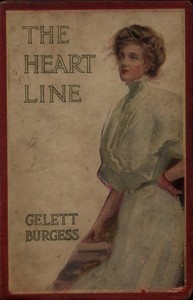
The rain kept drumming on the sill while I re-read the strained letters in Dividing Waters, that sense of two people talking past each other in the same small room. Afterwards, I sat quiet. It drifted me, half-accidentally, toward another story about closeness and distance—The Heart Line: A Drama of San Francisco — Background and Themes—and I lingered there too, the same ache, different fog.
There are no reviews for this eBook.
There are no comments for this eBook.
Reader reflection
Take a moment to reflect on this book
Create a short personal record of your experience with this book.
Your progress
0
/
10
2
How much did you enjoy the reading experience?
3
Would you encourage someone else to read it?
4
How much effort did this book require?
5
How did the pace of the book feel?
6
Could you see yourself revisiting this book?
7
Would this book work well in a reading group?
8
Did you relate to its people, ideas, or situations?
9
What did this book teach you most?
10