1

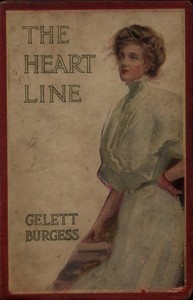
The Heart Line: A Drama of San Francisco — Background and Themes
(0 User reviews)
72
Project Gutenberg
2015
Not confirmed
San Francisco (Calif.) -- Fiction; Bohemianism -- Fiction; Fortune-tellers -- Fiction
Readers of public-domain and historical texts
Project Gutenberg digital edition
en
Edition facts
Words
161,533
Reading time
703 min
Text sections
19
The catalog record for The Heart Line: A Drama of San Francisco — Background and Themes provides practical reading context through 161,533 words, 11 hr 43 min estimated reading time, and 19 detected text sections.
The text analysis averages about 12.5 words per sentence, while the detected sections provide another way to judge how the source is divided.
Project Gutenberg metadata also associates the work with “San Francisco (Calif.) -- Fiction,” connecting these edition facts with the source record’s subject description.
Source:
Project Gutenberg record #48984
Gelett Burgess's 1907 novel uses a palmist protagonist and San Francisco's bohemian scene to explore fate, desire, and social performance. The prose blends ironic observation with vivid period detail, from squalid tenements to glittering Techau Tavern.
Editorial Edition Score
4.8/5
★★★★★
★★★★★
Calculated from edition completeness, EPUB availability, text structure and catalogue metadata. Not a user rating.
How this score is calculated
- Description quality20 pts
- Title & short description10 pts
- Source metadata20 pts
- Text length15 pts
- Chapters / structure15 pts
- EPUB file integrity20 pts
Total of 100 points, scaled to a 2.5-5.0 range. Editions with an empty description or a missing EPUB file are not scored.
Edition quality
Read the Text
streak of light admitted by a crack in the panel of the door, and rose to see if he could see through it. At the height of his eye it was too narrow to show him anything in the room, but farther up it widened. He pulled down several account-books from the shelves and piled them upon the box. Standing tiptoe upon these, he found that he could get a clear though limited view of the bay-window.
Here a little girl sat quietly, vividly illuminated in the sunshine. She was scarcely more than four years of age and was dressed in a navy blue silk frock whose collar and pockets were elaborately trimmed with ruffles of white satin and bows of ribbon. She wore a white muslin cap decorated with ribbon, lace and rosebuds; white stockings showed above her high buttoned boots; her hair was a truant mass of fine-spun threads, curling, tawny yellow. Her face was round, her eyes extraordinarily wide apart under level, straight brows. What caught and held his attention, however, as he watched, was a velvety mole upon her left cheek, so placed as to be a piquant ornament rather than a disfigurement to her countenance. She sat listening, tightly holding a woolly lamb in her plump little arms. The two women were out of his range of vision.
The steady low sound of voices came to him, but he made no attempt to listen—his attention was riveted upon the figure of the little girl who was sharply focused, as in an opera-glass, directly in his field of view. Occasionally, as she was spoken to, she smiled, and her cheek dimpled; but she seemed to be looking at him, through the door. She scarcely moved her eyes, but kept them fixed in his direction, as if conscious of an invisible presence.
The women talked on. Occasionally Madam Grant’s voice rose to a more excited note, and a few words came to him, betraying to his knowledge of her that her mood had been interrupted by her customary vagaries. At such times the little girl would withdraw her glance to gaze solemnly in Madam Grant’s direction; she showed, however, no signs of alarm. It seemed, indeed, as if the little girl understood, even as he understood, the temporary aberration. Then her eyes would return to his, as if drawn back by his gaze.
So the scene lasted for a half-hour, during which time he caught no glimpse of the other visitor. At last a hand was outstretched and the little girl rose. Francis stepped down for a moment to rest himself from his strained position; when he had put his eye again to the crack she had passed out of his line of sight.
He was to catch a few words more, however, before the callers left.
"I’m glad you came to-day," Madam Grant said. "You were just in time."
"Why, are you going to leave here?"
"Yes, I’m going away."
"Felicia," the visitor said earnestly, "why won’t you let us take care of you? This is no place for you—it is dreadful to think of you here! Now, while you are able to talk to me, do let me do something for you!"
"No; it’s too late. Besides, there is Francis," said Madam Grant.
"Let Francis come, too. This is a terrible place for a child. Look at this room—look at the filth and disorder!"
Madam Grant’s voice rose again. "Take her away, take her away!" she cried raucously. "She’ll go to New York, she’ll go to Toledo—I don’t want her in Toledo meddling! She’ll be in New Orleans the first thing you know; there she goes now! Take her away, take her away!"
The door closed. Francis heard the key turn in the lock. Then there was the jarring sound of a fall and finally all was still. He waited for some moments, then he called out:
"Mamsy, let me out! let me out!"
"Mamsy!" he called out again. "Where are you? Come and let me out, _please_ let me out!"
There was still no answer to his pleadings. In terror now, he pounded the panels, shook the handle of the door, and then began to cry. Climbing upon the box again, he caught sight of Madam Grant’s skirt. She was lying prone upon the floor. As he wept on, she moved and began to crawl slowly toward him. At last her hand groped to the door and the key was turned in the lock. He burst out into her arms.
The novel opens not with its hero, but with a slum: the Siskiyou House, a tenement so decayed that its carpet is 'a matted carpet of dirt and rubbish inches deep.' Into this squalor, Burgess places a single incongruous object—'an oak bookcase, its shelves well filled with volumes'—belonging to Madam Grant, a fortune-teller. This juxtaposition of intellectual aspiration and physical degradation sets the tone for a story that constantly measures inner lives against outward circumstances.
Burgess writes in a style that is both detached and tactile, cataloguing grime, grease, and 'harlequin pattern of dun and greasy tones' with the same precision he later applies to fashionable restaurants. His narrator observes characters as specimens, noting how Frankie Dean's eyes are 'black, snapping' and 'cold-blooded as a snake,' while the girl from Santa Rosa is 'slight and dewy, vivid with sudden color.' The palmist Granthope reads hands; the author reads rooms.
The Palmist as Social Barometer
Granthope, the palmist, moves through San Francisco society as both participant and observer. Burgess uses his profession to create a narrative lens that is inherently judgmental yet noncommittal. When Granthope enters Techau Tavern, he immediately scans the room for 'clients whom he had served'—a reflex that turns every social encounter into a potential reading. The author's descriptions of the tavern's 'noisy gaiety,' 'garish lights and mirrors,' and 'insistent orchestra' mirror the palmist's own method: surface details are clues to deeper patterns.
Burgess's dialogue reveals character through rhythm and interruption. Keith and Fernigan perform 'like a vaudeville team,' while Sully Maxwell speaks 'about once every fifteen minutes, and then usually to the waiter.' Frankie Dean is 'voluble, sarcastic,' lying in wait to 'make sport of him.' The girl from Santa Rosa 'said nothing, but, from'—the sentence breaks off, her silence as telling as the others' chatter. These verbal tics are Burgess's equivalent of palm lines: each character's speech pattern is a fate line written in the air.
Rooms as Moral Landscapes
Burgess devotes extraordinary attention to interiors, using them as indexes of character. The Siskiyou House is described with forensic detail: 'a broken chair or two leaned crazily against the wall,' windows 'looked point-blank upon the damp wall of an abutting wooden house.' The accumulation of 'scraps of paper, cloth and tangled strings' suggests lives reduced to debris. Yet Madam Grant's bookcase stands 'glossily, splendidly new, incongruously set amidst the disorder'—a detail that hints at a mind still reaching beyond its surroundings.
At the opposite extreme, Techau Tavern is all 'confusion of excited talk, the clatter of dishes, the riotous music.' Where the tenement is stagnant, the tavern is frenetic. Granthope finds this atmosphere 'stimulating,' dissolving his 'mood immediately.' Burgess implies that environment is not backdrop but agent: the squalid room breeds desperation, the glittering room breeds performance. The palmist's art, which claims to read character independent of setting, is constantly undercut by the power of place.
The Grammar of Social Performance
Burgess's sentences often mimic the social rituals they describe. When Granthope joins Mrs. Page's table, the narration shifts into a catalogue of gestures and signals: 'She looked at him with all kinds of messages in her eyes, as if she were quite sure that he could interpret them.' The conditional 'as if' is crucial—Burgess never confirms that the messages are real. Social life is a series of plausible fictions, and the palmist is both practitioner and dupe.
The author's use of lists—'Keith and Fernigan were there, also, like a vaudeville team, rollicking with fun, playing into each other's hands, charging the company with abandon'—creates a breathless, accumulative rhythm that mirrors the group's 'first effervescence of its enthusiasm.' Yet within this gaiety, Burgess plants discordant notes: Frankie Dean is 'cold-blooded as a snake'; Sully Maxwell is tolerated only because he is 'a good spender.' The novel's social grammar is one of inclusion and exclusion, with the palmist as the one who can read the rules but not escape them.
The Limits of Intuition
Burgess repeatedly tests the palmist's claims against the messiness of real interaction. Granthope, 'tired with his day's work, in conflict with himself, morbidly self-conscious,' is hardly a master of his own fate. His professional skill—reading hands—seems powerless to resolve his own 'mood' or to predict the consequences of joining a particular social circle. The novel's prologue, set in 1877, establishes a world where fortune-telling is associated with squalor and criminality; by the time Granthope appears, the practice has been gentrified but remains suspect.
The excerpts show Burgess using the palmist's vocabulary as a source of metaphor: characters are 'impellent,' 'gorgeous animal,' 'temptingly piquant.' But the author never lets the metaphor become the message. When Granthope's mood 'disappeared like a shattered soap-bubble,' the simile is deliberately fragile. Burgess seems to suggest that intuition, like palmistry, is a useful fiction—a way of imposing order on chaos, but not a key to truth. The novel's drama lies in the gap between what the palmist claims to see and what actually unfolds.
Readers should attend to Burgess's use of the present participle—'testing,' 'noticing,' 'beckoned'—which gives even static scenes a sense of ongoing action. The novel's San Francisco is a city of surfaces, and the palmist is its ideal inhabitant: someone who reads surfaces for a living. Whether the heart line reveals love or merely the pressure of a hand remains an open question, one that Burgess leaves for the reader to decide.
I keep circling back to that palmist’s hollow confidence, the way he reads lines as if they were promises. It reminds me of an afternoon spent with Sister Gertrude: A Tale of the West Riding — Background and Themes, where quiet Yorkshire piety hides its own performative pulls. Both books hum with the same ache—how we script our own fates, then flinch at the telling.
There are no reviews for this eBook.
There are no comments for this eBook.
Reader reflection
How did this book work for you?
Your answers remain private and are stored only in this browser.
Your progress
0
/
10
2
How did the book work for you overall?
3
Would you recommend this book to another reader?
4
What was the reading difficulty like?
5
Would you start a conversation about this book?
6
How understandable was the text?
7
What did you appreciate most?
8
How useful did the reading feel?
9
Which lesson or insight stayed with you?
10