1


The Castle of Ehrenstein Its Lords Spiritual and Temporal; Its Inhabitants Earthly and Unearthly — Text and Context
(0 User reviews)
371
Project Gutenberg
2015
Not confirmed
Germany -- Fiction; Gothic fiction
Readers of public-domain and historical texts
Project Gutenberg digital edition
en
Edition facts
Words
160,739
Reading time
699 min
Text sections
16
The catalog record for The Castle of Ehrenstein Its Lords Spiritual and Temporal; Its Inhabitants Earthly and Unearthly — Text and Context provides practical reading context through 160,739 words, 11 hr 39 min estimated reading time, and 16 detected text sections.
The text analysis averages about 26.8 words per sentence, while the detected sections provide another way to judge how the source is divided.
Project Gutenberg metadata also associates the work with “Germany -- Fiction,” connecting these edition facts with the source record’s subject description.
Source:
Project Gutenberg record #50325
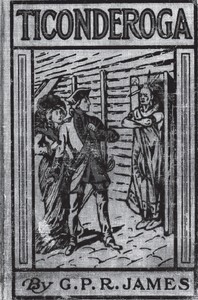
G. P. R. James's 1847 Gothic novel opens with a tempestuous night at Ehrenstein castle, where a young man's stealthy movements and the Count's harsh judgment of his daughter's marriage set the stage for a tale of suspense, with supernatural elements hinted at in the subtitle but not yet manifest in the excerpts.
Editorial Edition Score
4.8/5
★★★★★
★★★★★
Calculated from edition completeness, EPUB availability, text structure and catalogue metadata. Not a user rating.
How this score is calculated
- Description quality20 pts
- Title & short description10 pts
- Source metadata20 pts
- Text length15 pts
- Chapters / structure15 pts
- EPUB file integrity20 pts
Total of 100 points, scaled to a 2.5-5.0 range. Editions with an empty description or a missing EPUB file are not scored.
Edition quality
Read the Text
It was an awfully dark and tempestuous night; the wind howled in fury through the trees, and round the towers; the large drops of rain dashed against the casements, the small lozenges of glass rattled and clattered in their leaden frames, and the thick boards of the oaken floor heaved and shivered under the force of the tempest. From time to time a keen blue streak of lightning crossed the descending deluge, and for an instant the great black masses of the forest, and the high and broken rocks around, appeared like spectres of a gone-by world, and sank into Egyptian darkness again, almost as soon as seen; and then the roar of the thunder was added to the scream of the blast, seeming to shake the whole building to its foundation.
In the midst of this storm, and towards one o'clock in the morning, a young man, of about one-and-twenty years of age, took his way silently, and with a stealthy step, through the large old halls and long passages of the castle of Ehrenstein. His dress was that of one moving in the higher ranks of society, but poor for his class; and though the times were unusually peaceful, he wore a heavy sword by his side, and a poniard hanging by a ring from his girdle. Gracefully yet powerfully formed, his frame afforded the promise of great future strength, and his face, frank and handsome without being strictly beautiful, owed perhaps more to the expression than to the features. He carried a small brazen lamp in his hand, and seemed bound upon some grave and important errand, for his countenance was serious and thoughtful, his eyes generally bent down, and his step quick, although, as we have said, light and cautious.
The room that he quitted was high up in the building, and, descending by a narrow and steep staircase, formed of large square blocks of oak, with nothing but a rope to steady the steps, he entered a long wide corridor below, flanked on one side by tall windows like those of a church, and on the other by numerous small doors. The darkness was so profound that, at first, the rays of the lamp only served to dissipate the obscurity immediately around it, while the rest of the corridor beyond looked like the mouth of a yawning interminable vault, filled with gloom and shadows. The next moment, however, as he advanced, a blazing sheet of electric flame glanced over the windows, displaying their long line upon the right, and the whole interior of the corridor. Here and there an old suit of armour caught the light, and the grotesque figures on two large antique stone benches seemed to grin and gibber in the flame. Still the young man walked on, pausing only for one moment at a door on the left, and looking up at it with a smile somewhat melancholy.
At the end of the corridor, on the left, he came to a larger staircase than that which he had before descended, and going cautiously down, and through some other passages, he found himself in a small vestibule, with two doors on either hand. They were of various dimensions, but all studded with large nails, and secured by thick bands of iron; and turning to the largest of the four, he quietly lifted the latch, and pushed it open. The wind, as he did so, had nearly blown out the lamp, and in suddenly shading it with his hand, he let slip the ponderous mass of woodwork, which was blown back against its lintels with a dull clang, which echoed far away through the vaulted passages of the castle.
The novel begins with a classic Gothic storm: wind howls, rain dashes against casements, and lightning reveals the forest and rocks like 'spectres of a gone-by world.' Amid this, a young man, Ferdinand of Altenburg, moves stealthily through the castle, armed with sword and poniard, his expression serious. The setting is richly detailed—a narrow oak staircase, a long corridor with church-like windows and antique armor—but the catalog subject 'Gothic fiction' is only partially supported by these excerpts. The subtitle promises 'inhabitants earthly and unearthly,' yet the text so far shows only earthly conflicts: a father's wrath, a daughter's fear, and a looming trial. The supernatural remains potential rather than present.
Storm and Stealth: The Gothic Opening
The opening chapter employs every Gothic convention: a violent storm, a dark castle, a secretive protagonist. The wind 'howled in fury,' rain dashed against 'lozenges of glass,' and the floor 'heaved and shivered.' The young man, Ferdinand, carries a 'small brazen lamp' and moves with 'stealthy step' through halls and passages. The corridor is flanked by 'tall windows like those of a church' and 'numerous small doors,' evoking a labyrinthine space. The lightning momentarily illuminates 'old suits of armour' and 'grotesque figures' on stone benches. This is a textbook Gothic mise-en-scène, but the catalog also lists 'Germany -- Fiction' and 'Exploration, Survival & Adventure Tales,' which the excerpts do not yet support—there is no exploration or survival adventure here, only interior tension.
Father, Daughter, and the Threat of Execution
The domestic drama centers on Adelaide, the Count's daughter, who has secretly married Ferdinand. The Count threatens: 'you have seen the last of him whom you call husband, for I will grant him not another hour beyond the rise of sun to-morrow.' Adelaide kneels, protests she never dreamt of such a thing, but is ordered to her chamber. The Count secures the door, his eye resting on a portrait of a lady 'very like herself,' and his cheek grows pale. This suggests a backstory—perhaps a parallel tragedy—but the excerpts do not reveal it. The Count's harshness and the mention of 'Count Frederick's trumpets' introduce a legal proceeding: Ferdinand is to be judged. The catalog's 'Gothic fiction' tag fits the tyrannical father and imprisoned daughter, but the 'horror-gothic' secondary topic is not evident; the horror is psychological, not supernatural.
Ferdinand's Vigil and the Arrival of Horsemen
Ferdinand, confined, wishes for 'a good horse, a few words in Adelaide's ear, and a free passage over the drawbridge.' He watches from the battlements as a band of spearmen appears on a distant road, then a 'long line of horsemen, with banners and lances, and glittering arms.' He identifies them as Count Frederick, whom he hopes will be a fair judge. The description of the landscape—hills clothed with wood, patches of meadow, roads cutting over summits—is precise and expansive, more reminiscent of a historical romance than a Gothic thriller. The catalog's 'Exploration, Survival & Adventure Tales' category seems mismatched; the adventure here is legal and romantic, not survivalist. The excerpts end before the trial, leaving the outcome unknown.
Readers should note that the novel's subtitle promises 'unearthly' inhabitants, but the excerpts contain no ghosts, spirits, or supernatural events. The Gothic atmosphere is strong, but the plot so far is a domestic drama of forbidden marriage and paternal tyranny. The catalog's 'Exploration, Survival & Adventure Tales' classification may reflect later developments not sampled here. Approach the text as a historical Gothic romance with legal intrigue, and watch for whether the 'unearthly' element ever materializes.
There’s something about that storm-torn night at Ehrenstein, the way secrecy presses against stone walls, that reminds me of the quieter unease I felt after finishing The Travelling Thirds — Themes and Context. Not ghosts, exactly, but the weight of what people carry unseen. Both left me sitting with a feeling I couldn’t quite name, long after the last page. The Travelling Thirds — Themes and Context lingered like that too.
There are no reviews for this eBook.
There are no comments for this eBook.
Reader reflection
Before you leave, reflect on the book
Use these questions to collect your thoughts before moving on.
Your progress
0
/
10
2
Did this book hold your interest?
3
Would you recommend this book to another reader?
4
What was the reading difficulty like?
5
How understandable was the text?
6
How would you describe its reading pace?
7
Did you gain anything practical from the text?
8
Did any part of the book feel personally relevant?
9
What did this book teach you most?
10