1

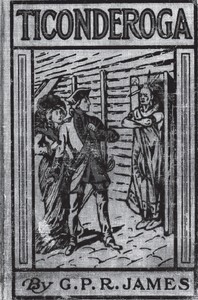
Ticonderoga: A Story of Early Frontier Life in the Mohawk Valley — Key Ideas to Explore
(0 User reviews)
590
Project Gutenberg
2016
Not confirmed
United States -- History -- French and Indian War, 1754-1763 -- Fiction; Ticonderoga (N.Y.) -- History -- French and Indian War, 1754-1763 -- Fiction
Readers of public-domain and historical texts
Project Gutenberg digital edition
en
Edition facts
Words
132,519
Reading time
577 min
Text sections
14
For Ticonderoga: A Story of Early Frontier Life in the Mohawk Valley — Key Ideas to Explore, the stored edition analysis reports 132,519 words, 9 hr 37 min estimated reading time, and 14 detected text sections.
The text analysis averages about 23.3 words per sentence, while the detected sections provide another way to judge how the source is divided.
Project Gutenberg metadata also associates the work with “United States -- History -- French and Indian War, 1754-1763 -- Fiction,” connecting these edition facts with the source record’s subject description.
Source:
Project Gutenberg record #50853
G. P. R. James's 1858 frontier novel opens with a detailed description of a new-built house and a stranger's arrival, shifting between leisurely domestic scenes and rapid scout missions. The narrative voice blends formal 19th-century prose with colloquial dialogue, notably in the character Woodchuck, whose speech patterns and cautious philosophy drive the action.
Editorial Edition Score
4.8/5
★★★★★
★★★★★
Calculated from edition completeness, EPUB availability, text structure and catalogue metadata. Not a user rating.
How this score is calculated
- Description quality20 pts
- Title & short description10 pts
- Source metadata20 pts
- Text length15 pts
- Chapters / structure15 pts
- EPUB file integrity20 pts
Total of 100 points, scaled to a 2.5-5.0 range. Editions with an empty description or a missing EPUB file are not scored.
Edition quality
Read the Text
There was a long table in the midst, and four wooden chairs arranged round one end, over which a snowy tablecloth was spread. The rest of the table was bare, but there were a number of other seats and two or three benches in the room, while at equal distances on either side, touching the walls, lay a number of bear and buffalo skins, as if spread out for beds.
The eye of the stranger glanced over them as he entered, but his host replied to his thoughts, with a smile: "We will lodge you somewhat better than that, sir. We have, just now, more than one room vacant; but you must know there is no such thing as privacy in this land, and when we have any invasion of our Indian friends those skins make them supremely happy. I often smile to think how a redman would feel in Holland sheets. I tried it once, but it did not succeed. He pulled the blankets off the bed and slept upon the floor."
Seated at the table, the conversation turned to many subjects, general, of course, but yet personally interesting to both the elder members of the party.
More than an hour was beguiled at the table--a longer period than ordinary--and then the bright purple hues which spread over the eastern wall of the room, opposite the windows, told that the autumnal sun had reached the horizon. The master of the house rose to lead the way into another room again, but ere he moved from the table another figure was added to the group around it, though the foot was so noiseless that no one heard its entrance into the chamber.
The person who had joined the little party was a man of middle age, of a tall, commanding figure, upright and dignified carriage, and fine, but somewhat strongly marked features. The expression of his countenance was grave and noble, but yet there was a certain strangeness in it--a touch of wildness, perhaps I might call it--very difficult to define. It was not in the eyes, for they were good, calm, and steadfast, gazing straight at any object of contemplation, and fixed full upon the face of anyone he addressed. It was not in the lips, for, except when speaking, they were firm and motionless. Perhaps it was in the eyebrow, which, thick and strongly marked, was occasionally suddenly raised or depressed, without apparent cause.
His dress was very strange. He was evidently of European blood, although his skin was embrowned by much exposure to sun and weather. But yet he wore not altogether the European costume, the garb of the American backwoodsman, or that of the Indian. There was a mixture of all, which gave him a wild and fantastic appearance. His coat was evidently English, and had straps of gold lace upon the shoulders; his knee breeches and high riding boots would have looked English, also, had not the latter been destitute of soles, properly so called; for they were made somewhat like a stocking, and the part beneath the foot was of the same leather as the rest. Over his shoulder was a belt of rattlesnake skin, and round his waist a sort of girdle, formed from the claws of the bear, from which depended a string of wampum, while two or three knives and a small tomahawk appeared on either side. No other weapons had he whatever. But under his left arm hung a common powder flask, made of cow's horn, and beside it, a sort of wallet, such as trappers commonly used for carrying their little store of Indian corn. A round fur cap of bearskin, without any ornament whatever, completed his habiliments.
It would seem that in that house he was well known, for its master instantly held forth his hand to him, and the young people sprang forward and greeted him warmly. A full minute elapsed before he spoke, but nobody uttered a word till he did so, all seeming to understand his habits.
"Well, Mr. Prevost," he said, at length, "I have been a stranger to your wigwam for some time. How art thou, Walter? Not a man yet, in spite of all thou canst do? Edith, my sweet lady, time deals differently with thee from thy brother. He makes thee a woman against thy will." Then turning suddenly to the stranger, he said: "Sir, I am glad to see you. Were you ever at Kielmansegge?"
"Once," replied the stranger, laconically.
The novel begins not with action but with the precise description of a house: its bark-covered veranda, its construction aided by a carpenter from nine miles off, and the owner's satisfaction in pleasing those he loves. This unhurried opening establishes a domestic world where custom admits every visitor freely, yet the narrator immediately undercuts this peace by noting that such openness coexists with daily lessons in precaution. The stranger who knocks with his whip rather than entering unbidden signals a shift in tone—his noble countenance and grave courtesy introduce a note of formality that will contrast sharply with later scenes.
James's prose moves between measured observation and sudden bursts of colloquial energy. The early chapters dwell on interior states and social niceties, but the pace quickens when characters like Woodchuck appear, speaking in terse, proverbial phrases and organizing rescue missions with what the narrator calls 'natural military skill.' This alternation between reflective domesticity and urgent frontier action defines the novel's rhythm.
The Architecture of Unease
The opening chapter lingers on the house's newness—'the bark on the trunks which supported the little veranda had not yet mouldered away'—and on the owner's deliberate choices in its construction. This attention to physical detail does more than set a scene; it establishes a world where surfaces are carefully managed. The narrator observes that the inhabitants 'took none' of the precautions taught by daily experience, holding themselves ready for open assault but neglecting safeguards against insidious attack. This paradox—visible newness masking invisible vulnerability—reappears in the stranger's arrival: he is handsome, courteous, and grave, but his errand is unknown. The house, like the frontier society it represents, is a structure built for openness yet shadowed by threat.
Later, the narrative returns to this architectural motif when Woodchuck plans his infiltration of enemy territory. He speaks of 'slipping in the more easily' by spreading false information, a verbal counterpart to the house's deceptive solidity. The novel repeatedly uses built spaces—cottages, forts, hunting grounds—as stages where the tension between visible order and hidden danger plays out.
Woodchuck's Voice and the Rhythm of Action
The character Woodchuck injects a distinct colloquial energy into the novel's formal prose. His speech is dense with proverbs and homely comparisons: 'I'm as careful as an old raccoon, who always looks nine ways before he puts his nose out of his hole.' This folksy caution contrasts with the narrator's more elaborate syntax, creating a shift in pace whenever Woodchuck takes charge. In the excerpted scene, he dismisses a covetous scout with blunt contempt—'There, go along and knit petticoats'—and organizes the rescue with terse commands. The narrator notes that his methods display 'a sort of natural military skill,' but the effect on the reader is one of acceleration: dialogue shortens, actions become decisive, and the leisurely descriptions of the opening give way to rapid planning.
This alternation between voices—the narrator's measured reflections and Woodchuck's clipped directives—structures the novel's pacing. Domestic scenes tend toward longer paragraphs and interior focus; action sequences tighten into exchanges of few words. The reader learns to associate Woodchuck's appearance with a quickening of tempo.
The Narrator's Intrusive Observations
James's narrator frequently steps back from the story to comment on the society it depicts. In the first chapter, he remarks on 'a strange state of society' where men neglect precautions despite daily experience. This analytical voice recurs throughout the excerpts, framing events within broader reflections on human nature. When Woodchuck rebukes the mercenary scout, the narrator adds that 'each probably had his selfishness of some kind,' a generalization that distances the reader from the immediate drama while deepening the portrait of frontier individualism.
These intrusions vary in length and effect. Some are brief asides—'always think of everything you can; and if you can't do that, think of as much as possible'—that echo Woodchuck's own maxims. Others, like the observation that 'life was so often periled with them, dangers and difficulties so often encountered, that existence without activity was rather a burden,' serve to justify the characters' willingness to risk themselves. The narrator's voice thus becomes a second layer of commentary, shaping how the reader interprets the action without dictating its outcome.
Readers attentive to narrative voice will find that James uses the contrast between formal description and colloquial dialogue to signal shifts in tension. The novel rewards those who note how the narrator's generalizations about frontier society frame the characters' choices. Because the excerpts cover only the opening and a later rescue sequence, the full arc of the story—including the fate of Walter Prevost and the resolution of the French and Indian War setting—remains unknown. Approach the text as a study in pacing: where the prose slows, look for hidden significance; where it quickens, expect decisive action.
Reading about Woodchuck's wary way of moving through the Mohawk woods reminded me of my grandfather's quiet caution whenever we walked the old logging trails. I felt that same patient, watchful stillness in John Holdsworth, Chief Mate — Edition Insights, where every careful step aboard ship seemed to carry the weight of a lifetime’s weather. Some books simply breathe with that unhurried, knowing cadence.
There are no reviews for this eBook.
There are no comments for this eBook.
Reader reflection
Your personal reading reflection
Build a private reading journal entry for this title.
Your progress
0
/
10
2
How much did you enjoy the reading experience?
3
How likely are you to recommend this book?
4
How easy was the book to follow?
5
Did the book offer a fresh perspective?
6
Did you gain anything practical from the text?
7
How closely did the book connect with your experience?
8
How did the reading compare with what you expected?
9
What changed or sharpened your thinking?
10