1


The Narrative of Arthur Gordon Pym of Nantucket Comprising the details of a mutiny and atrocious butchery on board the American brig Grampus, on her way to the South Seas, in — Reading Notes
(0 User reviews)
330
Project Gutenberg
2016
Not confirmed
Sea stories; Young men -- Fiction; Whaling ships -- Fiction; Stowaways -- Fiction
Readers of public-domain and historical texts
Project Gutenberg digital edition
en
Edition facts
Words
74,947
Reading time
326 min
Text sections
8
The Narrative of Arthur Gordon Pym of Nantucket Comprising the details of a mutiny and atrocious butchery on board the American brig Grampus, on her way to the South Seas, in — Reading Notes can be approached with a clearer sense of reading commitment from its source measurements: 74,947 words, 5 hr 26 min estimated reading time, and 8 detected text sections.
The text analysis averages about 28.1 words per sentence, while the detected sections provide another way to judge how the source is divided.
Project Gutenberg metadata also associates the work with “Sea stories,” connecting these edition facts with the source record’s subject description.
Source:
Project Gutenberg record #51060
Poe's only novel follows Arthur Gordon Pym through mutiny, shipwreck, and cannibalism in the South Seas. The narrative is framed by a preface claiming truth, yet the text's meticulous detail and psychological intensity blur fact and fiction, culminating in an enigmatic Antarctic voyage.
Editorial Edition Score
4.7/5
★★★★★
★★★★★
Calculated from edition completeness, EPUB availability, text structure and catalogue metadata. Not a user rating.
How this score is calculated
- Description quality20 pts
- Title & short description10 pts
- Source metadata20 pts
- Text length15 pts
- Chapters / structure15 pts
- EPUB file integrity20 pts
Total of 100 points, scaled to a 2.5-5.0 range. Editions with an empty description or a missing EPUB file are not scored.
Edition quality
Read the Text
In no affairs of mere prejudice, pro or con, do we deduce inferences with entire certainty even from the most simple data. It might be supposed that a catastrophe such as I have just related would have effectually cooled my incipient passion for the sea. On the contrary, I never experienced a more ardent longing for the wild adventures incident to the life of a navigator than within a week after our miraculous deliverance. This short period proved amply long enough to erase from my memory the shadows, and bring out in vivid light all the pleasurably exciting points of colour, all the picturesqueness of the late perilous accident. My conversations with Augustus grew daily more frequent and more intensely full of interest. He had a manner of relating his stories of the ocean (more than one half of which I now suspect to have been sheer fabrications) well adapted to have weight with one of my enthusiastic temperament, and somewhat gloomy, although glowing imagination. It is strange, too, that he most strongly enlisted my feelings in behalf of the life of a seaman, when he depicted his more terrible moments of suffering and despair. For the bright side of the painting I had a limited sympathy. My visions were of shipwreck and famine; of death or captivity among barbarian hordes; of a lifetime dragged out in sorrow and tears, upon some gray and desolate rock, in an ocean unapproachable and unknown. Such visions or desires--for they amounted to desires--are common, I have since been assured, to the whole numerous race of the melancholy among men--at the time of which I speak I regarded them only as prophetic glimpses of a destiny which I felt myself in a measure bound to fulfil. Augustus thoroughly entered into my state of mind. It is probable, indeed, that our intimate communion had resulted in a partial interchange of character.
About eighteen months after the period of the Ariel's disaster, the firm of Lloyd and Vredenburgh (a house connected in some manner with the Messieurs Enderby, I believe, of Liverpool) were engaged in repairing and fitting out the brig Grampus for a whaling voyage. She was an old hulk, and scarcely seaworthy when all was done to her that could be done. I hardly know why she was chosen in preference to other good vessels belonging to the same owners--but so it was. Mr. Barnard was appointed to command her, and Augustus was going with him. While the brig was getting ready, he frequently urged upon me the excellency of the opportunity now offered for indulging my desire of travel. He found me by no means an unwilling listener--yet the matter could not be so easily arranged. My father made no direct opposition; but my mother went into hysterics at the bare mention of the design; and, more than all, my grandfather, from whom I expected much, vowed to cut me off with a shilling if I should ever broach the subject to him again. These difficulties, however, so far from abating my desire, only added fuel to the flame. I determined to go at all hazards; and, having made known my intention to Augustus, we set about arranging a plan by which it might be accomplished. In the meantime I forbore speaking to any of my relations in regard to the voyage, and, as I busied myself ostensibly with my usual studies, it was supposed that I had abandoned the design. I have since frequently examined my conduct on this occasion with sentiments of displeasure as well as of surprise. The intense hypocrisy I made use of for the furtherance of my project--an hypocrisy pervading every word and action of my life for so long a period of time--could only have been rendered tolerable to myself by the wild and burning expectation with which I looked forward to the fulfilment of my long-cherished visions of travel.
Edgar Allan Poe's only completed novel opens with a preface that immediately destabilizes the reader's trust. The narrator, Arthur Gordon Pym, insists his account is true, yet admits he kept no journal and fears his story will be dismissed as 'an impudent and ingenious fiction.' He names Poe himself as an editor who urged publication, creating a layered frame that questions where fact ends and invention begins. The full title—a breathless catalogue of mutiny, butchery, famine, and massacre—promises sensational horror, but the prose that follows is measured, clinical, and obsessed with precise physical and psychological detail.
The Weight of a Single Splinter
The lottery scene in the excerpt is a masterclass in sustained dread. Pym describes his task of preparing four small splinters of wood, one of which will condemn its drawer to be killed and eaten. His fingers refuse to cooperate; his knees knock together. The passage dwells not on the act itself but on the agonizing delay: he considers absurd schemes—begging, murdering one of the others—anything but proceeding. The language is exact: 'the silent, definite, and stern nature of the business' contrasts with the earlier 'tumultuous dangers of the storm.' Poe builds horror not from gore but from the narrator's paralysis and the mechanical ritual of drawing lots. The reader is forced to inhabit Pym's terror, minute by minute.
A Voice That Insists on Its Own Veracity
Pym's narrative voice is characterized by a relentless appeal to credibility. He anticipates disbelief, citing the 'natural and unavoidable exaggeration' that afflicts all storytellers. He mentions a half-breed Indian as his only corroborating witness—a figure who never appears in the excerpt but is invoked as a guarantee. This self-consciousness pervades the prose: Pym tells us he is reluctant to dwell on the appalling scene, yet he does so with exhaustive precision. The effect is paradoxical: the more he protests his truthfulness, the more the reader suspects artifice. Poe, writing as Pym, creates a narrator who is both victim and manipulator, caught between the need to confess and the desire to persuade.
A World Reduced to Bare Necessities
The setting of the excerpt is stripped to essentials: a hulk, fog, a handful of men, and splinters of wood. There is no landscape, no ship's routine, no dialogue beyond urgent commands. Poe focuses on the physical and mental state of starvation: the 'frailness of the tenure' by which life is held. The men are reduced to calculating probabilities, and Pym's mind races through 'a thousand absurd projects' to avoid his fate. This minimalism heightens the moral stakes. The lot-drawing becomes a microcosm of civilization's collapse: law, friendship, and pity dissolve into a grim arithmetic. Poe does not moralize; he simply records the mechanics of desperation.
Readers approaching The Narrative of Arthur Gordon Pym should attend to the tension between Pym's claims of authenticity and the obviously crafted structure of his tale. The preface, the elaborate title, and the narrator's obsessive self-justification are not mere framing devices—they are central to the novel's unsettling effect. Pay close attention to moments of delay, hesitation, and meticulous description; they often carry more weight than the violent events themselves. Poe's sea story is also a story about storytelling, and about the limits of what can be believed.
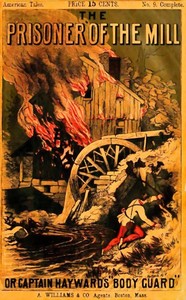
I remember how Poe’s meticulous horrors stayed with me long after I closed the book, that strange, shifting trust in his narrator. It made me think of another old story where loyalty and disguise blur the line between friend and foe, The Prisoner of the Mill; or, Captain Hayward's "Body Guard" — Themes and Context. Both left a similar ache, that unsettling feeling of never quite knowing who was watching.
There are no reviews for this eBook.
There are no comments for this eBook.
Reader reflection
Your personal reading reflection
Build a private reading journal entry for this title.
Your progress
0
/
10
2
Was reading this book enjoyable?
3
How likely are you to recommend this book?
4
How much effort did this book require?
5
How strongly did the book affect you emotionally?
6
Did you relate to its people, ideas, or situations?
7
How useful did the reading feel?
8
How did the pace of the book feel?
9
Which lesson or insight stayed with you?
10