1

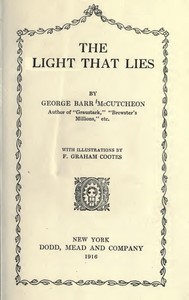
The Light that Lies — Themes and Context
(0 User reviews)
310
Project Gutenberg
2017
Not confirmed
Jury -- Fiction; Trials -- Fiction
Readers of public-domain and historical texts
Project Gutenberg digital edition
en
Edition facts
Words
29,508
Reading time
129 min
Text sections
3
The Light that Lies — Themes and Context can be approached with a clearer sense of reading commitment from its source measurements: 29,508 words, 2 hr 9 min estimated reading time, and 3 detected text sections.
The text analysis averages about 15.2 words per sentence, while the detected sections provide another way to judge how the source is divided.
Project Gutenberg metadata also associates the work with “Jury -- Fiction,” connecting these edition facts with the source record’s subject description.
Source:
Project Gutenberg record #54098
A man who has long evaded jury duty finally serves on a trial where the accused makes a simple, unsworn statement of innocence. The novel traces courtroom tensions, the weight of circumstantial evidence, and the quiet power of a defendant's words.
Editorial Edition Score
4.6/5
★★★★★
★★★★★
Calculated from edition completeness, EPUB availability, text structure and catalogue metadata. Not a user rating.
How this score is calculated
- Description quality20 pts
- Title & short description10 pts
- Source metadata20 pts
- Text length15 pts
- Chapters / structure15 pts
- EPUB file integrity20 pts
Total of 100 points, scaled to a 2.5-5.0 range. Editions with an empty description or a missing EPUB file are not scored.
Edition quality
Read the Text
Sampson had been uncommonly successful in evading jury service. By some hook or crook he always had managed to “get off,” and he had begun to regard his trips down to General or Special Sessions--coming with monotonous regularity about three times a year--as interruptions instead of annoyances. Wise men advised him to serve and get it over with for the time being, but he had been so steadfastly resourceful in confining his jury service to brief and uneventful “appearances,” and to occasional examinations as to his fitness to serve as a juror, that he preferred to trust to his smartness rather than to their wisdom. Others suggested that he get on the “sheriff's jury,” a quaintly distinguished method of serving the commonwealth in that the members perform their duty as citizens in such a luxurious and expensive way that they never appear in the newspapers as “twelve good men and true” but as contributors to somewhat compulsory festivities in which justice is done to the inner man alone. But Sampson, though rich, abhored the sheriff's jury. He preferred to invent excuses rather than to have them thrust upon him.
Having escaped service on half-a-dozen murder trials by shrewd and original responses to important questions by counsel for one side or the other--(it really didn't matter to Sampson which side it was so long as he saw the loophole)--he found himself at last in the awkward position of having exhausted all reasonable excuses, and was obliged to confess one day in court that he had reconsidered his views in regard to capital punishment. This confession resulted, of course, in his name being dropped from the “special panel,” for the jury commissioner did not want any man in that august body who couldn't see his way clear to taking the life of another. He “got off” once on the ground that he was quite certain he could not convict on circumstantial evidence, despite the assurance of learned experts that it is the _best_ evidence of all, and he escaped another time because he did not consider insanity a defence in homicidal cases.
Then they drew him for Special Sessions and eventually for the humiliating lower courts, the result being that his resourcefulness was under a constant and ever increasing strain. Where once he had experienced a rather pleasing interest in “getting off” in important cases, he now found himself very hard put to escape service in the most trifling of criminal trials.
He began to complain bitterly of the injustice to himself, an honest, upright citizen who was obliged to live in a constant state of apprehension. He felt like a hunted animal. He was no sooner safely out of one case when he was called for another.
It was all wrong. Why should he be hounded like this when the city was full of men eager to earn two dollars a day and who would not in the least mind sitting cross-legged and idle all day long in a jury box--snoozing perhaps--in order to do their duty as citizens? Moreover, there were men who actually _needed_ the money, and there were lots of them who were quite as honest as the prisoners on trial or even the witnesses who testified.
He was quite sure that if he ever was sworn in as a juror, his entire sympathy would be with the prisoner at the bar, for he would have a fellow feeling for the unhappy wretch who also was there because he couldn't help it. The jury system was all wrong, claimed Sampson. For example, said he, a man is supposed to be tried by twelve of his peers. That being the case, a ruffian from the lower East Side should be tried by his moral and mental equals and not by his superiors. By the same argument, a brainy, intelligent bank or railway president, an editor, or a college professor, should not be tried by twelve incompetent though perfectly honest window-washers. Any way you looked at it, the jury system was all wrong. The more Sampson thought about it the more fully convinced was he that something ought to be done about it.
The novel opens with Sampson, a man who has made a game of dodging jury service, employing inventive excuses—from opposing capital punishment to doubting circumstantial evidence—to avoid the jury box. His resourcefulness eventually runs dry, and he finds himself seated for a trial that will test his assumptions about guilt, testimony, and justice. The excerpts reveal a courtroom drama built not on fiery speeches but on a defendant's quiet, unadorned claim of innocence, delivered without counsel's prompting. The narrative voice is wry and observant, tracking Sampson's internal shifts as the trial unfolds.
The Evader's Education
Sampson's history of evasion is detailed with a blend of humor and exasperation. He has “got off” by declaring he could not convict on circumstantial evidence, by rejecting insanity as a defense, and by suddenly reconsidering capital punishment. The text notes that he “preferred to invent excuses rather than to have them thrust upon him.” This pattern establishes him as a man who treats jury duty as a personal contest of wits. Yet his eventual service forces him to confront the very evidence he once dismissed. The excerpts show his growing discomfort as the defendant's simple testimony—unadorned by legal maneuvering—begins to carry weight. Sampson's earlier cleverness becomes a foil for the moral weight he now must bear.
The Defendant's Quiet Testimony
The accused man speaks without interruption from his counsel, offering a “simple statement” of innocence. He does not attack his accusers, noting only that they have shown a theft occurred but not that he committed it. His words are measured: “I can only say to you, gentlemen, that I did not take it.” The courtroom falls silent; the crowd holds its breath. The district attorney then declines to cross-examine, a move that astonishes everyone. The narrative focuses on the effect of this restraint: the defendant's calm, his refusal to assign blame, and the absence of a legal battle. The tension lies not in dramatic revelations but in the stillness of a man who has returned to face his accusers without hope of convincing them, only to proclaim his innocence.
Sampson's Unspoken Verdict
Throughout the defendant's testimony, Sampson's gaze is drawn to Alexandra Hildebrand, the defendant's granddaughter. He sees “the light of triumph” in her eyes and “the flush of victory in her cheek.” This observation is crucial: Sampson reads her reaction as a sign that the defendant has cleared himself, yet his own heart sinks. The narrative does not explain why Sampson feels this despair—whether he believes the defendant guilty despite the performance, or whether he senses a deeper injustice. The excerpts leave this ambiguity intact. Sampson's internal response, juxtaposed with the granddaughter's visible relief, creates a tension that the reader must weigh. The trial's outcome remains unknown, but the pattern of Sampson's earlier evasions suggests he may now be trapped by a verdict he cannot escape.
The excerpts offer a concentrated study of a trial's emotional and psychological undercurrents, focusing on a juror's reluctant education and a defendant's stark testimony. Readers should attend to the subtle cues—the granddaughter's expression, the district attorney's silence, Sampson's unspoken dread—that shape the narrative's moral landscape. The novel's title hints at deception, but the text leaves open whether the lie belongs to the accused, the accusers, or the system itself.
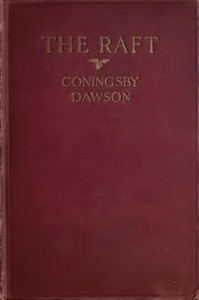
I remember sitting through a long trial once, the stillness of a defendant’s quiet denial lingering long after the gavel. That memory returned as I read The Light that Lies and later found a similar ache in The Raft — Context and Discussion. Both left me holding my breath, unsure what truth really weighed. The Raft felt like that same hush before a verdict.
There are no reviews for this eBook.
There are no comments for this eBook.
Reader reflection
Record your reading impressions
A brief reflection can help important ideas stay with you longer.
Your progress
0
/
10
2
What was your overall reaction to the book?
3
Would you encourage someone else to read it?
4
How demanding did the text feel?
5
Would you read this book again?
6
How understandable was the text?
7
How did the reading compare with what you expected?
8
Would you start a conversation about this book?
9
What did this book teach you most?
10