1

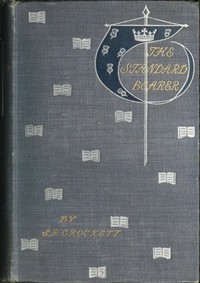
The Standard Bearer — A Reader’s Guide
(0 User reviews)
799
Project Gutenberg
2016
Not confirmed
Covenanters -- Fiction; Scotland -- History -- 17th century -- Fiction
Readers of public-domain and historical texts
Project Gutenberg digital edition
en
Edition facts
Words
79,382
Reading time
346 min
Text sections
8
For The Standard Bearer — A Reader’s Guide, the stored edition analysis reports 79,382 words, 5 hr 46 min estimated reading time, and 8 detected text sections.
The text analysis averages about 17.8 words per sentence, while the detected sections provide another way to judge how the source is divided.
Project Gutenberg metadata also associates the work with “Covenanters -- Fiction,” connecting these edition facts with the source record’s subject description.
Source:
Project Gutenberg record #53164
S. R. Crockett's novel uses a first-person narrator whose Scots-inflected voice and vivid physical descriptions convey the emotional turmoil of a minister caught between personal desire and religious duty during the Covenanting era.
Editorial Edition Score
4.7/5
★★★★★
★★★★★
Calculated from edition completeness, EPUB availability, text structure and catalogue metadata. Not a user rating.
How this score is calculated
- Description quality20 pts
- Title & short description10 pts
- Source metadata20 pts
- Text length15 pts
- Chapters / structure15 pts
- EPUB file integrity20 pts
Total of 100 points, scaled to a 2.5-5.0 range. Editions with an empty description or a missing EPUB file are not scored.
Edition quality
Read the Text
I, Quintin MacClellan, saw on the grassy summit of the Bennan--a thing which, being seen and overpast in an hour, changed all my life, and so in time by the grace of God and the chafe of circumstances made me for good or evil the man I am.
I was a herd laddie at the time, like David, keeping my father’s flocks and kicking up my heels among the collie tykes, with many another shepherd-boy in the wide moorish parishes of Minnigaff, Dalry and the Kells.
Now my father (and his father before him) had been all his life “indweller” in the hill farm of Ardarroch which sits on the purple braeface above the loch of Ken, with a little circumambient yard enclosed by cattle-offices and a dozen red-stemmed fir trees, in which the winds and the birds sing after their kind, winter and summer.
A sweet and grateful spot do I now remember that Ardarroch to be, and in these later days when I have tried so mickle of bliss and teen, and wearied my life out in so many wanderings and strivings, my heart still goes out kindly to the well-beloved place of my bairn-play.
It was the high summer of the fatal year 1685, when I saw the sight which put an end to my childhood. Well do I mind it that year, for amongst others, my father had to go for a while into hiding--not that he was any over-strenuous Covenant man, but solely because he had never in his life refused bite and sup to any neighbour hard pressed, nor yet to any decent chiel who might scarcely be able to give an account of the quarrel he had with the Tyrant’s laws.
So, during his absence, my brothers and I had the work of the farm to attend to. No dawn of day sifting from the east through the greenery of the great sloughing beeches and firs about the door ever found any of the three of us in our beds. For me, I was up and away to the hills--where sometimes in the full lambing time I would spend all night on the heathery fells or among the lirks and hidden dells of the mountain fastnesses.
And oh, but it was pleasant work and I liked it well! The breathing airs; the wide, starry arch I looked up into, when night had drawn her night-cap low down over the girdling blue-black hills; the moon glinting on the breast of Loch Ken; the moor-birds, whaup and snipe, plover and wild duck cheeping and chummering in their nests, while the wood-doves’ moan rose plaintive from every copse and covert--it was a fit birthplace for a young lad’s soul. Though indeed at that time none was farther from guessing it than Quintin MacClellan. For as I went hither and thither I pondered on nothing except the fine hunger the hills gave me, and the glorious draughts of whey and buttermilk my mother would serve out to me on my return, calling me meantime the greatest and silliest of her calves, besides tweaking my ears at the milk-house door if she could catch me ere I set my bare legs twinkling down the loaning.
For the time being I say nothing more of my father, “douce John of Ardarroch,” as all the parish called him, save that he was a moderate man and no high-flier as he would have described himself--yet out of whom his wife (and my good mother) had, by the constant dropping of argument, made a Covenant man, and even a fairly consistent follower of the Hill Folk. Neither will I bide to speak of my brothers Hob and David, for their names and characters will have occasion to appear as I write down my own strange history. Nor yet can I pause to tell of the sweetness and grace of my sister Anna, whose brown eyes held a charm which even my boyish and brotherly insensibility acknowledged and delighted in, being my elder by half-a-dozen years, and growing up amongst us rough louts of the heather like a white rose in the stocky corner of an herb-garden.
For I must tell of myself and what befell me on the Bennan top the twenty-first day of June--high Midsummer Day of the Year Terrible, and of all that it brought to me.
S. R. Crockett opens The Standard Bearer with a foreword that sets an intentionally austere tone, calling the book “iron-grey and chill” and situating it in the aftermath of the “Great Killing.” The narrator, a minister, speaks in a distinctive first-person voice that blends Scots cadences with formal period English. His account of a sudden romantic encounter in a kitchen reveals Crockett’s method: emotional intensity is conveyed through precise physical detail—the girl’s “lily-pale” face, her “long snatching breath,” and tears that “gathered slowly like wells.” The dialogue, sharp with accusation and defiance, drives the scene without authorial commentary.
A Narrator’s Uncertain Hand
The narrator describes himself as having a “weak and uncertain hand” holding the “Banner of Blue,” and the prose reflects this self-doubt. He admits to being “never having been thus tangled up with women’s affairs” before, and his internal hesitation is rendered through short, halting sentences: “Yes! I answered, but perhaps a little uncertainly.” Crockett uses the minister’s own words to expose his vulnerability, as when he says of his love for Jean, “though I had not thought thus of the matter before.” This technique keeps the reader inside a consciousness that is often surprised by its own feelings.
Dialogue as Conflict
Crockett’s dialogue carries the weight of the scene’s moral tension. Alexander-Jonita’s repeated question—“knowing that which you know, why have you done this?”—creates a rhythm of accusation. Jean’s reply, “You do not understand love,” is both a challenge and a plea. The exchange is spare, with few adverbs; the emotional charge comes from what is left unsaid. Jonita’s “sharpness in her words like the pricking of a needle’s point” is the only authorial gloss, and it is a simile rooted in physical sensation, not abstract judgment.
Physical Description and Emotional State
Crockett maps inner feeling onto bodily detail with consistency. Jean’s blush is “deep and burning,” then she turns “pale to the very lips”; her tears are “a little pearl shining wet on each” eyelash. The narrator’s own body responds before his mind catches up: he catches her “ere she had time to fall,” and later feels “thrilling strangely” at her weight in his arms. These descriptions do not merely ornament the scene—they are the primary means by which Crockett signals the characters’ unspoken shifts in feeling, especially the minister’s dawning recognition of love.
Scots Inflections and Period Voice
The dialogue is laced with Scots forms that anchor the story in its Galloway setting. Jonita’s cry, “Oh, lassie, ye will drive me mad,” and Jean’s “Ye ken well” are not heavy dialect but selective markers of region and class. The narrator’s own voice is more formal, yet he occasionally adopts Scots phrasing, as in “I thought not,” said Jonita, curtly.” Crockett uses these linguistic shifts to distinguish characters and to remind the reader that the story is told by a man who moves between the pulpit and the kitchen, between standard English and the vernacular of his congregation.
Readers attentive to Crockett’s craft will notice how the foreword’s promise of a story about “failures mostly” is borne out in the narrator’s own admissions of uncertainty. The excerpts show a writer who trusts his characters’ gestures and speech to carry meaning, rather than explaining their motives. This makes the novel a study in restraint: the emotional climax of the kitchen scene is earned through accumulated physical detail, not through authorial pronouncement.
The rain beat against the window as I finished Crockett’s storm-tossed minister, his voice still heavy in my ears. The Covenanter’s struggle for a settled conscience lingered, and I reached for something quieter on the shelf. That’s how I found the measured, analytical calm of The Dorrington Deed-Box — Reading Companion, a different sort of puzzle entirely, and the afternoon passed without notice.
There are no reviews for this eBook.
There are no comments for this eBook.
Reader reflection
Record your reading impressions
A brief reflection can help important ideas stay with you longer.
Your progress
0
/
10
2
How did the book work for you overall?
3
How likely are you to recommend this book?
4
What was the reading difficulty like?
5
How much did the book move you?
6
How well did it match your expectations?
7
Would you read this book again?
8
How clear did the writing feel?
9
What changed or sharpened your thinking?
10