1

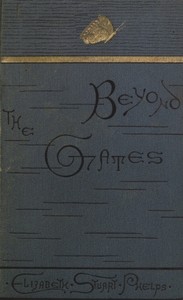
Beyond the Gates — Reading Notes
(0 User reviews)
1675
Project Gutenberg
2017
Not confirmed
Christian fiction; Spiritualism -- Fiction; Future life -- Fiction
Readers of public-domain and historical texts
Project Gutenberg digital edition
en
Edition facts
Words
40,960
Reading time
179 min
Text sections
5
For Beyond the Gates — Reading Notes, the stored edition analysis reports 40,960 words, 2 hr 59 min estimated reading time, and 5 detected text sections.
The text analysis averages about 16.4 words per sentence, while the detected sections provide another way to judge how the source is divided.
Project Gutenberg metadata also associates the work with “Christian fiction,” connecting these edition facts with the source record’s subject description.
Source:
Project Gutenberg record #54060
A first-person narrative of a 40-year-old unmarried woman who, after a brain fever, experiences an afterlife journey. The opening establishes her active, outward-focused life; later excerpts depict a heavenly city with libraries, schools, and purposeful inhabitants, including a guide named Marie Sauvée who studies and aspires to help the most difficult souls.
Editorial Edition Score
4.7/5
★★★★★
★★★★★
Calculated from edition completeness, EPUB availability, text structure and catalogue metadata. Not a user rating.
How this score is calculated
- Description quality20 pts
- Title & short description10 pts
- Source metadata20 pts
- Text length15 pts
- Chapters / structure15 pts
- EPUB file integrity20 pts
Total of 100 points, scaled to a 2.5-5.0 range. Editions with an empty description or a missing EPUB file are not scored.
Edition quality
Read the Text
. He came towards the bed as I spoke. He had his hat in his hand, and he put it up before his eyes.
“Mother!” I repeated louder than before. “_Why have you sent for Tom?_”
But Mother did not answer me. She leaned over me. I saw her looking down. She had the look that she had when my father died; though I was so young when that happened, I had never forgotten my mother’s look; and I had never seen it since, from that day until this hour.
“Mother! am I so sick as _that_? MOTHER!”
“Oh, my dear!” cried Mother. “Oh my dear, my dear!” ...
So after that I understood. I was greatly startled that they should feel me to be dangerously ill; but I was not alarmed.
“It is nonsense,” I said, after I had thought about it a little while. “Dr. Shadow was always a croaker. I have no idea of dying! I have nursed too many sicker people than I am. I don’t _intend_ to die! I am able to sit up now, if I want to. Let me try.”
“I’ll hold you,” said Tom, softly enough. This pleased me. He lifted all the pillows, and held me straight out upon his mighty arms. Tom was a great athlete--took the prizes at the gymnasium. No weaker man could have supported me for fifteen minutes in the strained position by which he found that he could give me comfort and so gratify my whim. Tom held me a long time; I think it must have been an hour; but I began to suffer again, and could not judge of time. I wondered how that big boy got such infinite tenderness into those iron muscles. I felt a great respect for human flesh and bone and blood, and for the power and preciousness of the living human body. It seemed much more real to me, then, than the spirit. It seemed an absurdity that any one should suppose that I was in danger of being done with life. I said:--
“I’m going to live, Tom! Tell Mother I have no idea of dying. I prefer to live.”
Tom nodded; he did not speak; I felt a hot dash of tears on my face, which surprised me; I had not seen Tom cry since he lost the football match when he was eleven years old.
They gave me something more out of the spoon, again, I think, at that moment, and I felt better. I said to Tom:--
“You see!” and bade them send Mother to lie down, and asked Alice to make her beef-tea, and to be sure and make it as we did in the army. I do not remember saying anything more after this. I certainly did not suffer any more. I felt quiet and assured. Nothing farther troubled me. The room became so still that I thought they must all have gone away, and left me with the nurse, and that she, finding me so well, had herself fallen asleep. This rested me--to feel that I was no longer causing them pain--more than anything could have done; and I began to think the best thing I could do would be to take a nap myself.
The narrator introduces herself as a forty-year-old unmarried woman who has been ill with brain fever. She emphasizes that she was not unhappy, but busy and active, having spent her time among the sick and poor. She explicitly states she never wished to die, framing the coming events as unexpected. This careful self-characterization—vigorous, outward-looking, and content—sets a grounded tone for a narrative that will move beyond ordinary experience.
The opening also reveals a family structure: a widowed mother, a married sister, a sister at home, and a brother in college. The narrator’s father was a clergyman, now dead. These details root the story in a specific domestic and social context, making the subsequent supernatural journey more striking by contrast.
A Deliberate, Unhurried Voice
The narrator’s voice is measured and self-aware. She pauses to explain why she includes personal background: “it may not be out of place to say a few words about myself, in order to clarify to the imagination of the reader points which would otherwise involve numerous explanatory digressions.” This meta-commentary signals a narrator who controls her story’s pacing and anticipates reader confusion. She also distinguishes between two types of solitary people—those drawn inward and those who choose outward life—placing herself in the latter category. Such reflective passages invite the reader to consider how the narrator’s earthly temperament shapes her perception of the afterlife.
The Afterlife as a City of Learning
When the narrator reaches the heavenly city, she is struck by its material and intellectual features: “the width and shining cleanliness of the streets, the beauty and glittering material of the houses, the frequent presence of libraries, museums, public gardens.” The emphasis on institutions of learning—colleges, seminaries, schools of art, music, and science—suggests that this afterlife values continuous education. Her guide, Marie Sauvée, is a “primary scholar” given a holiday to escort her. Marie speaks of “book knowledge and thought knowledge and soul knowledge,” and confesses she is “uncommonly ignorant.” This framing presents heaven not as a static reward but as a place of ongoing growth and aspiration.
Faces Transformed: Repose Without Passivity
A key observation is the change in human expression. The narrator notes that on earth, crowds show “the preponderant look of unrest and dissatisfaction,” but in this new community faces indicate “great intentness of purpose” combined with a “repose that it was impossible to call by any other name than divine.” She describes the inhabitants as “busy without hurry, efficacious without waste,” and lists paired qualities: ambition without unscrupulousness, power without tyranny, success without vanity. This careful balancing suggests a society where drive and peace coexist, challenging any assumption that the afterlife means idleness or mere rest.
Marie Sauvée’s Ambition and the Unseen Work
Marie Sauvée, though humble about her ignorance, reveals a striking ambition: “I have become ambitious in Heaven. I shall never be content till I am fit to be sent to the worst woman that can be found—no matter which side of death.” She wants to help someone “that nobody else will touch.” This aspiration points to a belief that heavenly service may extend back to the living world. The narrator does not elaborate on how this works, leaving the reader to wonder about the mechanics of such missions. Marie’s statement also echoes the narrator’s own earthly work among “the sick, the miserable, and the poor,” suggesting a continuity of purpose across the boundary of death.
The excerpts offer a coherent vision of an afterlife that is active, educational, and socially engaged. Readers should pay attention to how the narrator’s earthly character—practical, compassionate, and self-deprecating—colors her descriptions of heaven. The presence of Marie Sauvée, a guide who is still learning, hints that knowledge in this world is progressive. The narrative does not resolve how the narrator arrived or what her final role will be; instead, it invites the reader to observe a process of discovery alongside a protagonist who remains, even in paradise, a careful observer.
Reading about Marie Sauvée’s quiet dedication to the hardest souls reminded me of old ambitions, the way one plan quietly replaces another. It brought to mind a different kind of earnest striving, the courtly maneuvering and hopeful pageantry found in Darnley; or, The Field of the Cloth of Gold — Story, Setting & Ideas. Both feel like studies in purposeful waiting.
There are no reviews for this eBook.
There are no comments for this eBook.
Reader reflection
Record your reading impressions
A brief reflection can help important ideas stay with you longer.
Your progress
0
/
10
2
What was your overall reaction to the book?
3
How likely are you to recommend this book?
4
How demanding did the text feel?
5
Did any part of the book stay with you emotionally?
6
How did the pace of the book feel?
7
How distinctive were its ideas or approach?
8
Which element worked best for you?
9
Which lesson or insight stayed with you?
10