1

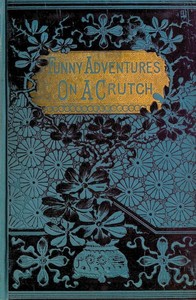
John Smith's Funny Adventures on a Crutch Or The Remarkable Peregrinations of a One-legged Soldier after the War — Inside the Classic
(0 User reviews)
2449
Project Gutenberg
2015
Not confirmed
United States -- History -- Civil War, 1861-1865 -- Veterans -- Fiction; Disabled veterans -- United States -- Fiction
Readers of public-domain and historical texts
Project Gutenberg digital edition
en
Edition facts
Words
94,392
Reading time
411 min
Text sections
51
The source record for John Smith's Funny Adventures on a Crutch Or The Remarkable Peregrinations of a One-legged Soldier after the War — Inside the Classic measures this digital text at 94,392 words, 6 hr 51 min estimated reading time, and 51 detected text sections.
The text analysis averages about 19.5 words per sentence, while the detected sections provide another way to judge how the source is divided.
Project Gutenberg metadata also associates the work with “United States -- History -- Civil War, 1861-1865 -- Veterans -- Fiction,” connecting these edition facts with the source record’s subject description.
Source:
Project Gutenberg record #49961
A one-legged Civil War veteran named John Smith travels across post-war America, encountering humorous situations and theatrical characters, narrated with a self-deprecating, digressive style that blends picaresque adventure with sharp social observation.
Editorial Edition Score
4.9/5
★★★★★
★★★★★
Calculated from edition completeness, EPUB availability, text structure and catalogue metadata. Not a user rating.
How this score is calculated
- Description quality20 pts
- Title & short description10 pts
- Source metadata20 pts
- Text length15 pts
- Chapters / structure15 pts
- EPUB file integrity20 pts
Total of 100 points, scaled to a 2.5-5.0 range. Editions with an empty description or a missing EPUB file are not scored.
Edition quality
Read the Text
CHAPTER I. THE WAY IT HAPPENED.
CHAPTER II. JOHN’S ADVENTURE WITH A CRAZY MAN.
CHAPTER III. PROPOSES TO LEAP FROM A THIRD-STORY WINDOW.
CHAPTER IV. LOCKED UP
CHAPTER V. ACCOMMODATED WITH A “ROOM LOWER DOWN.”
CHAPTER VI. THE WAY SMITH GETS BORED.—AN EPISODE.
CHAPTER VII. JOHN SMITH’S FRIEND.
CHAPTER VIII. JOHN THOUGHT HE WOULD LIKE TO TRAVEL.
CHAPTER IX. SEA-SICK.—UGH!
CHAPTER X. THE “HUB.”
CHAPTER XI. NARROW ESCAPE IN A ROW AT BALTIMORE.
CHAPTER XII. HOW SMITH TRAVELED A-FOOT—AND MORE.
CHAPTER XIII. ROMANCE IN JOHN SMITH’S “REAL LIFE.”
CHAPTER XIV. THE HUDSON.
CHAPTER XV. JOHN AT SARATOGA.
CHAPTER XVI. THE SAIL-BOAT.
CHAPTER XVII. NIAGARA FALLS.
CHAPTER XVIII. CAVE OF THE WINDS.
CHAPTER XX. COL. JOHN SMITH AT AN HOTEL.
CHAPTER XXI. COURTESIES OF TRAVELERS.
CHAPTER XXII. “THE CITY OF MAGNIFICENT DISTANCES.”
CHAPTER XXIII. SMITH’S EXPERIENCE ON A SKATE.
CHAPTER XXIV. OVER THE MOUNTAINS.
CHAPTER XXV. DIFFICULTY WITH THE OWNER OF PITTSBURG.
CHAPTER XXVI. PECULIARITIES OF TRAVELERS.
CHAPTER XXVII. MCCULLOCH’S LEAP.
CHAPTER XXVIII. CINCINNATI.
CHAPTER XXIX. FALL CITY AND CAVE CITY.
CHAPTER XXX. JOHN SMITH’S ABSENCE FROM THE FACE OF THE EARTH.
CHAPTER XXXI. THE “NIGHTINGALE.”
CHAPTER XXXII. SMITH’S EXTRAORDINARY ADVENTURES IN THE “MOUND CITY.”
CHAPTER XXXIII. HOW NOT TO OPEN A PATENT LOCK.
CHAPTER XXXIV. A GAME OF CHECKERS.
CHAPTER XXXV. JOHN IN CHICAGO.
CHAPTER XXXVI. TRAVELING COMPANIONS.
CHAPTER XXXVII. MILWAUKEE AND THE LAKES.
CHAPTER XXXVIII. SMITH IN SEARCH OF HIS UNCLE.
CHAPTER XXXIX. SMITH’S KNOWLEDGE OF GERMAN.
CHAPTER XL. “A LIFE ON THE OCEAN WAVE, AND A HOME ON THE ROLLING DEEP.”
CHAPTER XLI. J. SMITH’S CURIOSITY TO SEE A GALE MORE THAN SATISFIED.
CHAPTER XLII. MORE OF THE DREADFUL SEA.
CHAPTER XLIII. JOHN SMITH’S END IMMINENT.
CHAPTER XLIV. COURTESIES AT SEA.
CHAPTER XLV. HO! FOR CALIFORNIA!
CHAPTER XLVI. ON THE ISTHMUS.
CHAPTER XLVII. THE “GOLDEN CITY.”
CHAPTER XLVIII. THE DOCTOR.
CHAPTER XLIX. A STARTLING BUNDLE.
CHAPTER L. EXIT SMITH.
------------------------------------------------------------------------
Adventures On A Crutch!_
---------------------
CRACK! went a rifle at the battle of Antietam. Not that it was the only one fired, for they were rattling away at the rate of a thousand per second just then; but there was one rifle in particular discharged, which, so far as I was concerned, was clearly distinguishable from all the rest. I did not see it, nor am I confident that, in the din of battle, I heard its report; yet I was made painfully aware of its existence and proximity, and shall no doubt entertain a recollection of it while life lasts, and reason retains her throne.
That rifle, evidently fired by some one whom I would have shot first, if I had had a good chance—and therefore I couldn’t blame him much for shooting me—threw a leaden ball of one ounce in weight, and similar to an acorn in shape; and that missile, travelling at the rate of five thousand miles an hour—though they rarely travel a whole hour without resting—struck and wounded me, John Smith. It passed through the thigh, lacerating that muscle vulgarly known as the _tensor vaginæ femoris_, and causing a compound fracture of the _femur_, barely below the _trochanter major_; that is to say, it broke the bone about three inches below the hip.
The ball had come diagonally from the direction of my right and front, passing through the outside portion of the left thigh, and coming out only an inch and a half from where it had entered; and I could not help, when I had regained my composure, making some little geometric calculations on the subject. I reckoned that if the man who had fired the rifle—allowing him to have been one hundred yards distant, and the barrel of the piece to have been four feet long—had moved the muzzle the one-hundredth part of an inch to the right, I should have been missed; if he had elevated it about the same distance I should have been _missing_. My next thought was that whereas my antagonist had discharged his rifle, I must request the government to discharge _me_.
Some of my comrades carried me from the field, and, after a little diversion in the way of fainting, got me loaded into a one-horse ambulance—a vehicle that can beat a wild-cat jumping on moderately rough ground—and away it went, plunging diagonally across a corn-field, like a schooner hove to in a storm. A shattered limb is one of the most painful things in the world, especially when its owner is jostled about like old rusty nails. For good, solid, substantial pain, I know of nothing worthy of being spoken of on the same day with it. The toothache, in its worst form, is bliss compared with it.
John Smith, a one-legged Civil War veteran, sets out on a picaresque journey through post-war America in this 1890 novel by A. F. Hill. The narrative is structured as a series of episodic adventures, moving from city to city—Cincinnati, Baltimore, Saratoga—and from one comic misadventure to the next. Hill’s prose is digressive and self-aware, with the narrator frequently breaking the fourth wall to address the reader directly. The book’s dedication to Artemus Ward signals its debt to the American humorist tradition of tall tales and ironic commentary.
The Picaresque Structure and the Crutch as Prop
The novel’s full title—John Smith’s Funny Adventures on a Crutch—announces its central prop. The crutch is not merely a mobility aid but a structural device that shapes the hero’s movement through space and society. Smith’s disability is a constant, yet the narrative treats it as a source of comic friction rather than pathos. In the excerpt, the narrator notes that “since ‘this cruel war is over,’ there are nearly as many one-legged men in the country as there are John Smiths,” turning a demographic reality into a running joke. The crutch also enables a distinctive rhythm: Smith hobbles, pauses, observes, and then moves on, mirroring the episodic, stop-and-start progression of the plot. Each chapter presents a new location or encounter, and the crutch ensures that Smith is always slightly out of step with the able-bodied world, a position that yields both humor and pointed commentary.
The Theatrical Encounter: Illusion and Reality
A key episode in the Cincinnati section dramatizes the gap between stage performance and backstage reality. Smith attends a production of Virginius and is captivated by an actor playing Icilius, whom he describes in hyperbolic terms: “perfectly majestic,” “born a king.” Yet later, in his boarding house, he overhears the same actor grumbling, “Pshaw! Gol-darn it, Bill! Where’s me pipe?” The juxtaposition is stark: the lofty stage persona collapses into a vulgar, pipe-seeking everyman. Hill uses this moment to explore the theme of theatricality in everyday life—a motif that recurs as Smith himself adopts various roles (writer, traveler, observer). The scene also highlights the novel’s interest in the mechanics of illusion, from the actor’s costume to the landlady’s fractured English. Smith’s own narrative voice, which oscillates between grandiloquence and colloquialism, mirrors this tension between performance and authenticity.
The Narrator’s Self-Conscious Voice and Digressions
Hill’s narrator is relentlessly self-aware, frequently commenting on the act of writing itself. The preface, for instance, claims that “it is verily more difficult to write a good preface for a book than to write the book itself,” and admits to having torn up eight earlier versions. This meta-fictional play extends into the main narrative, where Smith pauses to describe his own writing process: “I there wrote and slept for one month; taking my meals at a neighboring saloon.” The digressions are not mere filler; they establish a conversational tone that invites the reader into a shared joke. The narrator also uses parenthetical asides and exaggerated rhetorical questions (“Ye mythic gods! Ye gods, Grecian and Roman!”) to heighten comic effect. This voice is the novel’s primary engine, turning what might be a simple travelogue into a performance of wit and self-deprecation. The reader is never allowed to forget that they are being told a story by a man who is both participant and commentator.
Movement Between Scenes: The City as Stage
The novel’s geography is defined by rapid, often jarring transitions. Smith moves from a boarding house to a theater, from a saloon to a steamboat, and from Cincinnati to Baltimore with little connective tissue. Each new setting is introduced with minimal description, often reduced to a single detail: the “City of Pork” for Cincinnati, the “Hub” for Boston. This shorthand reflects a narrative logic that prioritizes incident over atmosphere. The movement is also social: Smith interacts with landladies, actors, friends, and strangers, each encounter a self-contained vignette. The crutch becomes a ticket into these varied milieus, allowing Smith to observe from a position of slight detachment. The episodic structure, with its 51 text sections, suggests a serialized origin, and the reader is encouraged to treat each chapter as a discrete performance. Hill’s America is a patchwork of local characters and dialects, and Smith’s journey is a tour of its comic possibilities.
Readers should approach John Smith’s Funny Adventures on a Crutch as a loose, episodic entertainment rather than a tightly plotted novel. The pleasure lies in the narrator’s voice and the unexpected turns of phrase. Pay attention to the way Hill uses the crutch as both a literal and metaphorical device—it is the source of the book’s humor and its perspective. The theatrical scenes, in particular, reward close reading for their commentary on performance and identity.
Reading about John Smith’s hobbling, theatrical progress brought back my grandfather’s stiff leg after the war—how he’d joke to soften the limp. That same tender humor lives in The Mystery of M. Felix — Reading Notes, where wandering feels less like adventure than a quiet way of bearing what’s broken, one odd step at a time.
There are no reviews for this eBook.
There are no comments for this eBook.
Reader reflection
Before you leave, reflect on the book
Use these questions to collect your thoughts before moving on.
Your progress
0
/
10
2
What was your overall reaction to the book?
3
Would you encourage someone else to read it?
4
Did the language feel accessible?
5
What did you think about the pace?
6
How personally connected did you feel to the book?
7
How valuable was this book for your own interests?
8
Did the book meet your expectations?
9
In one sentence, what did you learn?
10