1

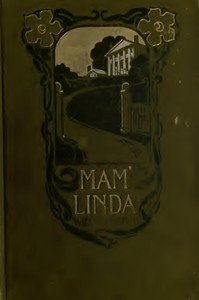
Mam' Linda — Text and Context
(0 User reviews)
59
Project Gutenberg
2016
Not confirmed
Georgia -- Fiction; United States -- Race relations -- Fiction; Lynching -- Fiction
Readers of public-domain and historical texts
Project Gutenberg digital edition
en
Edition facts
Words
108,082
Reading time
470 min
Text sections
14
Before opening Mam' Linda — Text and Context, the edition data offers a quick orientation: 108,082 words, 7 hr 50 min estimated reading time, and 14 detected text sections.
The text analysis averages about 16.9 words per sentence, while the detected sections provide another way to judge how the source is divided.
Project Gutenberg metadata also associates the work with “Georgia -- Fiction,” connecting these edition facts with the source record’s subject description.
Source:
Project Gutenberg record #50899
Set in early 20th-century Georgia, this novel follows lawyer Carson Dwight as he confronts a lynch mob targeting a Black prisoner. The excerpts reveal a tense community debate, with Dwight's moral stand pitted against overwhelming mob violence, framed through poker games and storefront politics.
Editorial Edition Score
4.9/5
★★★★★
★★★★★
Calculated from edition completeness, EPUB availability, text structure and catalogue metadata. Not a user rating.
How this score is calculated
- Description quality20 pts
- Title & short description10 pts
- Source metadata20 pts
- Text length15 pts
- Chapters / structure15 pts
- EPUB file integrity20 pts
Total of 100 points, scaled to a 2.5-5.0 range. Editions with an empty description or a missing EPUB file are not scored.
Edition quality
Read the Text
ins. He says a regular gang of blue-bloods has been organized here to take up fer town coons agin the pore whites in the country. We might crush such a report in time, you know, but we'll never kill it if thar's a fight over it to-night.”
“That's the trouble,” the others said, in a breath.
“Wait one minute--you stay right here,” Baker said, and he went and stood in front of the store door and looked in for a moment; then he came back. “I thought maybe he'd let us all talk sense to 'im, but you can't put reason into a man like that any easier than you can dip up melted butter with a hot awl. I can't see any chance unless you fellers will leave it entirely to me.”
“Leave it to you?” Garner exclaimed. “What could you do?”
“I don't know whether I could do a blessed thing or not, boys, but the dam thing is so desperate that I'm willin' to try. You see, I never talk my politics--if I do, I talk it on t'other side to see what I kin pick up to advantage. The truth is, I think them skunks consider me a Wiggin man, and I'd like to git a whack at 'em. Maybe I can git 'em to leave town. Abe Johnson is the leader of 'em, and he never gets too drunk to have some natural caution.”
“Well, it certainly couldn't do any harm for you to try, Pole,” said Tingle.
“Well, I'll go down to the wagon-yard and see if they are still hanging about.”
As he approached the place in question, which was an open space about one hundred yards square surrounded by a high fence, at the lower end of the main street, Pole stood in the broad gateway and surveyed the numerous camp-fires which gleamed out from the darkness. He finally descried a group of men around a fire between two white-hooded wagons to the wheels of which were haltered several horses. As Pole advanced towards them, paying cheerful greetings to various men and women around the different fires he had to pass, he recognized Dan Willis, Abe Johnson, and several others.
A quart whiskey flask, nearly empty, stood on the ground in the light of the fire round which the men were seated. As he approached they all looked up and nodded and muttered careless greetings. It seemed to suggest a movement on the part of Dan Willis, a tall man of thirty-five or thirty-six years of age, who wore long, matted hair and had bushy eyebrows and a sweeping mustache, for, taking up the flask, he rose and dropped it into his coat-pocket and spoke to the two men who sat on either side of Abe Johnson.
“Come on,” he growled, “I want to talk to you. I don't care whether you join us or not, Abe.”
“Well, I'm out of it,” replied Johnson. “I've talked to you fellows till I'm sick. You are too darned full to have any sense.”
Willis and the two men walked off together and stood behind one of the wagons. Their voices, muffled by the effects of whiskey, came back to the ears of the remaining two.
“Goin' out home to-night, Abe?” Baker asked, carelessly.
“I want to, but I don't like to leave that damned fool here in the condition he's in. He'll either commit murder or git his blasted head shot off.”
“That's exactly what _I_ was thinking about,” said Pole, sitting down on the ground carelessly and drawing his knees up in the embrace of his strong arms. “Look here, Abe, me'n you hain't to say quite as intimate as own brothers born of the same mammy, but I hain't got nothin' agin you of a personal nature.”
“Oh, I reckon that's all right,” the other said, stroking his round, smooth-shaven face with a dogged sweep of his brawny hand. “That's all right, Pole.”
“Well, my family knowed yore family long through the war,” Abe. “My daddy was with yourn at the front, an' our mothers swapped sugar an' coffee in them hard times, an', Abe, I'm here to tell you I sorter hate to see an unsuspectin' neighbor like you walk blind into serious trouble, great big trouble, Abe--trouble of the sort that would make a man's wife an' childern lie awake many and many a night.”
“What the hell you mean?” Johnson asked, picking up his ears.
“Why, it's this here devilment that's brewin' betwixt Dan an' Carson Dwight.”
“Well, what's that got to do with _me?_” Johnson asked, in surly surprise.
The novel opens not with the lynching that its catalog subjects promise, but with a poker game in the back of a general store. The storekeeper, James Blackburn, complains to young lawyer Carson Dwight about the rowdy young men who treat his business as a clubhouse. The scene establishes a social hierarchy: the raised platform where the card players sit, the cellar below used for storage, and the front where Blackburn conducts legitimate trade. This physical layout mirrors the story's moral geography, with Dwight soon forced to descend into that cellar to check for hidden listeners before a secret meeting about the impending lynching.
The Store as Stage
The opening chapter uses the store's architecture to map social dynamics. The poker players occupy a raised platform, while the storekeeper sits near the front door with Dwight. The cellar, damp and dark, stores salt, syrup, and hardware—mundane goods that contrast with the explosive secret it later holds. When Dwight descends with a lamp to ensure no one is hiding, the action literalizes the story's descent into moral darkness. The store is not merely a setting but a microcosm of the town's divisions: the young men's frivolity, Blackburn's uneasy tolerance, and Dwight's growing seriousness.
The Weight of a Single Life
Pole Baker's report to the secret meeting crystallizes the central conflict. He describes hundreds of men in white sheets converging from different factions, each carrying a flag, and dismisses any hope of saving the prisoner: 'No power under high heaven could save his neck.' The language is stark, with Baker snapping his fingers 'as sharp as the cocking of a revolver.' Yet Dwight persists, checking the cellar for spies and refusing to resign. The excerpts show a community that has already decided the prisoner's guilt based on 'reliable testimony' that he threatened his victim, leaving Dwight isolated in his doubt.
Voice and Dialect as Markers
Harben distinguishes characters through dialect and speech patterns. Pole Baker speaks in a drawling, mountain vernacular ('I lowed you-uns would want to know'), while the lawyer Dwight uses standard English. The storekeeper's colloquial complaints about Bradstreet reporters and hoe-downs establish a specific regional texture. These linguistic choices do more than add color; they signal social standing and authority. Baker's folksy delivery contrasts with the gravity of his news, and his final gesture—snapping his fingers—underscores the mob's lethal efficiency. The excerpts offer no resolution, only the mounting pressure of an inevitable march.
Readers should attend to how Harben builds suspense through spatial details and dialogue rather than direct action. The excerpts end before the mob arrives, leaving Dwight's fate and the prisoner's unknown. The catalog subjects label this a novel about lynching and race relations, but the text so far focuses on white characters' deliberations. Pay attention to how the narrative handles the prisoner's perspective—or its absence—as a measure of the book's scope and limitations.
I keep thinking about the quiet tension in Mam' Linda — not the shouting, but the silences between poker hands, the weight of unspoken decisions. It reminded me of a passage in Blue-Stocking Hall, (Vol. 2 of 3) — Edition Insights, where a drawing-room conversation carries the same hush before a choice that changes everything. Two different worlds, but the same held breath.
There are no reviews for this eBook.
There are no comments for this eBook.
Reader reflection
What did you think of this book?
Answer a few questions and save a private reflection on this device.
Your progress
0
/
10
2
How did the book work for you overall?
3
Would you pass this book on to a friend?
4
What was the reading difficulty like?
5
How well did it match your expectations?
6
Would you start a conversation about this book?
7
Would a second reading be valuable?
8
Could you follow the author’s main argument?
9
Which lesson or insight stayed with you?
10