1

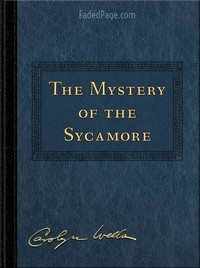
The Mystery of the Sycamore — Inside the Classic
(0 User reviews)
1355
Project Gutenberg
2015
Not confirmed
Detective and mystery stories; Stone, Fleming (Fictitious character) -- Fiction
Readers of public-domain and historical texts
Project Gutenberg digital edition
en
Edition facts
Words
67,781
Reading time
295 min
Text sections
10
The catalog record for The Mystery of the Sycamore — Inside the Classic provides practical reading context through 67,781 words, 4 hr 55 min estimated reading time, and 10 detected text sections.
The text analysis averages about 12.3 words per sentence, while the detected sections provide another way to judge how the source is divided.
Project Gutenberg metadata also associates the work with “Detective and mystery stories,” connecting these edition facts with the source record’s subject description.
Source:
Project Gutenberg record #50209
Curt Keefe's clipped speech and methodical mail-sorting establish a crisp narrative voice in this 1921 mystery. The story revolves around a murder under a sycamore tree, with suspects including the Wheeler family. Keefe's evolving courtesy and the phantom bugler add layers to the investigation.
Editorial Edition Score
4.7/5
★★★★★
★★★★★
Calculated from edition completeness, EPUB availability, text structure and catalogue metadata. Not a user rating.
How this score is calculated
- Description quality20 pts
- Title & short description10 pts
- Source metadata20 pts
- Text length15 pts
- Chapters / structure15 pts
- EPUB file integrity20 pts
Total of 100 points, scaled to a 2.5-5.0 range. Editions with an empty description or a missing EPUB file are not scored.
Edition quality
Read the Text
dvice from the same source, and as Keefe had an eye single to the glory of self-advancement, he kept all these things and pondered them in his heart.
The result was that ten years of association with Lawyer Appleby had greatly improved the young man’s manner, and though still brief of speech, his curtness had lost its unpleasantly sharp edge and his courtesy had developed into a dignified urbanity, so that though still Curt Keefe, it was in name only.
“What’s the pretty letter all about, Curtie?” asked the observant stenographer, who had noticed his third reading of the short missive.
“You’ll probably answer it soon, and then you’ll know,” was the reply, as Keefe restored the sheet to its envelope and took up the next letter.
Genevieve Lane produced her vanity-case, and became absorbed in its possibilities.
“I wish I didn’t have to work,” she sighed; “I wish I was an opera singer.”
“‘Cromwell, I charge thee, fling away ambition,’ murmured Keefe, his eyes still scanning letters; ‘by that sin fell the angels,’ and it’s true you are angelic, Viva, so down you’ll go, if you fall for ambition.”
“How you talk! Ambition is a good thing.”
“Only when tempered by common sense and perspicacity—neither of which you possess to a marked degree.”
“Pooh! You’re ambitious yourself, Curt.”
“With the before-mentioned qualifications. Look here, Viva, here’s a line for you to remember. I ran across it in a book. ‘If you do only what is absolutely correct and say only what is absolutely correct—you can do anything you like.’ How’s that?”
“I don’t see any sense in it at all.”
“No? I told you you lacked common sense. Most women do.”
“Huh!” and Genevieve tossed her pretty head, patted her curly ear-muffs, and proceeded with her work.
Samuel Appleby’s beautiful home graced the town of Stockfield, in the western end of the Commonwealth of Massachusetts. Former Governor Appleby was still a political power and a man of unquestioned force and importance.
It was fifteen years or more since he had held office, and now, a great desire possessed him that his son should follow in his ways, and that his beloved state should know another governor of the Appleby name.
And young Sam was worthy of the people’s choice. Himself a man of forty, motherless from childhood, and brought up sensibly and well by his father, he listened gravely to the paternal plans for the campaign.
But there were other candidates, and not without some strong and definite influences could the end be attained.
Wherefore, Mr. Appleby was quite as much interested as his secretary in the letter which was in the morning’s mail.
“Any word from Sycamore Ridge?” he asked, as he came into the big, cheerful office and nodded a kindly good-morning to his two assistants.
“Yes, and a good word,” returned Keefe, smiling. “It says: ‘Come.’” The secretary’s attitude toward his employer, though deferential and respectful, was marked by a touch of good-fellowship—a not unnatural outgrowth of a long term of confidential relations between them. Keefe had made himself invaluable to Samuel Appleby and both men knew it. So, as one had no desire to presume on the fact and the other no wish to ignore it, serenity reigned in the well-ordered and well-appointed offices of the ex-governor.
Even the light-haired, light-hearted and light-headed Genevieve couldn’t disturb the even tenor of the routine. If she could have, she would have been fired.
Though not a handsome man, not even to be called distinguished looking, Samuel Appleby gave an impression of power. His strong, lean face betokened obdurate determination and implacable will.
Its deep-graven lines were the result of meeting many obstacles and surmounting most of them. And at sixty-two, the hale and hearty frame and the alert, efficient manner made the man seem years younger.
“You know the conditions on which Wheeler lives in that house?” Appleby asked, as he looked over the top of the letter at Keefe.
“Well, it’s this way. But, no—I’ll not give you the story now. We’re going down there—to-day.”
“The whole tribe?” asked Keefe, briefly.
“Yes; all three of us. Be ready, Miss Lane, please, at three-thirty.”
“Yes, sir,” said Genevieve, reaching for her vanity-box.
“And now, Keefe, as to young Sam,” Appleby went on, running his fingers through his thick, iron-gray mane. “If he can put it over, or if I can put it over for him, it will be only with the help of Dan Wheeler.”
“Is Wheeler willing to help?”
The novel opens with a precise character sketch: Curtis Keefe sorts his mail into three piles, a habit that reveals his mental status. His nickname 'Curt' is both a label and a self-fulfilling prophecy, though ten years under ex-Governor Appleby have softened his sharpness into 'dignified urbanity.' This attention to voice and manner extends to the dialogue, where Keefe's curtness contrasts with the more hesitant speech of others like Burdon. The narrative pace shifts between brisk exposition and tense, clipped exchanges, as seen in the early banter with the stenographer and later in the heated discussion about the Wheelers' guilt.
The Weight of a Name
The narrator explicitly links Keefe's nickname to his conversational style: 'the abbreviation was largely responsible for his habit of curtness.' This metafictional nod suggests that language shapes character. Appleby's advice—'see to it that it is short for courtesy'—becomes a guiding principle, and the narrative tracks Keefe's growth from brusque to urbane. The same attention to naming appears in the title itself: the sycamore tree is not just a setting but a symbol, its name repeated in chapter headings and dialogue. The mystery revolves around this tree, and the word 'sycamore' recurs like a refrain, anchoring the plot to a single, evocative location.
Dialogue as Investigation
Much of the story unfolds through conversation, with characters dissecting alibis and motives in real time. In one exchange, Keefe presses Allen and Burdon on the Wheeler family's guilt, using pointed questions to expose their assumptions: 'You do believe it, though! And what’s more, you believe the criminal is the one of the three whom you least want it to be!' The dialogue is layered with subtext—Allen's 'flushed and crestfallen face' betrays his suspicion of Maida Wheeler. The pace quickens during these interrogations, with short, rapid-fire lines mimicking the tension of a courtroom cross-examination. Even minor characters like the maid Rachel speak with self-importance, her testimony framed by the narrator's skepticism.
Pacing Through Speculation
The narrative alternates between action—like the garage fire—and extended speculation. After the fire, Keefe and Burdon debate possibilities: self-defense, a phantom bugler, or a cover-up. The prose slows to a deliberative crawl as they weigh evidence: 'It leads us to the necessity of a lot of hard work.' This shift in pace mirrors the detective's process, moving from chaotic events to methodical reasoning. The excerpt also reveals a pattern: characters often repeat phrases ('I know all that—but then—') as they circle around the same points, creating a rhythm of doubt and insistence. The promise of a 'big detective from the city' hints at a future acceleration, but for now, the investigation remains grounded in talk.
Readers should attend to how Wells uses speech patterns to distinguish characters and drive the plot. Keefe's evolving courtesy, the Wheelers' evasions, and the servants' guarded answers all contribute to a layered portrait of suspicion. The sycamore tree itself is a silent witness, its name echoing through the chapters. Pay attention to who speaks, how they speak, and what they leave unsaid—the mystery may be solved not by clues, but by the cadence of confession.
Crisp murder, yes, but it’s the Wheeler family’s quiet, crumbling formality that lingers—that sense of a world holding its breath before it changes. It made me think of Darnley; or, The Field of the Cloth of Gold — Story, Setting & Ideas, where courtship and pageantry feel just as measured, just as fragile, right before the gilding wears thin.
There are no reviews for this eBook.
There are no comments for this eBook.
Reader reflection
Take a moment to reflect on this book
Create a short personal record of your experience with this book.
Your progress
0
/
10
2
Was reading this book enjoyable?
3
Is this a title you would suggest to others?
4
What was the reading difficulty like?
5
Did any part of the book stay with you emotionally?
6
Could you apply anything you learned?
7
Did any part of the book feel personally relevant?
8
Would you read this book again?
9
What did this book teach you most?
10