1

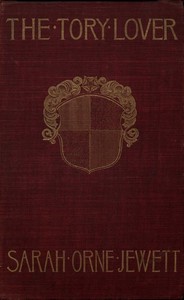
The Tory Lover — A Reader’s Guide
(0 User reviews)
47
Project Gutenberg
2016
Not confirmed
War stories; United States -- History -- Revolution, 1775-1783 -- Fiction
Readers of public-domain and historical texts
Project Gutenberg digital edition
en
Edition facts
Words
118,891
Reading time
517 min
Text sections
16
This digital edition of The Tory Lover — A Reader’s Guide is described by source-level measurements including 118,891 words, 8 hr 37 min estimated reading time, and 16 detected text sections.
The text analysis averages about 20.2 words per sentence, while the detected sections provide another way to judge how the source is divided.
Project Gutenberg metadata also associates the work with “War stories,” connecting these edition facts with the source record’s subject description.
Source:
Project Gutenberg record #51537
Sarah Orne Jewett's 1901 novel follows Mary Hamilton and the Ranger's voyage during the American Revolution, blending coastal Maine society with naval adventure and the figure of John Paul Jones, as seen in excerpts focusing on Berwick gentry and the ship's French connections.
Editorial Edition Score
4.8/5
★★★★★
★★★★★
Calculated from edition completeness, EPUB availability, text structure and catalogue metadata. Not a user rating.
How this score is calculated
- Description quality20 pts
- Title & short description10 pts
- Source metadata20 pts
- Text length15 pts
- Chapters / structure15 pts
- EPUB file integrity20 pts
Total of 100 points, scaled to a 2.5-5.0 range. Editions with an empty description or a missing EPUB file are not scored.
Edition quality
Read the Text
I. The Sea-Wolf II. The Parting Feast III. A Character of Honor IV. The Flowering of whose Face V. The Challenge VI. The Captain speaks VII. The Sailing of the Ranger VIII. The Major’s Hospitalities IX. Brother and Sister X. Against Wind and Tide XI. That Time of Year XII. Between Decks XIII. The Mind of the Doctor XIV. To add More Grief XV. The Coast of France XVI. It is the Soul that sees XVII. The Remnant of Another Time XVIII. Oh had I wist! XIX. The best laid Plans XX. Now are we Friends again? XXI. The Captain gives an Order XXII. The Great Commissioner XXIII. The Salute to the Flag XXIV. Whitehaven XXV. A Man’s Character XXVI. They have made Prey of him XXVII. A Prisoner and Captive XXVIII. News at the Landing XXIX. Peggy takes the Air XXX. Madam goes to Sea XXXI. The Mill Prison XXXII. The Golden Dragon XXXIII. They come to Bristol XXXIV. Good English Hearts XXXV. A Stranger at Home XXXVI. My Lord Newburgh’s Kindness XXXVII. The Bottom of these Miseries XXXVIII. Full of Straying Streets XXXIX. Mercy and Manly Courage XL. The Watcher’s Light XLI. An Offered Opportunity XLII. The Passage Inn XLIII. They follow the Dike XLIV. The Road’s End XLV. With the Flood Tide
*LIST OF ILLUSTRATIONS*
Mary Hamilton . . . _Marcia O. Woodbury_ . . . _Frontispiece_
The Ranger . . . _Charles H. Woodbury_
Hamilton House . . . _Charles H. Woodbury_
Along the Dike . . . _Charles H. Woodbury_
"By all you love most, war and this sweet lady."
The last day of October in 1777, Colonel Jonathan Hamilton came out of his high house on the river bank with a handsome, impatient company of guests, all Berwick gentlemen. They stood on the flagstones, watching a coming boat that was just within sight under the shadow of the pines of the farther shore, and eagerly passed from hand to hand a spyglass covered with worn red morocco leather. The sun had just gone down; the quick-gathering dusk of the short day was already veiling the sky before they could see the steady lift and dip of long oars, and make sure of the boat’s company. While it was still a long distance away, the gentlemen turned westward and went slowly down through the terraced garden, to wait again with much formality by the gate at the garden foot.
Beside the master of the house was Judge Chadbourne, an old man of singular dignity and kindliness of look, and near them stood General Goodwin, owner of the next estate, and Major Tilly Haggens of the Indian wars, a tall, heavily made person, clumsily built, but not without a certain elegance like an old bottle of Burgundy. There was a small group behind these foremost men,—a red cloak here and a touch of dark velvet on a shoulder beyond, with plenty of well-plaited ruffles to grace the wearers. Hamilton’s young associate, John Lord, merchant and gentleman, stood alone, trim-wigged and serious, with a look of discretion almost too great for his natural boyish grace. Quite the most impressive figure among them was the minister, a man of high ecclesiastical lineage, very well dressed in a three-cornered beaver hat, a large single-breasted coat sweeping down with ample curves over a long waistcoat with huge pockets and lappets, and a great white stock that held his chin high in air. This was fastened behind with a silver buckle to match the buckles on his tight knee breeches, and other buckles large and flat on his square-toed shoes; somehow he looked as like a serious book with clasps as a man could look, with an outward completeness that mated with his inner equipment of fixed Arminian opinions.
The opening scene of The Tory Lover places the reader on a riverbank in Berwick, Maine, in October 1777, where Colonel Jonathan Hamilton and a group of gentlemen watch a boat approach through a spyglass. The description is precise: the spyglass is covered with “worn red morocco leather,” and the dusk gathers quickly. Jewett names each gentleman—Judge Chadbourne, General Goodwin, Major Tilly Haggens—and notes their dress, such as “a red cloak here and a touch of dark velvet.” This attention to social detail and material texture is characteristic of the novel’s method.
War Stories and Social Portraiture
The catalog classifies The Tory Lover as a war story set during the American Revolution, but the excerpts reveal that Jewett devotes considerable space to the manners and appearances of her characters. The Berwick gentlemen are described with an almost ethnographic eye: Major Haggens is “clumsily built, but not without a certain elegance like an old bottle of Burgundy.” The minister wears “a three-cornered beaver hat” and “a large single-breasted coat.” These details do not advance the plot but establish a social world. The novel’s interest in costume and posture suggests that Jewett, known for her regional fiction, is as concerned with the texture of colonial society as with military action.
John Paul Jones and the French Connection
The excerpts shift to the figure of John Paul Jones, who is presented not merely as a naval commander but as a man of sensibility. In France, he visits the Duke and Duchess of Chartres; the duchess is described as “a great-grand-daughter of Louis Quatorze” and “granddaughter of the great Count of Toulouse.” Jewett emphasizes Jones’s “perfect acquaintance” with naval strategy and his ability to charm the duchess. The narrative notes that “all the degrading side of a sailor’s life and hardships” fade in her presence. This treatment aligns with the catalog’s war-story label but adds a romantic, almost courtly dimension that is not typical of straightforward military fiction.
The Ranger’s Voyage and the Fog of War
The sailing of the Ranger from Brest in April 1778 is described with attention to weather and navigation: the ship heads “past the Channel and into the Irish Sea,” and the crew sees “the mountains of Cumberland” through fog. Jewett notes that the captain “did some petty trading with poor fishermen” to gather intelligence. The prose is concrete about the ship’s movements—“beating against the easterly winds”—and the captain’s mood is “thoughtful and even melancholy.” The excerpts do not reveal the outcome of the voyage, but they establish a tone of tense anticipation. The novel thus combines the social world of Berwick with the practical and psychological realities of naval warfare.
Readers approaching The Tory Lover should expect a novel that moves between domestic interiors and the deck of a ship, between the measured speech of Maine gentry and the ambitions of a famous privateer. Jewett’s prose rewards attention to small details—a spyglass, a coat, a fog bank—that build a world as much as a plot. The excerpts offer no resolution to the love story implied by the title, but they suggest that the novel’s tensions are as much social and psychological as they are martial.
Reading about Mary Hamilton’s world, with its salt air and quiet loyalties, I found myself thinking of the other side of that coin—the younger soldier’s perspective, less certain of glory, more aware of the cost. A different kind of coastal story, but the same weather, somehow. That feeling lingered, and I remembered Redcoat Captain: A Story of That Country — A Closer Reading as its softer, sadder echo.
There are no reviews for this eBook.
There are no comments for this eBook.
Reader reflection
How will you remember this book?
Save your reaction, strongest insight, and memorable passage.
Your progress
0
/
10
2
Was reading this book enjoyable?
3
Would you encourage someone else to read it?
4
How much effort did this book require?
5
Did any part of the book feel personally relevant?
6
Could you apply anything you learned?
7
What was the strongest part of the book?
8
Was the book what you thought it would be?
9
What is the main idea you are taking away?
10