1

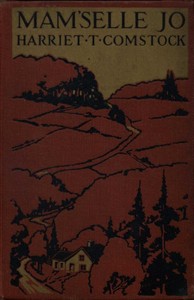
Mam'selle Jo — Key Ideas to Explore
(0 User reviews)
1087
Project Gutenberg
2015
Not confirmed
Single women -- Fiction; Self-sacrifice -- Fiction; Saint Lawrence River Valley -- Fiction
Readers of public-domain and historical texts
Project Gutenberg digital edition
en
Edition facts
Words
86,595
Reading time
377 min
Text sections
13
This digital edition of Mam'selle Jo — Key Ideas to Explore is described by source-level measurements including 86,595 words, 6 hr 17 min estimated reading time, and 13 detected text sections.
The text analysis averages about 12.8 words per sentence, while the detected sections provide another way to judge how the source is divided.
Project Gutenberg metadata also associates the work with “Single women -- Fiction,” connecting these edition facts with the source record’s subject description.
Source:
Project Gutenberg record #49361
An editorial note on Harriet T. Comstock's Mam'selle Jo, focusing on authorial choices in diction, dialogue, and description as seen in excerpts from the 1918 novel about a plain, self-sacrificing woman in the St. Lawrence River Valley.
Editorial Edition Score
4.8/5
★★★★★
★★★★★
Calculated from edition completeness, EPUB availability, text structure and catalogue metadata. Not a user rating.
How this score is calculated
- Description quality20 pts
- Title & short description10 pts
- Source metadata20 pts
- Text length15 pts
- Chapters / structure15 pts
- EPUB file integrity20 pts
Total of 100 points, scaled to a 2.5-5.0 range. Editions with an empty description or a missing EPUB file are not scored.
Edition quality
Read the Text
I. Mam’selle Jo Is Set Free II. Mam’selle Must Buy a Husband III. Mam’selle Does Not Buy a Husband IV. But Mam’selle Makes a Vow V. Enter Donelle VI. Mam’selle Hears Part of the Truth VII. Marcel Takes Her Stand by Jo VIII. The Priest and the Road Mender IX. Woman and Woman X. Pierre Gets His Revenge XI. The Great Decision XII. The Hidden Current Turns XIII. The Inevitable XIV. A Choice of Roads XV. The Look XVI. The Story XVII. The Blighting Truth XVIII. Tom Gavot Settles the Matter XIX. The Confession XX. Gavot Gets His Call XXI. Donelle at Last Sees Tom XXII. Norval Comes Back XXIII. Both Norval and Donelle—See XXIV. The Glory Breaks Through
*LIST OF ILLUSTRATIONS*
"Jo Morey was forty and as dark as a midwinter day deprived of the sanctifying warmth of the sun. She was formed for service, not charm" . . . _Frontispiece_
"At the foot of the cross, her head bowed and her tears falling, Donelle shivered and prayed"
"Tom looked at her. He saw the thrill of life, adventure, and youth shake her. He saw with an old, old understanding that because he was going away, alone, upon the road, he meant to her what he never could have meant had he remained"
"’Indeed, Mr. Norval, it is your sacred duty to tell it to—to that girl in Canada. You promised and she ought to know’"
This is a story of a woman who having no beauty of face or form was deprived for a time of the beautiful things of life.
Then she prayed to the God of men and He gave her material success. Having this she raised her eyes from the earth which had been her battlefield and made a vow that she would take what was possible from the odds and ends of happiness and weave what she could into love and service.
Through this she won a reward far beyond her wildest dreams and found peace and joy.
"You are a strange man"—she said to him who discovered her.
"You are a very strange woman, Mam’selle"—he returned.
Besides these two there are:
Captain Longville—and his wife Marcel.
Pierre Gavot—and his wife Margot who found life paid because of her boy Tom.
Old Father Mantelle—more friend than priest who helped them all.
But Dan Kelly—of Dan’s Place—better known as The Atmosphere—made life difficult for them all.
Then after a time the Lindsays of the Walled House drew things together and opened a new vista. Here we find:
Man-Andy; called by some, The Final Test, or Old Testy.
James Norval—who had some talent and an occasional flash of genius.
Katherine Norval, his wife, who from the highest motives nearly drove him to hell.
There are Sister Angela with the convenient memory and Little Sister Mary with the Lost Look.
Mary Maiden who happened into the story for a second only.
And lastly: Tom Gavot who dreamed of roads, played with roads, made roads, and at last found The Right Road which led him to the top, from that high point he saw—who can tell what?
And—Donelle who early prayed that she might be part of life and vowed that she was willing to suffer and pay. Life took her at her word, and used her.
*MAM’SELLE JO IS SET FREE*
One late afternoon in September Jo Morey—she was better known in the village of Point of Pines as Mam’selle Jo—stood on the tiny lawn lying between her trim white house and the broad highway, lifted her eyes from the earth, that had long been her battlefield, and murmured aloud as lonely people often do,
She did not say this arrogantly, but, rather, reverently. It was like a prayer of appreciation to the only God she recognized; a just God who had crowned her efforts with success. Not to a loving God could Mam’selle pray, for love had been denied her; not to a beautiful God, for Jo had yet to find beauty in her hard and narrow life; but to the Power that had vindicated Itself she was ready to do homage.
The opening line of Harriet T. Comstock's Mam'selle Jo establishes its protagonist with stark, unflattering directness: "Jo Morey was forty and as dark as a midwinter day deprived of the sanctifying warmth of the sun. She was formed for service, not charm." This blunt physical and moral characterization sets the tone for a narrative that often uses weather and light as metaphors for emotional states. The novel's dedication, which speaks of Fate weighing "sunshine and shadow" and throwing in "a bit of extra brightness," frames the story as a deliberate balancing act between hardship and grace.
Diction and the Weight of Description
Comstock's prose is marked by a preference for concrete, often homely nouns and verbs over abstract sentiment. Jo is "formed for service, not charm"—a phrase that treats her body as a tool rather than an ornament. The narrator describes Katherine Norval as "the sort of woman who comes slowly and secretively to conclusions," using the adverb "secretively" to imply a hidden, almost furtive inner life. When James Norval learns of his wife's book, he reacts with a simile that is both vivid and deflating: "Norval took a book she offered as he might have taken a young and very doubtful baby." The unexpected comparison to an infant—something fragile, uncertain, and requiring care—underscores his bewilderment and the awkwardness of the moment. Such choices avoid melodrama while keeping the reader grounded in physical reality.
Dialogue as Revelation of Character
The excerpted dialogue reveals character through what is left unsaid as much as through direct speech. When Helen Law, dying, asks about her baby, her husband Law replies, "Yes, Helen, a boy," after a struggle. The narrator notes that "For years Law had not addressed his wife by name. That would have seemed sacrilege." This detail—the avoidance of a name as a marker of emotional distance—speaks volumes about their marriage. Later, Katherine Norval announces her literary ambition with a mix of defiance and hurt: "I have a duty to myself, I see it at last. All my life I have sacrificed everything for you, Jim." The repetition of "I" and the accusatory "you" signal a shift in power, while Norval's stunned response—"Your talent, Katherine, your talent?"—repeats her words with incredulity, exposing his complete ignorance of her inner life. Comstock uses such exchanges to show how couples talk past each other, each locked in their own perspective.
Structural Patterns: The Vow and the Return
The novel's chapter titles suggest a narrative built around decisive moments: "Mam'selle Jo Is Set Free," "Mam'selle Must Buy a Husband," "Mam'selle Makes a Vow." This sequence implies a progression from constraint to agency, though the excerpts do not reveal the outcome. The dedication's legend of Fate weighing sunshine and shadow recurs in the character list, which describes Jo as a woman who "prayed to the God of men" for material success and then "made a vow that she would take what was possible from the odds and ends of happiness." The phrase "odds and ends" is deliberately modest, suggesting a patchwork approach to joy. The story also introduces a pattern of departure and return: Law leaves "for the ends of the earth" without a return ticket, while Norval's eventual return is hinted at in the chapter "Norval Comes Back." These structural echoes give the novel a rhythmic, almost folkloric quality.
Setting and the St. Lawrence River Valley
The catalog places the novel in the "Saint Lawrence River Valley," and the excerpts hint at a rural or small-town Canadian setting. Characters include "Old Father Mantelle—more friend than priest" and "Dan Kelly—of Dan's Place—better known as The Atmosphere." The latter nickname suggests a local establishment that functions as a social hub, its name implying a pervasive mood or influence. The presence of a "Walled House" owned by the Lindsays introduces an element of enclosure and mystery. Comstock uses setting sparingly but effectively: when Norval plans a summer away, he "patiently set forth the charms of the watering places he loathed," a detail that contrasts the artificiality of resorts with the implied authenticity of the valley. The landscape itself becomes a silent witness to the characters' struggles, as when Donelle, at the foot of a cross, "shivered and prayed."
Readers approaching Mam'selle Jo should attend to the way Comstock builds meaning through small, precise details—a character's nickname, a repeated phrase, a telling gesture. The novel's moral framework is established early through the dedication and character list, but the excerpts suggest that the story earns its resolutions through accumulated observation rather than preachment. Pay particular attention to how the author handles the passage of time and the return of absent characters; these movements may carry more weight than the plot's surface events.
That feeling of carrying a character’s quiet ache long after the last page—it followed me from Mam’selle Jo’s river valley into Blue-Stocking Hall, (Vol. 2 of 3) — Edition Insights, where the same unhurried tenderness lingers between the lines, like an old photograph left gently on the windowsill.
There are no reviews for this eBook.
There are no comments for this eBook.
Reader reflection
How will you remember this book?
Save your reaction, strongest insight, and memorable passage.
Your progress
0
/
10
2
Was reading this book enjoyable?
3
How likely are you to recommend this book?
4
How much effort did this book require?
5
Did anything about the book feel genuinely new?
6
What did you appreciate most?
7
Could you see yourself revisiting this book?
8
What was its emotional impact?
9
What did this book teach you most?
10