1

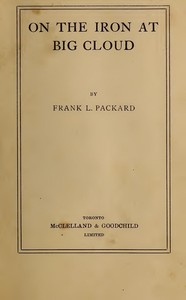
On the Iron at Big Cloud — Background and Themes
(0 User reviews)
673
Project Gutenberg
2017
Not confirmed
Short stories, Canadian; Railroad stories; Canadian fiction -- 20th century
Readers of public-domain and historical texts
Project Gutenberg digital edition
en
Edition facts
Words
94,929
Reading time
413 min
Text sections
11
The source record for On the Iron at Big Cloud — Background and Themes measures this digital text at 94,929 words, 6 hr 53 min estimated reading time, and 11 detected text sections.
The text analysis averages about 16.6 words per sentence, while the detected sections provide another way to judge how the source is divided.
Project Gutenberg metadata also associates the work with “Short stories, Canadian,” connecting these edition facts with the source record’s subject description.
Source:
Project Gutenberg record #54111
Fifteen stories set on the Hill Division of a mountain railroad, focusing on the men who work the line: foremen, superintendents, and the isolated crews who face avalanches, washouts, and the human cost of keeping trains running through the Rockies.
Editorial Edition Score
4.8/5
★★★★★
★★★★★
Calculated from edition completeness, EPUB availability, text structure and catalogue metadata. Not a user rating.
How this score is calculated
- Description quality20 pts
- Title & short description10 pts
- Source metadata20 pts
- Text length15 pts
- Chapters / structure15 pts
- EPUB file integrity20 pts
Total of 100 points, scaled to a 2.5-5.0 range. Editions with an empty description or a missing EPUB file are not scored.
Edition quality
Read the Text
the executive offices. One man after another had gone out there, and one after another they had resigned. “Hard lot to handle,” Carleton, the division superintendent, had replied to the numerous requests for explanation that had been fired at him. And now Dick wanted to go. The general manager’s fingers beat a tattoo on the desk and his frown deepened into a scowl. “You’re a young fool,” he grunted at last.
And Holman knew that he had gained his point “That’s very good of you, uncle,” he cried. “I knew you’d see it my way. When may I start?”
“I guess you’ll get there soon enough,” his uncle answered grimly. He rose from his chair and accompanied Holman to the door. “Well, go if you want to, but remember this, young man, you’re going on your own terms. When you resign from _that_ position, you resign from the road, understand!”
“All right, uncle,” Holman laughed in reply. “It’s a bargain.”
Three days later, as Number One pulled into Big Cloud, Holman swung himself to the platform. Up past the mail and baggage cars, the steam drumming at her safety, a big ten-wheeler was backing down to couple on for the run through the Rockies. There was the pride of proprietorship in his glance as his eyes swept the great mogul critically, for in his pocket was his official appointment as Locomotive Foreman of the Hill Division, vice Williams, resigned.
It was not until the last of the Pullmans had rolled smoothly past him that he turned to take stock in his surroundings. The first impression was not prepossessing. Before him, just across the yard filled with strings of freight cars, were the low, rambling, smoke-begrimed shops and running shed, while beyond these again the town straggled out monotonously.
To the westward, through the mountains, were the curves and grades that wrenched and racked and tore the equipment he would hereafter be accountable for. To the eastward--but “eastward” was only two hundred yards away, for there his eye caught the “Yard Limit” post, that likewise marked the end of the division.
If after this cursory survey there still lingered any illusions of the picturesque in Holman’s mind, they were rudely dispelled by the interior of the barn-like structure at the side of the platform that did duty for station, division headquarters, general storeroom, and anything else that might seek the shelter of its protecting roof. The walls were adorned with such works of art as are afforded by the Sunday supplements, interspersed here and there with an occasional blue-print and time schedule. The furnishings bore unmistakable evidence of having seen service with the construction staff when the road was in the making. At the right of the door, as Holman entered, the despatcher was poring over the train sheet.
“Sure,” said he in answer to Holman’s inquiry, “that’s the super over there.”
Holman crossed the room and proffered his credentials.
“Glad you’ve come,” was Carleton’s greeting, as he rose and extended his hand. “We’ve been expecting you. Williams went East this morning on Number Two. Sit down. That’s your desk there.”
Holman glanced at the battered table toward which the other pointed, then back again to the four days’ growth on the super’s face.
Carleton grinned. “Fixings aren’t up to what you boiled-shirt fellows down East are used to. Out here on the firing line most anything goes. I’ve been requisitioning office fixtures for months. Ain’t seen any way-bill of them yet, Davis, have you?” he called across to the despatcher.
Davis got up with a laugh and joined the other two. “No,” said he, shaking hands with Holman, “not yet.”
“And not likely to, either,” continued the super. “It’s rough and ready out here, Holman. The staff quarters up there,” he jerked his thumb toward the ceiling, “are all-fired crude, and the Chinese cook is a gilt-edge thief and most persuasive liar; but we’ve got the finest division of the best railroad in the world, and we’re pushing stuff through the mountains on a schedule that makes Southern competition sick. We’re young here yet. Some day, when the roadbed’s shaken down to stay, we’ll build the extras.”
The enthusiasm and bluff heartiness of the super was contagious. Holman put out his hand impulsively. “We’ve heard a lot of you fellows down East,” he said, “and I’m glad I’ve got a chance to chip in.” His eyes swept around the room and came back to meet the super’s smilingly. “Even if accommodations _are_ below ‘Tourist Class,’” he added.
Frank L. Packard’s On the Iron at Big Cloud opens with a young man bargaining for a job that no one else wants: locomotive foreman of the Hill Division. The general manager calls him a fool, but the story’s first sentence—‘The General Manager of the Transcontinental System glared’—sets a tone of blunt authority that carries through the collection. These fifteen linked stories do not romanticize railroading; they dwell on the strain of a line that ‘dug, blasted, burrowed, and trestled its way through the mountains’ and on the men who hold it together by will, habit, or obsession.
The catalog lists the book under ‘Short stories, Canadian’ and ‘Railroad stories,’ but the excerpts show a narrower focus: the Hill Division’s repair shops, the Devil’s Slide, and the town of Big Cloud itself. Packard’s voice is terse, his sentences clipped, and his characters often defined by a single stubborn trait—like Coogan, who ‘patrolled the Devil’s Slide’ until he died.
The Weight of a Single Job
The first story, ‘Rafferty’s Rule,’ establishes a pattern: a man takes a position that has defeated his predecessors. Dick Holman asks to go where ‘Rawson and Williams can’t hold down the job.’ The general manager’s resistance is not about nepotism but about the division’s reputation—the locomotive-foremanship is ‘no subject to be introduced with temerity anywhere within the precincts of the executive offices.’ Packard does not explain why the job is so hard; he lets the reader infer it from the way characters speak around it.
Later, in ‘The Guardian of the Devil’s Slide,’ Coogan’s self-appointed patrol of a dangerous stretch of track is treated with the same matter-of-factness. The section boss simply says, ‘It’s up to you. Fire ahead.’ The stories rarely pause for reflection. They move by action and dialogue, and the men’s motives are often left unstated.
The Landscape as a Character
Packard’s Rockies are not scenic; they are obstacles. The right of way is ‘dug, blasted, burrowed, and trestled’—a series of verbs that emphasize human effort against resistant geography. The Devil’s Slide is a place where ‘a weakened rail, a sunken tie, a loosened spike’ could mean disaster. Coogan walks it ‘with his head bent forward, his eyes fastened on the right of way.’ The setting is not described for its beauty; it is described for its danger.
Tourists on the observation car treat Coogan as ‘more of an attraction than the scenic grandeur of the Rockies themselves,’ but the railroad men ‘didn’t like it.’ The landscape is a workplace, not a spectacle. The stories’ tension comes from the gap between how outsiders see the mountains and how the men who work them do.
The Brotherhood and Its Silences
Packard’s men are laconic. When Coogan dies, Carleton says, ‘God knows what the end would have been. The years would have been all alike, he’d never have got his mind back. It’s all for the best, what?’ Regan does not answer: ‘Philosophy and the master mechanic’s heart did not always measure things alike.’ The story ends with Coogan’s funeral—‘the biggest funeral Big Cloud ever had’—and the shop hands turning out ‘to the last man.’
The collection does not explain why these men matter to each other. It shows them paying for meals they refuse to have free, slipping coins back into pockets, and closing the shops at half-past four to march. The bond is in the actions, not in any stated sentiment. Packard trusts the reader to see it.
These stories reward a reader who pays attention to what is not said. The characters rarely explain themselves; their choices are shown through brief dialogue and even briefer narration. The setting—the Hill Division—is less a place than a pressure. Read for the way Packard builds tension from a single stubborn man, a stretch of track, and the silence of the men who keep the trains moving.
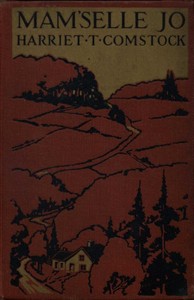
On the Iron at Big Cloud left me thinking about the isolated men who keep their duties despite the storm, and somehow that quiet stubbornness reminded me of a different sort of solitude—one of the heart rather than the mountain. There’s a tenderness in that other story, a soft ache of patience, which feels warmer than the Rockies’ snow. Mam’selle Jo — Key Ideas to Explore lingered with me the same way, like a lantern left on a porch.
There are no reviews for this eBook.
There are no comments for this eBook.
Reader reflection
Before you leave, reflect on the book
Use these questions to collect your thoughts before moving on.
Your progress
0
/
10
2
Was reading this book enjoyable?
3
Would you encourage someone else to read it?
4
How easy was the book to follow?
5
Did this book create an emotional response?
6
Did the book meet your expectations?
7
Did the book give you something worth debating?
8
Which aspect of the book did you value most?
9
Which lesson or insight stayed with you?
10