1

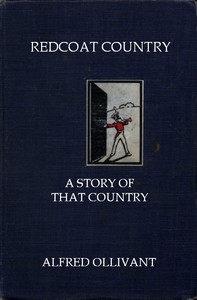
Redcoat Captain: A Story of That Country — A Closer Reading
(0 User reviews)
1063
Project Gutenberg
2017
Not confirmed
English fiction; Parables
Readers of public-domain and historical texts
Project Gutenberg digital edition
en
Edition facts
Words
28,521
Reading time
125 min
Text sections
4
Redcoat Captain: A Story of That Country — A Closer Reading can be approached with a clearer sense of reading commitment from its source measurements: 28,521 words, 2 hr 5 min estimated reading time, and 4 detected text sections.
The text analysis averages about 19.7 words per sentence, while the detected sections provide another way to judge how the source is divided.
Project Gutenberg metadata also associates the work with “English fiction,” connecting these edition facts with the source record’s subject description.
Source:
Project Gutenberg record #54575
In Alfred Ollivant's parable-like novel, a Redcoat Captain named Tiny navigates the absurd military bureaucracy of 'That Country' to marry Baby, blending whimsical language with satirical observations on authority and love.
Editorial Edition Score
4.6/5
★★★★★
★★★★★
Calculated from edition completeness, EPUB availability, text structure and catalogue metadata. Not a user rating.
How this score is calculated
- Description quality20 pts
- Title & short description10 pts
- Source metadata20 pts
- Text length15 pts
- Chapters / structure15 pts
- EPUB file integrity20 pts
Total of 100 points, scaled to a 2.5-5.0 range. Editions with an empty description or a missing EPUB file are not scored.
Edition quality
Read the Text
His had jolly little curls all over, with blue eyes under: hers was chestnut, with grey eyes like clouds in a lake.
She was between ten and twenty: he was a little more.
He was so tall that the Fellows called him Tiny: her name was Mabel, so they called her Baby.
So Tiny came to the Fort on the Hill where the sun used to set; and it was noon.
And the Fort was a round wall with a barrack-square inside. And through a hole in the wall a great cannon of artillery peeped out over the country to keep Them down: for They were always supposed to be there, though nobody had ever seen Them.
Then Tiny climbed in through the cannon-hole, and on to the barrack-square, where nobody was now only the back-view of Goliath, the elephant, whisking his tail in the stable, while the Boy, who saw to him, slept among his feet.
So Tiny walked across the square in the sun till he came to a door in the dark of the wall. And on the door was painted in white letters
which the Fellows said meant,
Old General Roast End,
Officers' Grub Royal Elephants,
which was the name of the Regiment.
And the Regiment was so named by order of the King because that pleased old Goly, so that he trampled less at night, when the Fellows wanted to sleep.
Then Tiny knocked at the door and went in.
And the room had crossed sugar-sticks on the wall, and a row of bottles full of little black and white marbly balls on the mantel-piece, and over them a great motto,
_Every Bull's Eye has its billet._
And in one corner was a pile of painted india-rubber cannon-balls. And there was a huge fire roaring, though it was summer. And before the fire stood the General, with his hands behind him, sucking something and warming himself.
Then Tiny shut the door, and began,
"I am Tiny; and I am going to marry Baby. How long will I stop in this hole, because about taking a house to put Baby in?"
So the General bent towards his boots; and his head shone; and his boots shone; and he bulged over the fire; and he said,
"I am Sir Goodall Grouse, and a Major-General. I had ought to be a full General if I had me rights--only they cheat so."
Then he bowed himself straight; and he was very red and tight; and he shot his neck till the veins swelled, and he shouted,
"And I don't care who knows it."
So Tiny, who knew Generals, pretended sad, and shook his head, and answered,
"When we go out to war, Sir, we always say that if only Sir Goodall came and did it, it wouldn't be a war at all, to call one, it would be a walk-over."
And when the General heard that, he sat down and said,
"You are a very promisin young officer _indeed_!" And he made a bump in his cheek with his tongue, and wrote upon the blotting-paper for ten minutes most industriously,
_Captain Tiny to be reccomended for promotion:_
Then he turned to Tiny and rubbed his hands and said,
"And now what will you allow me for to do for you?" And the clerk was so astonished that he poked in to see.
So Tiny told for the second time.
Then the General rolled the quid of toffee in his cheek very wisely, and he wrinkled, and said,
"Well. You will probly stop here for all time, and certainly for years and years. And you may take that on the word of Sir Goodall Grouse, who never told a lie, cause he couldn't think of one to tell." And he blew out his chest so a button flew, and shouted, "And what's more, I should ought to be a full General if I had me rights--and I don't care who knows it!" And he thumped the blotting-paper till it shook.
Then Tiny winked to himself and said inside,
"Hang your rights, Old Roast End!" but outside he said,
"Thank you, Sir. Now I feel a lot better."
And he saluted and went out, meek as a mouse; but directly he got outside he took to his legs and raced across the square, shouting and singing because of Baby and the house where he would keep her for years and years while he trained her how to be a soldier's wife.
And about next day Sir Goodall retired, because he said the Service didn't leave him time enough to roast himself.
And that is about all about Sir Goodall for now.
Then Tiny came upon his toes very merry to the place where the Fellows fed between sleeps.
Alfred Ollivant's Redcoat Captain: A Story of That Country opens with a peculiar blend of military formality and childlike whimsy. The protagonist, Tiny—so tall that his nickname is ironic—arrives at a fort where a cannon peeps through a hole to keep down 'Them,' though no one has ever seen them. The regiment's name, 'Officers' Grub Royal Elephants,' is a playful acronym that sets the tone for a world where logic is bent to accommodate elephants, generals who suck sweets, and a motto like 'Every Bull's Eye has its billet.'
The Language of That Country
Ollivant's prose is marked by a distinctive, almost nursery-rhyme cadence: 'So, after waiting faithfully for days and days and days, they agreed they could wait no longer.' The narration shifts between a knowing adult voice and a faux-naive perspective that treats military hierarchy as a game. Descriptions are concrete yet surreal: the General's head and boots both shine, he bulges over the fire, and his neck swells as he shouts. The text uses repetition and rhythmic phrasing—'O dear! O dear! O dear!'—to create a hypnotic, oral-storytelling quality. This language consistently undercuts the gravity of military life, turning parades and protocols into something closer to a children's adventure.
Authority and Its Absurdities
The military structure in Redcoat Captain is both rigid and ridiculous. The General, Sir Goodall Grouse, complains he 'had ought to be a full General if I had me rights—only they cheat so.' The Colonel, after receiving a disturbing message, takes to bed, repeating 'I love evewybody, and evewybody loves me.' Tiny lectures a subaltern at length for a minor wedding mishap, forcing him to sing a 'Sorry Song.' These episodes satirize command: authority figures are either pompous, fragile, or petty. The fort itself is a round wall with a cannon-hole, suggesting a toy-like defense. The unseen 'Them'—the perpetual enemy—underscores the absurdity of a war without visible opponents.
Love and Courtship in a Fantastical Setting
Tiny's quest to marry Baby drives the plot, but the romance is filtered through the story's playful logic. Baby is 'the daughter of the merry lady who lived among rooks'; Tiny is a Redcoat Captain. Their ages are given as 'between ten and twenty' and 'a little more,' blurring childhood and adulthood. Tiny's first act is to ask the General how long he'll be stationed in 'this hole' because he needs a house for Baby. The courtship is treated with earnestness and humor: Tiny forgives the Junior Subaltern for a wedding mishap involving 'a drop of lime-juice off a feather.' The emotional stakes are real, but the setting—with its sugar-stick wall decorations and india-rubber cannonballs—keeps the tone light and fanciful.
Readers should approach Redcoat Captain as a parable that resists straightforward interpretation. The text's blend of military satire and fairy-tale logic rewards attention to its linguistic quirks and structural repetitions. Ollivant's 'That Country' is neither fully allegorical nor purely whimsical; it invites the reader to hold contradictory tones in mind. The excerpts suggest a work that is both affectionate and critical, where love and duty are negotiated through the rituals of an army that runs on its own peculiar rules.
Tiny’s quiet fight against that absurd bureaucracy stayed with me long after the last page, that strange ache of wanting something simple in a world that makes it so hard. I found myself thinking of it again while reading Denounced: A Romance — Reading Companion, which carries that same wistful weight. Some loves just feel like they’re whispered against the noise.
There are no reviews for this eBook.
There are no comments for this eBook.
Reader reflection
Take a moment to reflect on this book
Create a short personal record of your experience with this book.
Your progress
0
/
10
2
Was reading this book enjoyable?
3
Would you encourage someone else to read it?
4
What was the reading difficulty like?
5
How useful did the reading feel?
6
How understandable was the text?
7
How distinctive were its ideas or approach?
8
Did any part of the book feel personally relevant?
9
What changed or sharpened your thinking?
10