1

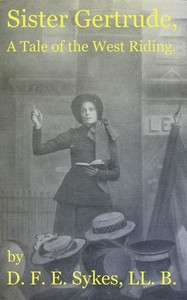
Sister Gertrude: A Tale of the West Riding — Background and Themes
(0 User reviews)
1514
Project Gutenberg
2017
Not confirmed
Autobiographical fiction; West Riding of Yorkshire (England) -- Fiction
Readers of public-domain and historical texts
Project Gutenberg digital edition
en
Edition facts
Words
52,241
Reading time
228 min
Text sections
5
Before opening Sister Gertrude: A Tale of the West Riding — Background and Themes, the edition data offers a quick orientation: 52,241 words, 3 hr 48 min estimated reading time, and 5 detected text sections.
The text analysis averages about 18.4 words per sentence, while the detected sections provide another way to judge how the source is divided.
Project Gutenberg metadata also associates the work with “Autobiographical fiction,” connecting these edition facts with the source record’s subject description.
Source:
Project Gutenberg record #53919
Sykes's semi-autobiographical novel follows Edward Beaumont, a solicitor and aspiring politician in 1880s Huddersfield. The narrative voice shifts between earnest social observation and lively drawing-room banter, as seen in the flirtatious exchange with Miss des Forges. The West Riding setting and the protagonist's professional and romantic entanglements are drawn from Sykes's own life.
Editorial Edition Score
4.7/5
★★★★★
★★★★★
Calculated from edition completeness, EPUB availability, text structure and catalogue metadata. Not a user rating.
How this score is calculated
- Description quality20 pts
- Title & short description10 pts
- Source metadata20 pts
- Text length15 pts
- Chapters / structure15 pts
- EPUB file integrity20 pts
Total of 100 points, scaled to a 2.5-5.0 range. Editions with an empty description or a missing EPUB file are not scored.
Edition quality
Read the Text
ly eighties, and market-day in the ancient manufacturing town of Huddersfield, in the West Riding. The town is called a manufacturing town in the geographies, and its name may be found therein among the leading centres of the great cloth industry. As a matter of fact, though, to be sure, there are still some few mills in the lower quarters and outskirts of the town, and hard by the inky river that runs through it, the cloth for which Huddersfield is noted is manufactured for the most part in the adjacent villages, and the town itself is its central mart. On market-days the manufacturers of the rural districts, if rural is a term to be applied with any propriety to clusters of mills situate on lofty steeps, betake themselves to the town, attend the Cloth Market, or may be seen in their town warehouses or at the corners of the streets converging on the Cloth Hall, dine heavily at the market ordinary of their favourite hostelry, see their bankers and their lawyers, and not uncommonly, in the late afternoon, join their buxom wives or comely daughters at an accustomed rendezvous, assist in the weekly household shopping of their frugal dames, and by them are driven home in that outward and visible sign of commercial prosperity and social respectability, the family gig or trap. By the time the worthy owner of mill and loom is seated at his ample board, surrounded by his Lares and Penates, consuming the home-fed ham and domestic muffin, and quaffing his fragrant Souchong, his mill hands, male and female, donned in their second-best, have in their turn betaken themselves townwards to see the sights, and indulge the mild dissipation of strolling the streets, gazing in the shop-windows, making a modest purchase—it is then that the Phyllis of the loom buys for Corydon the meerschaum pipe he is afraid to smoke except on Sundays, and that Corydon wastes his substance on sweet-meats for the ripe lips of his charmer. Or maybe Phyllis and Corydon, amorously-linked, seek the pit-door of the town theatre to suck oranges and furtive peppermints, whilst the buskined villain struts upon the none too ample stage and declaims his stilted speech.
It was, then, about eight of the evening of a certain Summer market-day when two young men, arm in arm, lounged leisurely past the Market Place, and stopped for no other reason than to see why others had stopped, for a small and shifting crowd had gathered round the base of the Market Cross, and were giving, some a rapt and sustained attention, others but the brief hearing of a soon-sated curiosity to a speaker standing upon the Cross’s pedestal. The audience were, for the most part, of young and little heedful holiday-makers, who took the speaking as part of their outing, and one of the many wonderful things to be heard of market-days, and to be mused upon at leisure, amid the clack of the loom and the hum of the revolving wheels, or discussed in the interchange of feminine experiences for which the all too brief dinner-hour avails.
There was, however, a fringe of the more serious-minded, who listened to the speaker with solemn attention, and regarded her with respectful appreciation. These, one may surmise, were in their several homes Sunday-school teachers or chapel members themselves, with some experience of spiritual exhorting, and feeling under some compulsion to lend their countenance, if only, by the way, even to an unauthorised Evangelist. Nearer to the speaker stood a body of men and women, some with cymbals or other instruments of music or of noise, wearing the scarlet tunic and German-band cap, or the close-fitting serge costume and coal-scuttle bonnet by which the gentler soldiers of the Salvation Army seek to conceal what fairness of feature it has pleased the good God to give them.
These militant believers served not only as a body-guard of the central figure of the gathering, but as a chorus; a stalwart, rugged-featured soldier, whose secular calling was the ungentle craft of a butcher, evoking an occasional subdued note from the drum he beat o’ nights to the praise and glory of God; whilst a neat and modest maiden, once the slattern scullery-maid of the Red Lion, gently tinkled a tambourine, that served also as a collection-box for stray coppers earnestly entreated; and their brethren of both sexes punctuated the address of their leader by fervent “Amens,” “Glorys,” and “Hallelujahs,” ejaculated at frequent intervals and interspersed with as little regard to their appropriateness to the spoken word as a ’prentice compositor displays in the sprinkling of his commas in the printed line.
The novel opens with a precise temporal and geographical marker—'a summer evening of the early eighties, and market-day in the ancient manufacturing town of Huddersfield'—immediately grounding the reader in the West Riding's industrial landscape. Sykes's narrative voice is notably dual: it can deliver a dry, almost sociological observation of the town's cloth industry, then pivot to a brisk, colloquial dialogue that reveals character through speech patterns. The excerpt from the dinner party showcases this shift, as the rapid-fire exchange between Edward Beaumont and Miss des Forges moves from flirtatious banter to a pointed discussion of a barrister's career prospects, all while maintaining a light, ironic tone.
Voice and Register: From Market-Day Report to Drawing-Room Repartee
The opening chapter establishes a narrator who can toggle between detached reportage and intimate, almost theatrical dialogue. The description of Huddersfield as 'a manufacturing town' in the geographies is delivered with a faint, wry distance—'as a matter of fact, though, to be sure, there are still some few m...'—before the text cuts to the dinner scene. There, the voice changes entirely: Miss des Forges speaks in a breathless, exclamatory style ('It’s such fun flirting with a parson, don’t you know'), while Edward replies with measured, teasing economy ('Can’t say, I’m sure'). This contrast in register is not merely decorative; it signals the social maneuvering central to the novel. The narrator rarely editorializes during dialogue, letting the characters' word choices—'huggery,' 'Estovers,' 'briefless'—carry the weight of class and professional commentary.
Pacing Through Dialogue: The Compression of Social Exchange
The dinner-party excerpt demonstrates how Sykes uses rapid-fire dialogue to accelerate narrative pace. Miss des Forges’s questions tumble out without pause—'How long have you been at the Vicarage?... And you don’t know why?... And you a lawyer!'—creating a rhythm that mimics the urgency of flirtation and social performance. Edward’s replies are clipped, often deflecting with a question or a dry joke ('Question of marriage settlement, I suppose?'). This back-and-forth compresses a great deal of exposition (the cousin Charlie’s situation, the nature of legal careers) into a few lines, keeping the scene lively. The pace slackens only when the narrator interjects with physical description—'the sunshine faded from the bright face of Miss des Forges'—marking a shift in emotional temperature. Sykes thus controls tempo by alternating between dialogue bursts and brief narrative pauses.
Recurring Details: The West Riding as Character and Constraint
The setting is not merely backdrop but a recurring pressure on the narrative. The novel’s full title—Sister Gertrude: A Tale of the West Riding—signals the region’s centrality, and the opening sentence anchors the story in a specific economic and social geography: Huddersfield as a 'manufacturing town' and 'leading centre of the great cloth industry.' This industrial identity resurfaces in the dinner-party conversation when Edward mentions 'the weavers’ dispute' and the 'mill owners,' hinting at the class tensions that will later engulf him. Even the banter about a barrister’s career—'three ways never known to fail,' including writing a book on 'Estovers'—reflects a world where professional advancement is tied to land and property law, a distinctly West Riding concern. Sykes does not let the reader forget that these characters are shaped by the mills, markets, and legal offices of the region.
Readers attentive to shifts in tone will find Sykes’s novel rewards close attention to its dialogue rhythms and its quiet, regional specificity. The narrative voice is neither uniformly earnest nor consistently ironic; it adapts to scene and speaker, making the West Riding itself a participant in the story. Approach the text as a layered performance of voice, where what is said—and how—reveals as much as the plot.
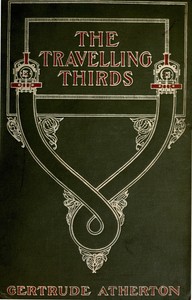
Reading Sister Gertrude, I found myself lingering on Edward’s quiet, bookish loneliness amid the Huddersfield chatter. That same restrained ache surfaced later, unexpectedly, in how the traveller’s companions in The Travelling Thirds — Themes and Context each carry their own unnoticed burdens. It felt like meeting an old friend’s cousin—familiar discomfort, new faces, same gentle stillness between the words.
There are no reviews for this eBook.
There are no comments for this eBook.
Reader reflection
What was your reading experience?
Capture what you thought, learned, and would like to remember.
Your progress
0
/
10
2
What was your overall reaction to the book?
3
Would you encourage someone else to read it?
4
Did the language feel accessible?
5
Which part made the strongest impression?
6
Could you see yourself revisiting this book?
7
Was the book moving at the right speed?
8
Would you start a conversation about this book?
9
What is the main idea you are taking away?
10