1

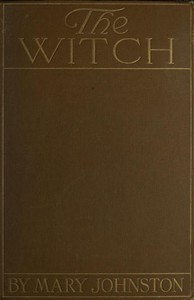
The Witch — Reading Companion
(0 User reviews)
216
Project Gutenberg
2016
Not confirmed
Great Britain -- History -- James I, 1603-1625 -- Fiction; Witchcraft -- Fiction
Readers of public-domain and historical texts
Project Gutenberg digital edition
en
Edition facts
Words
113,076
Reading time
492 min
Text sections
36
For The Witch — Reading Companion, the stored edition analysis reports 113,076 words, 8 hr 12 min estimated reading time, and 36 detected text sections.
The text analysis averages about 15.4 words per sentence, while the detected sections provide another way to judge how the source is divided.
Project Gutenberg metadata also associates the work with “Great Britain -- History -- James I, 1603-1625 -- Fiction,” connecting these edition facts with the source record’s subject description.
Source:
Project Gutenberg record #53109
Set in 1603 England, Mary Johnston's novel follows the witch trials in Hawthorn village, blending historical detail with psychological tension as fear and superstition grip a community.
Editorial Edition Score
4.9/5
★★★★★
★★★★★
Calculated from edition completeness, EPUB availability, text structure and catalogue metadata. Not a user rating.
How this score is calculated
- Description quality20 pts
- Title & short description10 pts
- Source metadata20 pts
- Text length15 pts
- Chapters / structure15 pts
- EPUB file integrity20 pts
Total of 100 points, scaled to a 2.5-5.0 range. Editions with an empty description or a missing EPUB file are not scored.
Edition quality
Read the Text
e worst! All the revellers and disputers rose, made for the door, became dispersed. Aderhold snatched up his cloak and hat, laid a coin beside the empty malmsey cup, sent one regretful glance in the direction of the volume lying beside the great bowl, and quitted the Cap and Bells. In the street was a glare of light and the noise of running feet. The crowd appeared to be rushing toward Thames bank, some tall building upon it being afire. He let them go, and drawing his cloak about him, turned in the direction of his lodging.
He had not gone far when he felt himself touched on the shoulder. “Not so fast! A word with you, friend!—You’ve put me out of breath—”
It proved to be the lawyer who had befriended him. They were standing before some church. Wall and porch, it rose above them, dark and vacant. The lawyer looked about him, glanced along the steps and into the hollow of the porch. “Bare as is this land of grace!—Look you, friend, we know that it is allowable at times to do that in danger which we disavow in safety. Especially if we have great things in trust.—I marked you quickly enough for a man with a secret—and a secret more of the soul and mind than of worldly goods. Hark you! I’m as little as you one of the mass-denying crew we’ve left. What! a man may go in troublous times with the current and keep a still tongue—nay, protest with his tongue that he loves the current—else he’ll have a still tongue, indeed, and neither lands nor business, nor perhaps bare life! But when we recognize a friend—” He spoke rapidly, in a voice hardly above a whisper, a sentence or two further.
“You take me,” said Aderhold, “to be Catholic. You mistake; I am not. I spoke without mask.” Then, as the other drew back with an angry breath. “You were quick and kindly and saved me from that which it would have been disagreeable to experience. Will you let me say but another word?”
“Say on,” said the other thickly, “but had I known—”
The light from Thames bank reddening the street even here, they drew a little farther into the shadow of the porch. “I have travelled much,” said Aderhold, “and seen many men and beliefs, and most often the beliefs were strange to me, and I saw not how any could hold them. Yet were the people much what they were themselves, some kindly, some unkindly, some hateful, some filled with all helpfulness. I have seen men of rare qualities, tender and honourable women and young children, believe what to me were monstrous things. Everywhere I have seen that men and women may be better than the dogma that is taught them, seeing that what they think they believe is wrapped in all the rest of their being which believes no such thing. Both in the old religion and in the Reformed have I known many a heroic and love-worthy soul. Think as well as you may of me, brother, and I will think well of thee—and thank thee, besides,—”
“Cease your heretic talk!” said the lawyer. “I held you to be of holy Mother Church—” With suddenness, in the darkness, he put forth his foot and swung his arm, at once tripping and striking the physician with such violence that he came to the ground with his forehead against the stone step of the church. When he staggered to his feet the lawyer was gone. Around him howled the March wind and far above the church vane creaked. He stood for a moment until the giddiness passed, then gathered his cloak about him and, hurrying on through the nipping air, reached his lodging without further adventure.
That night he slept well. The next morning, as he was eating his breakfast, that was spare enough, he heard a loud and formal crying in the street below. He went to the window. A crier was approaching, at his heels a mob of boys and of the idle generally. “_The Queen is Dead!—The Queen is Dead!—The Queen is Dead!—Long Live King James!_”
The novel opens with the dying Queen Elizabeth I, establishing a historical moment of transition. The narrative quickly narrows to Hawthorn village, where the accusation of witchcraft against Joan Heron and Mother Spuraway exposes the community's latent fears. Johnston's prose shifts between the queen's deathbed and the village's growing hysteria, linking political uncertainty to local persecution.
The Queen's Death and the Village's Unease
The first chapter, “The Queen’s Chamber,” situates the story in March 1603, as Elizabeth I lies dying. The text notes that “the most important thing had been the scattering of the Armada fifteen years before,” grounding the narrative in recent English history. This royal death creates a power vacuum that parallels the local crisis in Hawthorn. The excerpts show how the queen’s illness is discussed in London streets and taverns, while the village’s own turmoil brews separately. Johnston uses this dual focus to suggest that national and local anxieties feed each other, though the excerpts do not reveal direct connections between the queen’s death and the witch hunt.
The Mechanics of Accusation
In the examination scene, Master Clement confronts Mother Spuraway about giving “a bush of rue to Joan Heron.” The interrogation reveals how trivial acts become evidence: the rue came from “the burned cot,” and the constable drags her away despite her protest, “I am no witch!” The text describes the crowd’s excitement: “Every loss of a twelvemonth, every undeserved grief, every untoward happening, every petty mystery was awake and growing monstrous.” This passage shows how communal memory is retrofitted into a narrative of witchcraft. The sexton’s house, where charges are heard, becomes a stage for collective emotion, with the air seeming “to beat and sound and pulse.”
Superstition as a Social Force
Johnston’s narrator reflects that “the elder world was close of kin” and that “old and gross superstition had been whistled up.” The text compares the church to “a palm-thatched or cedar roof over some sacred stone or carven god,” suggesting a regression to primitive beliefs. The trial scene emphasizes that witchcraft is seen as a universal threat: “the personal foe of God Almighty, came into court!” The accused are viewed as enemies of every baptized soul, blamed for everything from “burn their ricks and barns” to “make their children peak and pine.” This section illustrates how fear transforms ordinary misfortunes into evidence of diabolical agency, though the excerpts do not reveal the outcome of the trial.
The Role of Justice Carthew
Justice Carthew presides over the examination, preferring the sexton’s house to his own for such proceedings. He is accompanied by a young man who is “half his son’s tutor, half his own clerk,” and by Master Clement. The text notes that “no other kind of lawbreaking could so raise, so universalize, emotion,” highlighting how witchcraft accusations differ from other crimes. Carthew’s presence suggests the formal legal system’s involvement, but the excerpts do not indicate whether he is skeptical or credulous. The crowd’s behavior—pressing in, standing on stones to see—shows the public spectacle of the trial.
Readers should attend to how Johnston balances historical context with the personal stories of the accused. The excerpts provide a vivid picture of the witch trial process but leave key questions unanswered: What happens to Joan Heron and Mother Spuraway? How does the queen’s death affect the village? The novel’s length and chapter titles suggest a journey beyond Hawthorn, perhaps to escape or exile. The text rewards careful attention to the language of accusation and the psychology of fear.
The rain hammered the window while I stayed buried in Mary Johnston’s witch-haunted Hawthorn, feeling the village’s dread settle like damp. When I finally glanced up, a forgotten old volume sat on the shelf. That afternoon, the fear of one era drifted into the quiet drawing-rooms of Blue-Stocking Hall, (Vol. 2 of 3) — Edition Insights, and the mood changed from terror to something gentler, yet no less revealing.
There are no reviews for this eBook.
There are no comments for this eBook.
Reader reflection
What was your reading experience?
Capture what you thought, learned, and would like to remember.
Your progress
0
/
10
2
Did this book hold your interest?
3
Would you pass this book on to a friend?
4
How easy was the book to follow?
5
How did the reading compare with what you expected?
6
What was the strongest part of the book?
7
How understandable was the text?
8
Did anything about the book feel genuinely new?
9
In one sentence, what did you learn?
10